NSRVCS News - July 2, 2010

logo.jpg
paddle.jpg

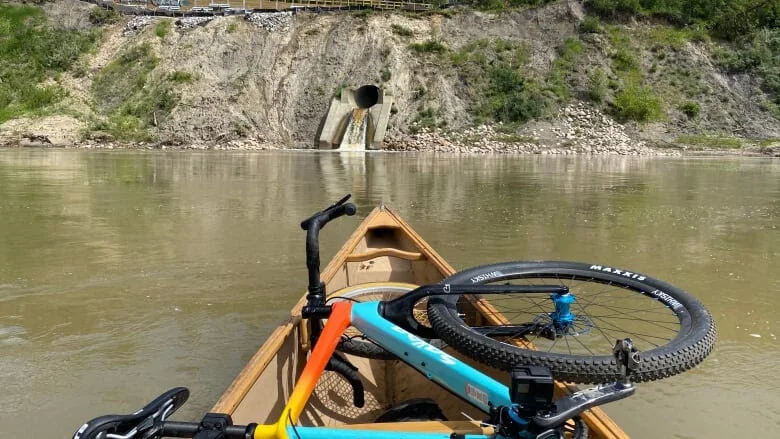
Edmonton doctor paddles to work
Every spring, as soon as the North Saskatchewan River is fully thawed, Darren Markland begins paddling to work. The Edmonton emergency room doctor commutes by canoe.
 
His day begins by hitching his canoe to his road bike and making an urban portage from home to the Sir Wilfred Laurier boat launch in west Edmonton. Unloading his canoe and placing his dismantled bike inside, he paddles to downtown, where he docks and again hitches boat to bike. He then bikes to the Royal Alexandra Hospital and begins his regular 15-hour shift.
 
Instead of traffic jams and hurried pedestrians, his morning commute includes sweeping views of the river valley, singing birds and jumping fish. "I've found people who've been panning for gold and there's people out here fishing," he said. "By the time I get to work, my batteries are totally recharged. Read more at https://www.cbc.ca/news/canada/edmonton/edmonton-doctor-paddles-to-work-canoe-commute-1.5627240

sparrow.jpg

Catchy sparrow song goes viral across Canada
The white-throated sparrows of British Columbia have devised a new song that has gone viral across Canada. For years, the small songbird’s traditional descending whistle featured a three-note ending. But researchers have tracked how a unique two-note-ending version of the male bird’s call has rapidly spread 3,000km eastwards from BC to western Quebec during this century.
 
According to biology professor Ken Otter, “As far as we know, it’s unprecedented. We don’t know of any other study that has ever seen this sort of spread through cultural evolution of a song type.”
 
In 2004, the data showed Alberta's sparrows were still trilling away with the triplet ending typical to the species. Ten years later, all the males in our region had shifted to a doublet ending. By 2015, it had spread to central Ontario and in 2019 it reached western Quebec. Listen to the new song at https://www.sciencealert.com/this-sparrow-song-went-viral-across-canada-and-it-s-unlike-anything-we-ve-heard-before

mosquitoes.jpg

The beneficial roles mosquitoes play in our environment
Mosquitoes play a vital role in the food chain. Their larvae and full-grown forms provide food for several different animals and organisms. For example, dragonflies feed on mosquitoes and their larvae, as do bats. Fish often eat the larval forms and even snack on adult mosquitoes that linger too long on the surface of the water when they are laying their eggs.
 
Another positive effect that mosquitoes have is that they help pollinate certain plants, especially the aquatic or near-aquatic plants that they spend much of their lives around. By doing so, mosquitoes help perpetuate these plants, which can provide cover and shelter for other animals and organisms. Increased plant life is also helpful as plants engage in the necessary process of photosynthesis, ensuring there is enough oxygen.
 
Because of the role mosquitoes play, there are a greater number of species in the environment. For instance, chickadees, swallows, house wrens, bluebirds, warblers, vireo, and sparrows all catch flying insects while those insects are in the air, allowing the birds to consume the bugs without perching and themselves potentially falling victim to predators, thus helping to ensure the survival of different bird species. Read more at
https://sciencing.com/positive-effects-mosquitoes-8513632.html

hyssop.jpg

Giant Hyssop good for hummingbirds, butterflies and tea
Giant Hyssop is a member of the mint family which makes this Alberta wild plant edible. It is one of the easiest plants to grow and blooms throughout July, August and into September. They attract bees and butterflies coming for a drink from the nectar filled flowers.
 
It is good as a fresh, cut flower and dries well for arrangements with long, sturdy stems. The flowers dry to a distinctive navy blue. You can plant directly into the garden in mid-June. Its seedlings are fast growing and can be moved to their permanent location by late summer.
 
The licorice flavoured leaves make fine herbal teas and jellies or can be included fresh in salads. Learn more about this plant, including how to make your own Giant Hyssop tea at 
http://www.naturenorth.com/summer/hyssop/Fhyssop.html Share river valley event, job posting, or news
If you have a river valley event, job posting, or news that you would like to see published in this newsletter, please send the info to nsrivervalley@gmail.com
 
Sincerely yours,
Harvey Voogd
North Saskatchewan River Valley Conservation Society
780.691.1712
nsrivervalley@gmail.com
https://www.facebook.com/NSRVCS/
http://www.edmontonrivervalley.org/

NSRVCS News - June 18, 2020

logo.jpg
snag.jpg

Snags are nature’s apartment complexes
A snag is a standing, dead or dying tree. It is often missing a top or most of the smaller branches. They provide critical habitat for many species. Their decomposing wood is soft enough for excavating species to make entrance holes and cavities.
 
Primary excavators, such as woodpeckers, create the cavities for feeding. They peck away at the snag to reveal insects to eat. These insects also break down the dead wood. Secondary users utilize existing cavities for feeding, breeding, nesting, shelter, and food storage.
 
Pileated woodpeckers create many of the cavities used by secondary nesters. In some areas, cavities created by these woodpeckers are used by 80 other species. Due to habitat loss, there are fewer areas where cavity users can find what they need to survive. Learn more at https://static1.squarespace.com/static/569ec99b841abaccb7c7e74c/t/5e6bce8c1861a329882eb980/1584123538458/Snags+-+Updated+2020.pdf

polaris.jpg

Snags are nature’s apartment complexes
A snag is a standing, dead or dying tree. It is often missing a top or most of the smaller branches. They provide critical habitat for many species. Their decomposing wood is soft enough for excavating species to make entrance holes and cavities.
 
Primary excavators, such as woodpeckers, create the cavities for feeding. They peck away at the snag to reveal insects to eat. These insects also break down the dead wood. Secondary users utilize existing cavities for feeding, breeding, nesting, shelter, and food storage.
 
Pileated woodpeckers create many of the cavities used by secondary nesters. In some areas, cavities created by these woodpeckers are used by 80 other species. Due to habitat loss, there are fewer areas where cavity users can find what they need to survive. Learn more at https://static1.squarespace.com/static/569ec99b841abaccb7c7e74c/t/5e6bce8c1861a329882eb980/1584123538458/Snags+-+Updated+2020.pdf

frog.jpg

Species at risk in Edmonton
The planned Edmonton Energy and Technology Park includes Horsehills creek, a minor tributary to the North Saskatchewan River, and a designated protected site because of the flora and fauna located in patches of forest and wetlands.
 
The northeast industrial park’s plan states that “A few of the species that may potentially be found within the general area are protected as provincially and federally-listed species. These include the Peregrine falcon, Harriot’s sagewort, and the Northern Leopard frog.”
 
Though historically widespread, the Northern Leopard frog is a species at risk in Alberta and designated as threatened. Protection of remnant breeding areas is essential.
 
For identification and information on this frog, the Peregrine falcon, and a selected list of other species at risk in Alberta, check out the Edmonton and Area Land Trust’s guide at
https://static1.squarespace.com/static/569ec99b841abaccb7c7e74c/t/5e46d49b2bcf325aff5603ea/1581700259441/Species+at+Risk+in+Alberta+2019+Final-compressed.pdf

archaeology.jpg

River Valley Archaeology
Three sites recorded because of work carried out in association with the south side of the new Walterdale Bridge provide examples of river valley archaeology heritage. The most ancient site recorded is a camp site that radiocarbon dating indicates was used 1,500 years ago. Buried two metres below the surface was a hearth feature surrounded by a dense blanket of debris left by the people that stayed there.
 
The concentration of ancient garbage consisted of 3,956 pieces of stone tool making debris, rocks for boiling water and a wide array of bison, rabbit, duck, whitefish, and other animal bones. Found within the hearth were carbonized seeds including choke cherry, pin cherry, bunchberry, and kinnikinnick. The latter is well known as a favorite smoke either on its own or mixed with tobacco.
 
Another site dates to an important time in Edmonton’s history: the fur trade era. Filled with mammal and fish bones, the pit also yielded a fragment of a white clay pipe stem. Clay pipes are commonly found at fur trade sites in Alberta. Nearby, another feature was identified from which a clay pipe bowl, lead shot, trade beads and a broken glass inset trade ring were recovered.
 
The third site dated to the early part of the last century. A photo from 1924 shows several houses at this location in the old Walterdale neighborhood, suggesting it was likely a backyard garbage pit. The glass bottles recovered from the feature contained medical treatments common at the time including Chamberlain’s Cough Remedy, Bovril, and Dr. Eno’s Fruit Salt. Read more at https://citymuseumedmonton.ca/2015/04/28/historic-narratives-promotion-and-archaeology-in-edmonton/ Share river valley event, job posting, or news
If you have a river valley event, job posting, or news that you would like to see published in this newsletter, please send the info to nsrivervalley@gmail.com
 
Sincerely yours,
Harvey Voogd
North Saskatchewan River Valley Conservation Society
780.691.1712
nsrivervalley@gmail.com
https://www.facebook.com/NSRVCS/
http://www.edmontonrivervalley.org/

NSRVCS News - June 11, 2020

logo.jpg
flower.jpg

308 varieties of plants and animals found only in Canada
A new report has developed the first comprehensive list of plants, animals and fungi that can only be found in Canada. It identified 308 species, subspecies and varieties that have been documented from our country.
 
Alberta has 54 nationally endemic species, the third highest in Canada behind British Columbia and Quebec. An example is the Lake Louise Arnica, a colourful wildflower that can be found on exposed alpine slopes and calcareous rockslides at high elevations.
 
This imperiled yellow wildflower is found only in the Canadian Rockies of Alberta and BC. Also known as snow arnica, this species grows at high elevations on exposed alpine slopes and rockslides.
 
Edmonton’s river valley and its natural areas are important not only for people but plants, animals, insects, and other creatures. There is no reason why we need to lose any local species due to our neglect of this Ribbon of Green. Learn more about this new report at https://storymaps.arcgis.com/stories/23b1ba2f0e2e46ce9a8c27412f414fc1

Parks.jpg

Alberta parks closure town hall
The Edmonton Chapter of The Council of Canadians is hosting a webinar titled Alberta Parks Threatened on Wednesday June 17 at 7:00 pm. The town hall will feature two expert speakers: Steve Donelon and Chris Smith from the Canadian Parks and Wilderness Society.
 
Donelon began a career with Alberta Parks in 1981, becoming the Regional Director for Kananaskis Country and then overseeing Alberta Parks provincial operations programs until his retirement in 2018, Steve was privileged to lead the Alberta Parks Program as Assistant Deputy Minister and co-lead Pathway to Canada Target 1, a national initiative developing a road map to meet Canada’s International commitments under Aichi Target 11 of the Convention on Bio-Diversity.
 
Smith has worked in three different countries and four Canadian provinces, contributing his experience to industry, government, and non-profits. Chris started with CPAWS Northern Alberta as a volunteer in 2018 and shortly after was brought on full-time as Parks Coordinator working on the Love Your Headwaters campaign.
 
The event will include question and answer opportunities. Registration at https://us02web.zoom.us/webinar/register/WN_jN_8NsukSkez6vam40_UEA

bat.jpg

Building homes for bats
Bats are an important component of our ecosystem and are beneficial to people. As insectivores, bats feed heavily on moths, flies and mosquitoes and consume forest and farm pests. In fact, a single little brown bat can eat up to 600 mosquitoes in one hour.
 
The loss of old, large-diameter trees because of human development, agriculture, and resource extraction has reduced the number of natural roosting structures. Look around your area and ask the following questions. Are there mature trees, but they will be cut down soon because of safety reasons? Are there trees, but not the kind that will provide roost-features for bats e.g., peeling bark, crevices, old woodpecker holes?
 
Bats that use bat houses in Alberta will also roost in trees. However, not all bats that roost in trees will use bat houses. Trees are also important for providing foraging habitat and flight corridors for bats.
 
Bat houses can provide alternate roosting habitat in areas where suitable features are lacking. Learn how to build a bat house at https://www.albertabats.ca/wp-content/uploads/ACBP-Bat-Houses-in-Alberta.pdf Share river valley event, job posting, or news
If you have a river valley event, job posting, or news that you would like to see published in this newsletter, please send the info to nsrivervalley@gmail.com
 
Sincerely yours,
Harvey Voogd
North Saskatchewan River Valley Conservation Society
780.691.1712
nsrivervalley@gmail.com
https://www.facebook.com/NSRVCS/
http://www.edmontonrivervalley.org/