NSRVCS News - August 28, 2020

logo.jpg
horses.jpg

Horses and our history
Local First Nations horse culture was short lived and a relatively recent development. Plains peoples had been pedestrian cultures and the horse was a late arrival and European in origin. The first horses arrived in what is now Central Alberta in the 1730s-1750s. Horses and the knowledge of horse riding had been traded up between nations from what is now California after the first few were sold by or stolen from Spanish colonialists there.
 
Horses grew in importance on the plains rapidly. They allowed First Nations to vastly expand their travelling range. As beasts of burden, horses helped First Nations carry more supplies further. The horse changed bison hunting techniques; instead of whole community affairs, skilled riders on horseback could kill choice animals. Horses also increased the pace of war.
 
Horses were a source of prestige for all people living in the west. Fort Edmonton’s Chief Factor John Rowand owned a large herd of horses, received as a dowry when he married his wife Louise Umphreville, and it is said that his wealth in horses afforded him the respect of the Cree.
 
When European fur traders first arrived in the Edmonton area and set up shop in 1795, horse culture was at its height. So was the cultural importance of horse theft. Stealing horses was a way to demonstrate one’s skill as a warrior and as a leader. The first recorded instance in Edmonton was in 1799, in which 20 horses were stolen and two were killed. Read more at https://citymuseumedmonton.ca/2016/10/18/lucier-and-the-horse-thieves/

inaturalist.jpg

Share your observations of the natural world
Citizen science is the practice of public participation and collaboration in scientific research to increase scientific knowledge. Through citizen science, people share and contribute to data monitoring and collection programs. Usually this participation is done as an unpaid volunteer
 
A citizen science network enables researchers to view and utilize data from myriad subjects in locations across the world, all at once. This is perhaps one of the greatest benefits of citizen science. But citizen scientists do not only provide usable data, they can analyze it, too.
 
iNaturalist is a nature app that helps identify plants and animals and is an accessible way to conduct citizen science. You can take a photo of your plant or insect of interest and it will provide possible identifications. If you take a clear picture depicting key features such as flowers and leaves, it does a good job of getting you to the genus level. By recording and sharing your observations, you create research quality data for scientists working to better understand and protect nature. Learn more at https://www.inaturalist.org/

starling.jpg

Shakespeare and starlings
All European Starlings in North America descended from 100 birds set loose in New York's Central Park in the early 1890s. The birds were intentionally released by a group who wanted America to have all the birds that Shakespeare ever mentioned. Today, more than 200 million of these songbirds range from Alaska to Mexico and many people, especially farmers, consider them pests.
 
Starlings are stocky black birds with short tails, triangular wings, and long, pointed bills. They are great vocal mimics and individuals can learn the calls of up to 20 different species. Birds whose songs starlings often copy include the American Robin, Northern Flicker, and many others.
 
Starlings turn from spotted and white to glossy and dark each year without shedding their feathers. The new feathers they grow in fall have bold white tips, which is what gives them their spots. By spring, these tips have worn away, and the rest of the feather is dark and iridescent brown. It is an unusual changing act that scientists term “wear molt”.
 
Scientists have discovered starlings can taste salt, sugars, citric acid, and tannins. They can tell the difference between sucrose (table sugar) and other kinds of sugars – helpful since starlings lack the ability to digest sucrose. Learn more at https://www.allaboutbirds.org/guide/European_Starling/overview

Frank.jpg

Artist known for paintings of river valley
Lori Frank is a born and raised in Edmonton artist known for her river valley series of paintings. According to Lori, “it was my trips to New York that inspired me to bring more awareness to the river valley, which is 20 times larger than Central Park. The beauty of our valley, walking in it, living overlooking it, and painting it brings me a great sense of belonging and joy.’
 
Ms. Frank says the series began, “with various stairways in various seasons leading to our valley. At that time, I also developed my series of trails in our valley and have since continued those series, adding bridges, people, and architecture. I feel like I’ve just started painting Edmonton and its valley… I will continue it as long as clients keep asking me to paint their favourite spots.” See more at https://www.lorifrank.ca/ Share river valley event, job posting, or news
If you have a river valley event, job posting, or news that you would like to see published in this newsletter, please send the info to nsrivervalley@gmail.com
 
Sincerely yours,
Harvey Voogd
North Saskatchewan River Valley Conservation Society
780.691.1712
nsrivervalley@gmail.com
https://www.facebook.com/NSRVCS/
http://www.edmontonrivervalley.org/

NSRVCS News - August 20, 2020

logo.jpg
snake.jpg

Wet weather creates great environment for snakes
Edmonton’s wet weather is creating the perfect conditions for the city’s snake population to flourish, says a local reptile expert. Peter Daly, a biological technologist with the City of Edmonton, said frogs, slugs and worms all love wet environments, which in turn means more items on the menu for garter snakes.
 
“It means snakes have a lot to feed on and with it being hot, it means they have the opportunity to be more active and range a little farther since they are cold-blooded.” Daly said the garter snake is usually found near water, including the city’s river valley, and they are excellent swimmers.
 
The most common snake in Edmonton is the western red-sided garter snake which can grow to more than one metre in length. It is distinguished by red-sided markings and dark green colouring. The garter snake is not harmful to humans, but they do bite. Daly said a bite from this kind of snake feels like velcro or grabbing a thistle. And while garter snakes technically have venom, he said the amount is not dangerous to humans, only fish and frogs. Read more at https://edmontonjournal.com/news/local-news/snakes-in-edmonton

martin.jpg

Pine marten a natural tree climber
The pine marten is found throughout Canada in mature boreal forests of conifers, including Edmonton’s river valley. This photo was taken in Kinnaird Ravine this April. Befitting its arboreal tendency, the marten has sharp, curved, and semi-retractable claws.
 
They are long and slender animals with a broad head tapering to a sharp nose. The eyes are large and black, and the ears are large and rounded like a cat. Martens have long, shiny, silky fur. The head is grey, legs and tail are very dark brown or black, the chest has a cream-colored patch, and the back is light brown.
 
Its diet consists primarily of small mammals, including squirrels and rodents. As an opportunistic feeder, they will eat birds, fruit, nuts, insects, and carrion. However, the marten is also an aggressive predator, and can kill the much larger snowshoe hares.
 
Few predators can match the quickness and agility of the adult marten, although the young are vulnerable to carnivores like owls. Learn more at https://naturecanada.ca/news/blog/get-to-know-the-pine-marten/

museum.jpg

What is a tree museum
Could one describe Edmonton’s river valley as a living tree museum? Should we consider a place for old or unique trees growing outside of the river valley to be securely preserved?
 
In 2010, the Enea Tree Museum in Switzerland opened to the public. It features over 50 trees, representing more than 25 varieties, some of which are over 100 years old. The tree collection consists exclusively of species from the local climate zone. More trees and plants stand in the park that surrounds the tree museum. On the entire site there are over 3000 trees and shrubs.
 
Since 2013, contemporary sculptures by renowned artists are also exhibited in the park and surroundings. The tree museum and sculpture park offer a unique experience for both garden lovers and those interested in art. More photos at https://www.enea.ch/baummuseum/?lang=en Share river valley event, job posting, or news
If you have a river valley event, job posting, or news that you would like to see published in this newsletter, please send the info to nsrivervalley@gmail.com
 
Sincerely yours,
Harvey Voogd
North Saskatchewan River Valley Conservation Society
780.691.1712
nsrivervalley@gmail.com
https://www.facebook.com/NSRVCS/
http://www.edmontonrivervalley.org/

NSRVCS News - August 13, 2020

logo.jpg
lichen.jpg

Learn to speak Lichen
Join Diane Haughland for a river valley walk on August 22, 9:30-11:00am, to learn about your lichen neighbours and how to translate what they are telling us about our urban environment. Not sure what a lichen is? Come and find out! You will be introduced to common and uncommon lichens and learn why listening to urban lichens is important.
 
Diane is an ecologist and lichen taxonomist who has studied Alberta’s lichens for over a decade. She teaches a course on lichen identification and ecology at the University of Alberta. Participation is limited to 10 individuals or up to 10 cohorts.
 
Registered participants will be emailed with the exact event location closer to the event. All participants are required to wear a mask and use hand sanitizer upon arrival. Registration and more information about the event sponsor, the Tomorrow Foundation, is at https://tomorrowfoundation.ca/

harvey.jpg

Paddle Edmonton's original main street
Canoe down Edmonton’s original main street, the North Saskatchewan River, and see the scenic river valley just as First Nations and fur traders did for hundreds of years. Keep an eye out for wildlife along the riverbank and learn the true meaning of going with the flow. A popular day trip is the 5-6 hour canoe trip from Devon to Edmonton.
 
My friend Ted Garver and I recently canoed 319km on the North Saskatchewan River from Rocky Mountain House to Edmonton. The deepness of the river valley in Edmonton means consistent urban sound and sights, except for the south Anthony Henday freeway bridge, do not register until quite far within the city’s boundaries, in our case Terwilliger Park.
 
Mark Lund’s connection to water ranges from teaching swimming lessons at 14, paddling as a member of Red Deer College’s canoe team and writing “Mark’s Guide for Alberta Paddlers”. Read his tips for safe paddling at https://rivervalley.ab.ca/news/tips-for-safe-paddling-on-the-north-saskatchewan-river/

plantain.jpg

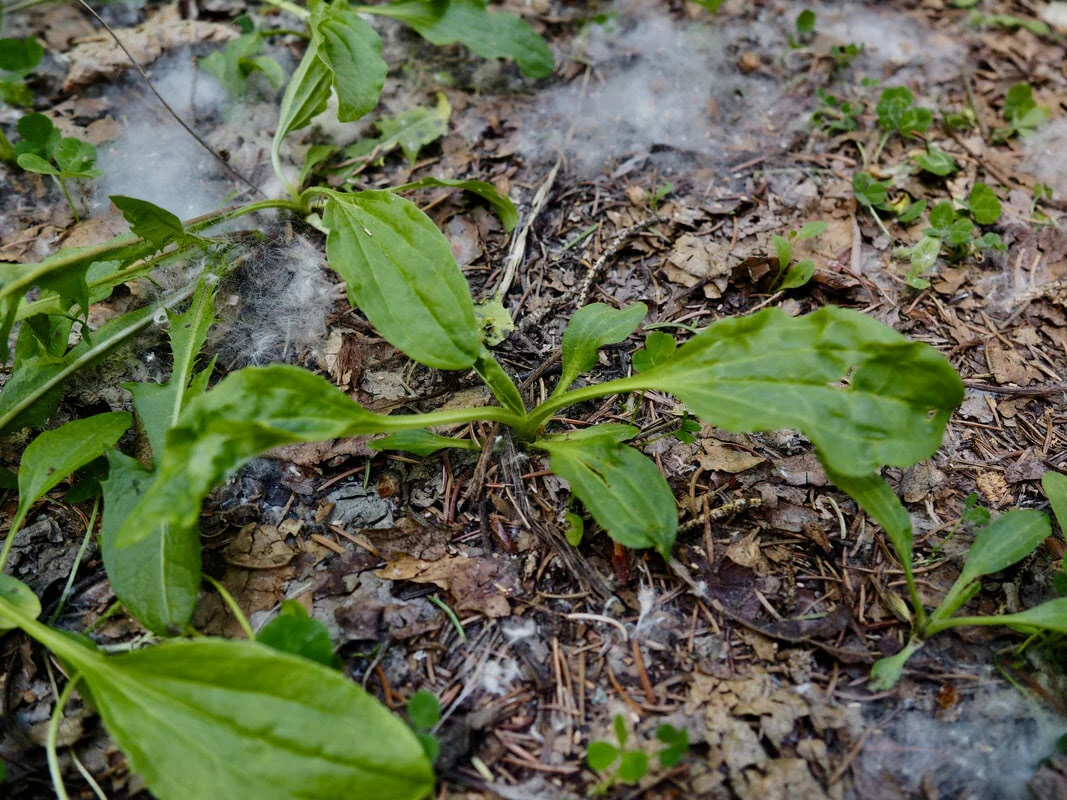
Plantain - plant that grows where humans walk
Plantain is an invasive plant that was introduced to the Americas with colonization. It was brought over by Europeans as an important medicinal plant. It has been referred to as “White man’s footprint” by a variety of Indigenous Peoples since it seemed to follow the footsteps of Settlers. This can be attributed to the fact that it thrives in disturbed soils, such as the soil that surrounded European settlements.

For millennia, poultices (soft, moist mass placed over skin) of plantain leaves have been applied to wounds, sores, and stings to promote healing. A tea of plantain leaves can be ingested to treat diarrhea and various gastrointestinal inflammation issues such as gastritis, peptic ulceration, colitis, and IBS. Plantain is also useful as a tea for UTI’s or episodes of kidney stones due to its anti-inflammatory, anti-hemorrhagic and anti-septic actions. 
 
The leaves are edible but become tough and fibrous quickly. In the fall, the seeds turn brown and may be used in place of Metamucil. The leaves of the plantain are rich in vitamins A, C, and K, making them a great healthy snack. Recipe for plantain chips at https://www.ealt.ca/natures-nourishment-1/plantain-chips Share river valley event, job posting, or news
If you have a river valley event, job posting, or news that you would like to see published in this newsletter, please send the info to nsrivervalley@gmail.com
 
Sincerely yours,
Harvey Voogd
North Saskatchewan River Valley Conservation Society
780.691.1712
nsrivervalley@gmail.com
https://www.facebook.com/NSRVCS/
http://www.edmontonrivervalley.org/