NSRVCS Newsletter - May 1, 2021

logo.jpg
robin.jpg

Spring is bird nesting season
A symbol of spring is birds with beaks full of twigs, fur, feathers, or grass, that will be used to construct nests for their young. There are different development strategies for birds. Most birds can be separated into two types.

The fluffy duckling type are born covered in fuzzy down feathers. Ducks, geese, and most other waterfowl and shorebirds are this type, and they are known as precocial. Precocial birds are mobile right after birth; they are born with their eyes open, and typically leave the nest within two days to seek out water and food with their mother. While reliant on their mother for warmth and to teach them about feeding, they are quite independent shortly after hatching.

Most songbirds, such as the chickadees, finches, and robins, and corvids, like magpies, crows, and blue jays are altricial. They hatch from their eggs naked, with their eyes closed, making them very vulnerable and dependent on their parents for the first part of their lives. At this stage, they are called hatchlings.

After a few days, the chicks’ eyes open and feathers begin to grow, often in tube-like sheaths with interspersed down feathers. They are now nestlings. Learn more at https://www.ealt.ca/blog/its-a-birds-life

incinerator.jpg

Edmonton’s love affair with river valley incinerators
In 1908, Rat Creek witnessed the construction of the city’s first public incinerator, a state-of-the-art facility that would burn fifty tons of garbage a day. However, the smell wafted toward the neighbourhood of Norwood, inciting the wrath of a large delegation of citizens.

The City Engineer agreed and argued for the removal of the Norwood monster. Commonwealth Stadium now sits on the grounds of Edmonton’s first masterplan for burning garbage. By 1931, city leaders were once again clamouring for a new burning facility, which was built in Mill Creek.

It was not big enough to absorb the post-war economic boom and the decision was taken in 1950 to build a brand spanking new incinerator on the site of the old incinerator. By 1954, s series of glowing articles in the Edmonton Journal detailed the specs on the new incinerator. With the unprecedented capacity to burn 290 tons of garbage a day, the Mill Creek incinerator was to be the final answer to the problem of the city’s dumps.

Even at 1800 degrees Fahrenheit, not everything would burn. And what did burn turned into ash and floated through the sky, landing on homes in Strathearn and Strathcona. Some summer days brought blizzards of black snow. By 1971, the City had united against the incinerator and it was destroyed to make way for Muttart Conservatory. Read more at
https://citymuseumedmonton.ca/2016/07/19/world-class-dump-part-two/

riverboat.jpg

Will the river boat return
According to the Edmonton Riverboat website, “due to Covid 19 we do not know when we will start operating.” In April 2020, the boat was damaged by a three-metre overnight surge in river volume that lifted it, and when waters receded, impaled the vessel on the two steel piles to which it was normally moored.

The boat’s history is one of a succession of owners, who over 25 years, have floated the 399-passenger sternwheeler on the North Saskatchewan River.

Before this boat, Edmonton businessman Ray Collins, who was enamoured with tales of the city’s turn-of-the-century paddle wheelers, tried to revive that culture in 1964 with the 80-passenger Little Klondike Queen. But it frequently ran aground, physically and financially, and operated in our picturesque river valley for only a couple years.

Collins’ second boat, built in the early-1990s, was manufactured by a city boat-maker, and generated so much excitement that the Edmonton Journal ran a 1993 contest to come up with its name, the Edmonton Queen.

The boat came in vastly over budget at $2.2 million, and the fabrication yard held back delivery. Lawsuits ensued. Collins’ venture went bust, and sawmill owner Dick Corser partnered with a property developer to pluck it from bankruptcy for what then seemed a steal: $800,000. More at https://www.macleans.ca/news/canada/a-river-runs-through-it-the-story-of-the-hardiest-boat-in-edmonton/

nature.jpg

Nature Alberta magazine worth a look
The spring issue of Nature Alberta Magazine has a lot of great information to offer. Articles include making sense of the situation in Alberta's Eastern Slopes, inviting citizen scientists for the City Nature Challenge, and learning about swift foxes, beavers, and secretive salamanders.

Nature Kids will learn how to attract pollinators with bee bombs. There is also an article that helps people wade through the multiple plant books out there and find the ones right for their level of interest. Free at https://fliphtml5.com/olrxh/aeqv

rabbit.jpg

River valley concern or contribution
If you have a river valley concern or question, contact us at nsrivervalley@gmail.com
Your friends and neighbours can sign up for this newsletter on our web site.
If you have a photo, information, or event about Edmonton’s river valley and think it should be in this newsletter, email it to us.

Sincerely yours,
Harvey Voogd
North Saskatchewan River Valley Conservation Society
780.691.1712

NSRVCS Newsletter - April 22, 2021

logo.jpg
slumping.jpg

Slumping and erosion part of river valley geology
Landslides are a part of our river valley’s life. The photo is of the east bank of Gold Bar creek where a landslide has caused erosion past the Imperial Oil refinery fence and property line.

The two most famous recent landslides were Keillor Road in 2002 and Whitemud Road in 1999. The Keillor Road Landslide occurred on the outside bend of the North Saskatchewan River and the slope moved 22 m into the river.

On the morning of October 23, 1999, a large landslide occurred along a 270 m section of the North Saskatchewan River Valley and affected seven residential lots on the west side of Whitemud Road between the intersection of Ramsay Road and 43rd Avenue. Two previous failures had occurred downstream within 300 m of this location in 1976 and 1967.

Cautions and closures on river valley trails by the City are generally the result of construction, slumping, erosion, flooding, or other environmental factors, such as silt and ice. Details on the closures can be found on the following map https://www.edmonton.ca/activities_parks_recreation/parks_rivervalley/trailpark-cautions-closures.aspx

trail.jpg

Government House to MacKinnon Ravine trail
This trail is a 5km round trip on the north bank of river, which one can increase by including Ramsey Ravine. This ravine which is a tributary of MacKinnon Ravine is 0.7km long one way.

Trailheads are either Government House Park parking lot, which is adjacent to Groat Road or the opposite end, starting at 148 Street and Summit Drive at the head of the ravine.

MacKinnon Ravine has a paved multi-use trail down its length. The multi-use trail has a gradual slope. Walkers, skateboarders, strollers, and many cyclists use this ravine to access the university or city centre.

The east fork of Ramsey Ravine has a north-south oriented multi-use trail that heads north from MacKinnon Ravine up a moderate slope to Churchill Crescent. about 131 Street. and 103 Avenue. Trail information at https://encf.org/wp-content/uploads/2020/05/Walk-II-30.pdf

waste.jpg

City use to encourage dumping waste in the river valley
While Edmonton was one of the first western cities in North America to create a vast waterworks infrastructure, it lacked any civic strategy for dealing with waste. Large items were simply pushed off the bluff near the Hotel Macdonald and left to tumble into the river valley.

It was the prospect of reusing and repurposing garbage that gave rise to Edmonton’s largest and longest-lasting shantytown, on Grierson Dump. Many unemployed immigrants realized they could reuse this material to build their own shacks and eke out a living finding the odd treasure in the dump.

Grierson Dump was not only a convenient place to ditch unwanted items but also a landfill that, according to the City Engineer’s office, mitigated the precariously steep nature of the riverbank. The City Engineer in fact encouraged the dumping of waste down Grierson Hill.

The reality of a growing dump just below the city centre led to several crises, and in 1911 the City Commissioner made the first of many attempts to shut it down. Police investigators concluded that typhoid and other public health “menaces” were breeding at the dump.

Tension came to a head in 1913 when a cholera epidemic swept through the population of hogs who fed off the slops at Grierson Dump. The pandemic was devastating for the hogs and led to a panic among the citizenry, who feared the outbreak would spread to humans. But the dumping continued until Grierson Dump finally closed around 1940. Read more at https://citymuseumedmonton.ca/2015/10/27/grierson-dump/

tick.jpg

New app to help monitor ticks
The eTick app will launch this spring in Alberta, allowing people to send images of ticks and receive species identification within 24-hours. It does not test for diseases like Lyme, but the benefits are tick awareness, passive surveillance of tick presence, and near-immediate results to the user.

Over the past 3 years, Alberta has monitored ticks through the submit-a-tick program where ticks were sent to Alberta Health Services Environmental Health Office for testing and identification. Last year, the number of ticks increased to 2,870, of which 63 could carry Lyme disease and 3 tested positive for the bacteria.

You are likely to stumble upon ticks in Edmonton’s river valley, where it is warm and relatively humid, said Janet Sperling, who is involved with the Canadian Lyme Disease Foundation. According to the Government of Alberta, several ticks in the Edmonton river valley were submitted in 2019, with one testing positive for the Lyme virus.

Studies show ticks travelling to the Prairies on migratory hosts. Canada’s Public Health Agency reported somewhere between 50 million to 175 million hitch-hiking black-legged ticks landing in Canada from migrating birds flying north each year. Learn more at https://calgaryjournal.ca/2021/04/18/new-tick-tracking-app-launching-soon-in-alberta/

concern.jpg

River valley concern or contribution
If you have a river valley concern or question, contact us at nsrivervalley@gmail.com
Your friends and neighbours can sign up for this newsletter on our web site.
If you have a photo, information, or event about Edmonton’s river valley and think it should be in this newsletter, email it to us.

Sincerely yours,
Harvey Voogd
North Saskatchewan River Valley Conservation Society
780.691.1712

NSRVCS Newsletter - April 17, 2021

logo.jpg
cleanup.jpg

River valley clean up effort gaining momentum online
When Ryan Haworth returned to Edmonton less than two months ago, he wanted to find a healthy way to create a close bond with his hometown. He soon found a worthy cause in Edmonton's river valley.

Haworth came across a Reddit post a couple of weeks ago complaining about how much garbage was in the river valley and he decided to do something about it. In less than two weeks, this has led to a group of just under 50 Edmontonians organizing clean-up efforts around the area.

While the size of the park can seem intimidating, taking on the task of cleaning it isn't difficult, Haworth said. "It's a big job for me to go and try and do it on a Thursday. But if you have a million people in the greater Edmonton area, only 50 to 200 of those people need to care to actually keep it maintained," Haworth said. More at https://www.cbc.ca/news/canada/edmonton/edmonton-river-valley-clean-up-effort-gaining-momentum-online-1.5988099

footbridge.jpg

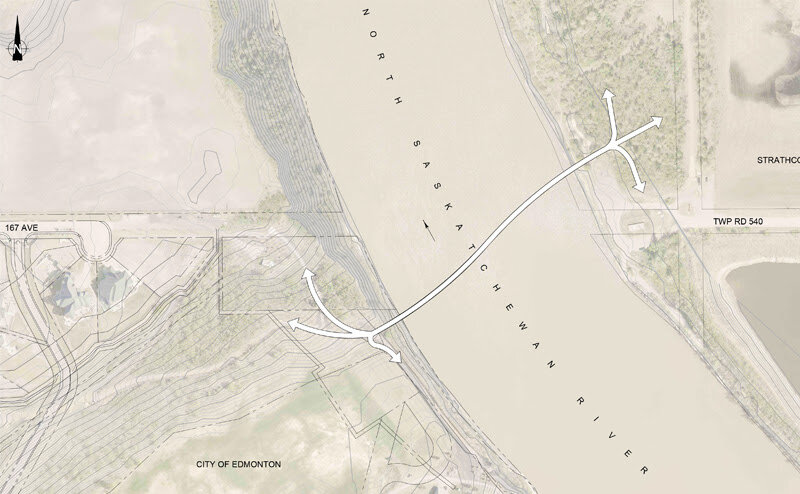
Proposed river footbridge would join Edmonton, Strathcona County
A footbridge that would connect Edmonton and Strathcona County is being proposed to improve access and connectivity towards a multi-use trail system. The project would create a river valley connection between the west side of the river at 167 Avenue to the east side at Township Road 540.

The general location was recommended after a feasibility study was completed in January of 2020. The city says Indigenous Nations and surrounding communities were engaged at the early stages to share insights and concerns about the proposed site.

The city is offering an online survey to provide feedback on the site of the proposed footbridge and additional amenities. The survey closes on April 29. Take the survey at https://www.edmonton.ca/projects_plans/roads/edmonton-strathcona-county-footbridge.aspx?utm_source=virtualaddress&utm_campaign=edmontonstrathconafootbridge

alcohol.jpg

Alcohol at picnic sites in seven river valley parks proposed
On April 28, Community and Public Services Committee will decide whether to approve a pilot program to allow the consumption of alcohol in seven river valley parks from May 28 until October 11, 2021. The selected parks include Sir Wilfrid Laurier, Whitemud, William Hawrelak, Government House, Victoria, Gold Bar, and Rundle.

Between February 22 and March 7, 2021, Administration conducted an online survey seeking the level of support for a pilot project to allow alcohol consumption in designated picnic areas in City parks. In total, 15,554 responses were received with 71 per cent supporting the plan.

Key concerns from respondents were ensuring noise and litter issues are well managed, designated areas are clearly signed with usage rules and regulations, proximity to washrooms and ensuring enforcement to avoid any disorderly behaviours.

You can read Administration’s report by clicking on Agenda 6.2 at https://pub-edmonton.escribemeetings.com/Meeting.aspx?Id=905401ef-d112-4041-bdb0-3280e03f57d4&Agenda=Agenda&lang=English&Item=24&Tab=attachments

If you wish to speak at Community and Public Services Committee on this issue, register with the City Clerk at 780.496.8178, city.clerk@edmonton.ca or in-person before the 9:30am meeting begins.

dogs.jpg

River valley concern or contribution
If you have a river valley concern or question, contact us at nsrivervalley@gmail.com
Your friends and neighbours can sign up for this newsletter on our web site.
If you have a photo, information, or event about Edmonton’s river valley and think it should be in this newsletter, email it to us.

Sincerely yours,
Harvey Voogd
North Saskatchewan River Valley Conservation Society
780.691.1712