River Valley News - Feb 10, 2022

Help decide the future of our river valley and ravine system
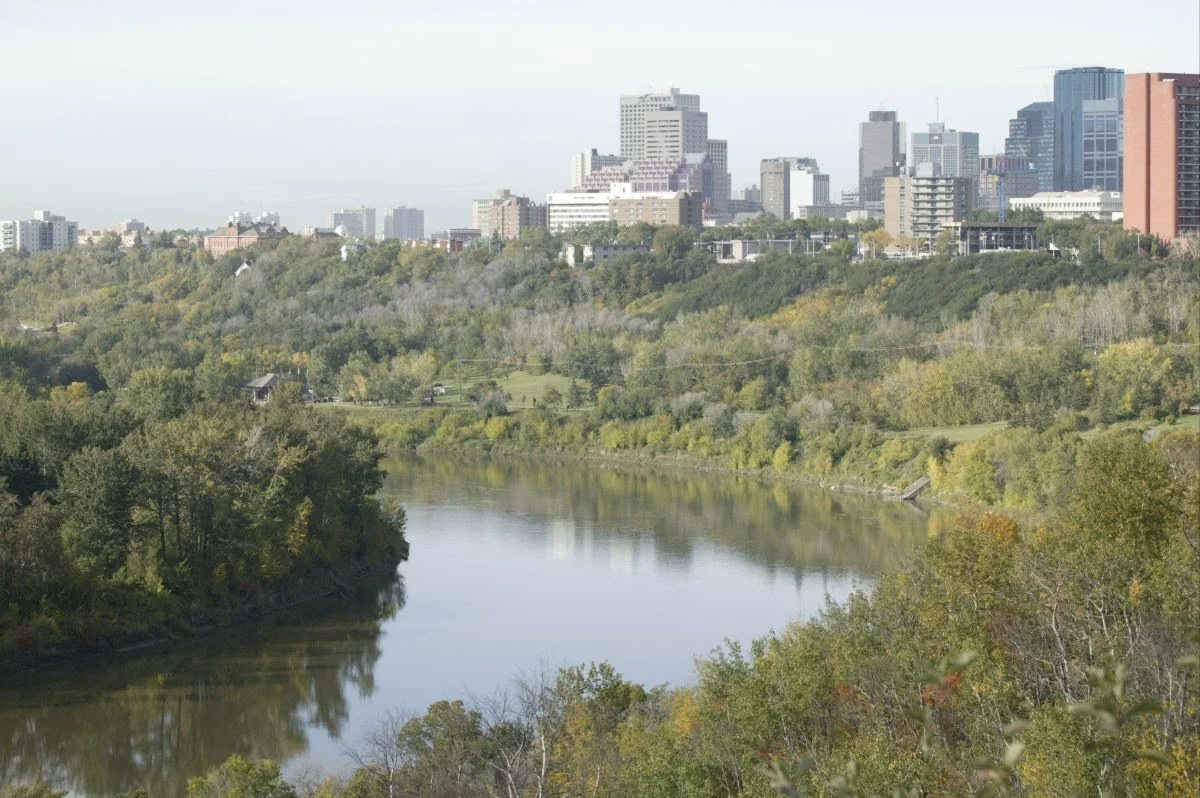
Edmonton’s City Plan, approved by City Council in 2020, describes the North Saskatchewan River Valley and Ravine System as the most important feature of our city. It is a vital ecological corridor, a valued recreation destination, a place of incredible cultural significance and a draw for visitors throughout the region.

The River Valley Planning Modernization Project seeks to renew the city’s strategic planning for the river valley and the processes and tools for evaluating and regulating development that is proposed within the system.

The question at the heart of the project is this: How will we ensure that the river valley, the backbone of our open space network, remains vibrant and ecologically resilient as the city grows?

The city wants your feedback through an interactive portal and a public survey no later than February 17 at https://www.edmonton.ca/city_government/initiatives_innovation/ribbon-of-green-public-engagement
Great Backyard Bird Count is Feb 18-21
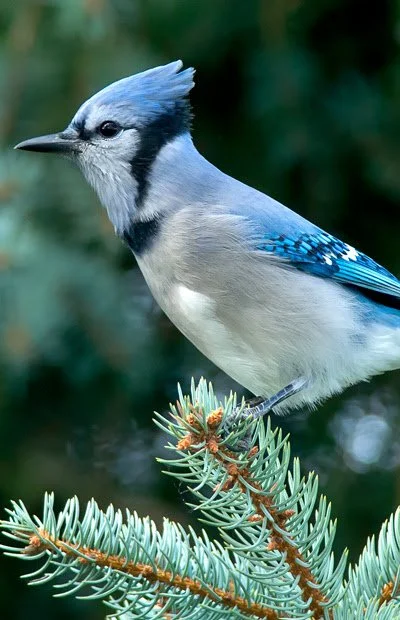
Each February the world comes together for the love of birds. Over four days, people are invited to spend time in their favorite places watching and counting as many birds as they can find and reporting them

Launched in 1998, the Great Backyard Bird Count (GBBC) was the first online citizen-science project, also referred to as community science, to collect data on wild birds and to display results in near real time. GBBC uses eBird, one of the world’s largest nature databases.

These observations help scientists better understand global bird populations before one of their annual migrations. Learn more, including how to register and participate in the Great Backyard Bird Count at https://www.birdcount.org/

Research shows cities across country losing green space
Statistics Canada’s first survey of urban green space shows that cities, including Edmonton, are losing their green spaces. The survey used satellite data to compare changes in parks, urban green spaces, yards, and other areas in 2001, 2011, and 2019.

Studies show benefits of vegetation include trees removing air pollutants, reductions in energy use, and human health benefits. Green spaces also reduce what is called urban heat islands, bubbles of high temperature around cities.

Sandeep Agrawal, a geographer and urban planner at the University of Alberta, has found the temperature difference between a city such as Edmonton and the surrounding countryside can be as high as five or six degrees. That differential is linked with the amount of urban green. “If the tree cover goes down, the urban heat island effect goes up quite a bit,” he said.

Heat islands can help cause human health problems such as respiratory failure or heat stroke, a problem worsened in heat waves such as that experienced last summer over much of Western Canada. Read more at https://rdnewsnow.com/2022/02/01/long-term-statistics-canada-research-shows-cities-across-country-losing-green-space/

Beaver Hills, Papaschase and the dinosaur man
The Beaver Hills, 20 minutes east of Edmonton, was designated as a biosphere in 2016 by the United Nations Educational, Scientific and Cultural Organization. UNESCO-designated biospheres are regions in which people live and work in harmony with nature. The Beaver Hills Biosphere encompasses an area of approximately 1600 square kms that includes portions of five counties and Elk Island National Park.

Joseph Tyrrell, famous for discovering dinosaurs near Drumheller, made an 1886 survey through the heart of the Beaver Hills meticulously documenting what he saw. An historically significant legacy of this journey is a map sketched by Chief Papaschase in the back pages of Tyrrell’s field book.

Tyrrell got lost entering the Beaver Hills and doubled back to Papaschase’s camp at Two Hills, now known in Edmonton as Huntington Hill and Mount Pleasant Cemetery, which was adjacent to Two Hills Lake later drained by city planners.

Papaschase drew a map of the trail, the Beaver Hills and marked down 3 places where Tyrrell should camp. The 135-year-old map he drew provided a complete picture of one of the oldest and very few paths that wound through the Beaver Hills in 1886. A 20-minute informative and entertaining video of this history, titled BHB Episode 8-Tyrrell and Papachase, Part 1, is at https://www.beaverhills.ca/explore/videos

Time to turn Edmonton's river valley golf courses into public parks
Liz writes “It is time to turn our river valley's golf courses into public parks. It is outrageous that so much precious park space is reserved for golfers. I was amazed that the previous city council gave a new 50-year lease to the private Mayfair Golf club to use that wonderful space only for their members.

Hawrelak Park, which we need to change back to Mayfair Park, will be closed for three years. I go to this park many times a month. Where will I turn for the three long years that it is closed for renovation?”

Hawrelak Park closure
Ria emails “It is with great dismay that I heard about Hawrelak being closed for three years for improvements to be carried out. Does the entire park have to be closed for the work to happen? Is the work really necessary? I can't imagine the southside without Hawrelak.”
Comment or contribution
If you have a comment, concern, or question, contact us at nsrivervalley@gmail.com Please also email us river valley photos or event information. Your friends, neighbours and colleagues can sign up for this newsletter on our web site https://www.edmontonrivervalley.org/

Sincerely yours,
Harvey Voogd
North Saskatchewan River Valley Conservation Society
780.691.1712

River Valley News - Feb 3, 2022

Time to turn Edmonton's river valley golf courses into public parks
The news that Hawrelak Park will be closed for a minimum of three years raises concerns and begs the question of how green space is allocated in a growing and modernizing city, writes Helen Sadowksi in an opinion piece. With the shutdown of Hawrelak Park, families and others in central neighbourhoods will have limited access to nearby green space.

And yet it’s abundantly clear that there is ample green space in our central river valley. It’s a matter of how this public green space is allocated, who gets priority, and what decisions were made by earlier city councils to assign this now precious space. Four golf courses; Victoria (1909), Mayfair (1923), Highlands (1929), and Riverside (1953) occupy 600 acres of our ribbon of green, within minutes of downtown.

Those decisions that gave priority to golfers were made at a different time, when the city was smaller, less populated, and less diverse. Even if those decisions made sense at that time, they no longer do. Can we still make sense of the decision to assign 640 acres of the city’s prime green space to golfers, who have many other options for enjoying their pastimes?

We have to ask ourselves: Who gets to use public spaces? Who is the city being designed for? What decisions need to be revisited? What is the most equitable and efficient way to use public spaces such as our river valley? Read complete article at https://edmontonjournal.com/opinion/columnists/opinion-its-time-to-turn-edmontons-river-valley-golf-courses-into-public-parks

Law's relationship with the North Saskatchewan River
University of Alberta Associate Professor Cameron Jefferies will critique sustainable development as an objective of environmental law and will instead present ecological sustainability and intergenerational stewardship as alternative and preferable perspectives for re-imagining a legal relationship with the North Saskatchewan River.

This presentation is part of the Environmental Law Centre’s series, Reimagining Rivers: Rethinking and Reframing Relationship with the Environment. Legal rights govern how we interact with each other and with the world around us. Various jurisdictions, for example, are now granting legal rights to aspects of the environment such as rivers.

This series, jointly organized by the Centre for Constitutional Studies and the Environmental Law Centre, provides opportunities to learn from expert speakers about jurisdictional hurdles that impact the thriving of our environment as well as innovative approaches to rethinking relationship with it.

The series will culminate in a symposium which will explore different conceptions of the North Saskatchewan River, as a legal person, as an agent, as a relation. Register for Cameron Jefferies’ February 16, 12:00-1:30pm online seminar at https://ualberta-ca.zoom.us/webinar/register/WN_NnuA3uTjQKyc4TsPhd6ejg

Silver Skate Festival a combination of fire and ice
The Silver Skate Festival, Edmonton’s longest running winter festival, has been creating winter experiences in Hawrelak Park for over 30 years. What began as a small annual skating event rooted in Dutch winter traditions, is back Feb 11-21 and has blossomed into an all-embracing celebration of winter sport, art, music, and recreation.

Recreation events include ball hockey, jam can curling and frisbee golf. Snow sculptures, story telling, skating, live music, and Frisbee Rod’s world record attempt is a brief list of other activities that will bring you joy.

Throughout each weekend, a team of fire artists will be building a sculpture that will be burned at 7:45pm on each of those days. Each day features a different team of artists. The fire represents renewal and the release of thoughts that make us sad or any fear or regret that chases love from our hearts.

In the Storytelling tent the public is invited to write down their thoughts to be offered to the fire sculpture. Festival information at https://silverskate.ca/

Better protection of Edmonton’s river valley needed
Carol writes “I support a Parks Department 100%!”

John suggests “There are two specific ways public access to the river can be improved for minimal cost. The first is in Riverdale where the river bends north. There is at least one lot fenced to the water's edge and several others with no trespassing signs. This forces walkers and cyclists to detour onto a back lane and a public street which is both dangerous and unnecessary. The houses are set back far enough that the city should be able to purchase a sufficiently wide right of way to restore public access to the river's edge.

The second is below the Beverly Heights neighbourhood which requires an even more arduous detour all the way up to the top of the bank. Public access is blocked between the 50th Street and Ainsworth Dyer foot bridges by the presence of a handful of residential properties along 110 Avenue and Hillside Crescent. The City should purchase any properties it doesn't already own, and either remove or re-purpose the existing buildings for public use.

Removing these blockages would allow the entire stretch along the north side of the river between Downtown and Rundle Park to be available for public access and enjoyment.”

Comment or contribution
If you have a comment, concern, or question, contact us at nsrivervalley@gmail.com Please also email us river valley photos or event information. Your friends, neighbours and colleagues can sign up for this newsletter on our web site https://www.edmontonrivervalley.org/

Sincerely yours,
Harvey Voogd
North Saskatchewan River Valley Conservation Society
780.691.1712

River Valley News - Jan 27, 2022

Better protection of Edmonton’s river valley needed
Kristine Kowalchuk writes in an opinion piece that between 2000 and 2015, Edmonton lost 6.4 per cent of our river valley natural areas, which translates to 75 acres each year. Since 2015, the losses have continued with another 200 acres lost to the Valley Line LRT and the E.L. Smith solar farm. As more people use the river valley for recreation, we need more land, not less.

She recommends creation of a Parks Department, as our city seems to be the only city anywhere without one. Currently, teams overseeing the river valley and parks are spread over other departments. In addition, Council needs to re-establish a Biodiversity and Climate Change Advisory Committee, that would reflect scientific consensus that the biodiversity and climate crises must be resolved together, and tap into existing community resources.

Kowalchuk urges the river valley planning modernization process prioritize the goal of greater ecological protection of the river valley as a biodiversity core area and a regionally significant wildlife corridor. Protecting this corridor is critical to the health of the system, and our city, and should be the starting point for river valley planning.

Finally, she suggests current operations funding be redirected so that the river valley is maintained as an ecosystem rather than a facility. Working with nature costs less than working against it and supports public health. There is opportunity here for Indigenous leadership. Read complete article at https://edmontonjournal.com/opinion/columnists/opinion-better-protection-of-edmontons-river-valley-sorely-needed-in-2022

River valley artifacts found this past summer
Andy Young’s photo shows a sampling of artifacts he found in river valley walks close to his home. They were collected in a responsible manner and in the case of embedded items the Royal Alberta Museum (RAM) was notified and came to the site to document.

He says the bison metatarsal (canon bone) on the left was put at 6-7000 yrs BP by RAM; the one beside it came from the same strata and shows indications of being broken open for the marrow by a stone tool similar to the scraper/basher type stone tool above it.

The two bison long bone splinters appear to be awls or piercing tools of some sort like those found at the Mitchell site in South Dakota and beside them is part of a bison pelvis which has a nice ergonomic feel to it which he bets is a hide scraper.

The horn core and partial skull at the top came out of the sediment when the river was low late in the year. The reverse side shows the brain case exposed to extract the brain to use in the tanning process.

The final artifact may be the most intriguing as it brings us all the way to the 1800’s. It is the concave end of a bison scapula that was clearly sawed off above the joint. It too was found at low water in the silt. Young believes that artifact is connected to the provisioning of meat to Fort Edmonton as detailed in an entry in John Rowand’s 1823 General Report (found on p110 of Archaeological Survey of Alberta Occasional Paper 39). Learn about RAM at https://royalalbertamuseum.ca/

Rusty Blackbird conservation a Canadian responsibility
The Rusty Blackbird breeds up to the northern tree line in Canada and is listed as sensitive in Alberta. Seventy percent of the bird’s breeding range is in Canada, so it is considered a species for which Canada has a major responsibility in terms of conservation.

It is a summer resident of northern Alberta and nests usually within 12m of water. The typical breeding habitat is forested wetlands, which can include slow-moving streams and rivers, peat bogs, sedge meadows, marshes swamps and beaver ponds.

The Rusty Blackbird has exhibited an immense population crash over the past 50 years. The magnitude of this trend has been estimated up to an 85% population decline since the mid-1960s. The species faces a multitude of threats both on its breeding and wintering grounds, which has resulted in the cumulative effect of a massive population decline.

Threats within the species’ breeding range include wetland conversion and alteration, pesticide exposure, acidification, and climate change. Learn more, and what you can do, at https://naturecanada.ca/discover-nature/endangered-species/rusty-blackbird/

A history of my father’s market gardens
My father was born in the impoverished county of Hoisan in southern Guangdong province in China and was chosen at age 13 in 1921 to go to Canada. By 1924, my father was in Alberta. In his farming village in China, Wong Bark Ging would have gained experience growing food – an advantage in becoming a market gardener here.

My father’s first market garden was south of the General Hospital near the High Level Bridge. The Royal Glenora Club sits on the site of the former Chinese market garden. By 1947 he gardened and lived in a house on the hillside near Government House where he befriended Ernest Stowe, the Chief Provincial Gardener. This friendship led to an advantageous arrangement to use city water for his garden.

The discriminatory Chinese Exclusion Act was finally repealed on May 14, 1947 making it possible for my mother to join my father in 1949, eighteen and a half years after they were married. In 1930, my father had returned to his ancestral village to marry Young See.

Before her arrival, my father’s dwelling was moved to his 10-acre market garden in Calder. This was where my parents started their family. In 1954 I came into this family and in 1956, with dreams of better prospects for his growing family, my father rented an additional 20 acres across the Clover Bar Bridge down on the river flats at the bottom of present-day Sunridge Ski Area.

When spring planting was done, an array of irrigation pipes delivered water to our major crop of cabbages and other vegetables. My most vivid memory took place in early autumn. Our Chinese vegetables like bok choy and gai choy matured into tracts of bright yellow flowers. Dwarfed by the lofty stalks, it was an adventure to romp between the rows. Read Ging Wei Wong’s full story of his father’s market gardens at https://citymuseumedmonton.ca/2021/12/13/wong-bark-ging-%e9%bb%83%e6%9f%8f%e6%8c%af-a-history-of-my-fathers-market-gardens/

Hotel Macdonald an iconic figure on Edmonton skyline
Carmen writes “This is the settler history. Prior to this, the land was where my great grandmother Victoria Callihoo had her teepee.” https://windspeaker.com/news/womens-history-month/victoria-belcourt-callihoo-metis-woman-painted-vibrant-picture-of-the-west?

Photo by Louisa Bruinsma who writes “Yesterday morning, January 19, I was wonderfully surprised to see a robin in my backyard, eating berries from our mountain ash tree. When our children were young, the first person in the family to spot a robin would receive a $2 bill.

Alas, the toonie, our aging children and inflation has ended that tradition However, I continued the tradition when I taught ESL, showed the students the $2 bill I had saved, and a toonie became the prize for the student who got a full card in word Bingo of spring vocabulary.

Comment or contribution
If you have a comment, concern, or question, contact us at nsrivervalley@gmail.com Please also email us river valley photos or event information. Your friends, neighbours and colleagues can sign up for this newsletter on our web site https://www.edmontonrivervalley.org/

Sincerely yours,
Harvey Voogd
North Saskatchewan River Valley Conservation Society
780.691.1712