NSRVCS News - December 10, 2020

logo.jpg
dogs.jpg

Fur trade history and dogs
Dog domestication records began 15,000 years ago and it appears not that humans domesticated the dog, but rather the dog domesticated themselves. As creatures of opportunity, they adapted to become more accustomed to humans, and humans received them for a variety of purposes. The duties of dogs have ranged from agriculture, hunting, companionship and for our purposes, sled-pulling and hauling

Around 1801, the Northwest Company initiated mail service by dog team from Fort Chipewyan on Lake Athabasca to headquarters at Fort William in what is now Thunder Bay, Ontario. Until 1845, the company carried letters free of charge for employees and factors, as well as freemen and settlers. Post 1845, the charge of $1.00 was applied to outsiders for this privilege.

It was custom for the Hudson’s Bay Company to meet at Fort Edmonton during the Christmas week to discuss business, prepare orders for trade goods and further, to make merry for the season tidings. Peter Erasmus’ work Buffalo Days and Nights, available at Edmonton Public Library, recounts the dogs that were present at these events.

“Every dog driver and team was rushing supplies of fish, with a roar from the dogs when visitors approached … After the event, their dogs were still dressed in all ribbons, tassels and bells of the previous day, but at noon, the dogs would be stripped of the decorations which were carefully put away for the next year” Read more at https://citymuseumedmonton.ca/2015/03/11/edmonton-goes-to-the-dogs/

kinnaird.jpg

Kinnaird ravine art walk
Kinnaird ravine has one of the largest displays of public art in Edmonton and is part of a river valley trail. The burst of colourful art is a bonus to the beauty of this trail. The art was contributed by members of the community, with people coming together from organizations and schools to paint the murals together.

This relatively short and quiet trail is a great place to get introspective in the heart of the city while appreciating local art. It begins at Sheriff Robertson Park playground which is on the northeast corner of 82 St and 111 Ave. After parking, walk through the playground. You will notice a trailhead indicating dogs have to be on-leash, as well as a garbage can. Head down this trail.

There are sections of murals spread out over the first km of the trail. Enjoy the display of community art mixed with the beauty of the trees and trails. After 2 km, the trail goes steeply downward to join the main trail that goes from Dawson Park to Capilano Bridge. Continue your adventure or turn around back up the hill to return the way you came. Information at
https://rivervalley.ab.ca/news/trail-trek-how-to-kinnaird-ravine-art-walk/

bird.jpg

Edmonton Christmas bird count on December 20
This traditional citizen-science project contributes data to an immense database managed and analyzed by the National Audubon Society and Bird Studies Canada. Thousands of Christmas counts occur around the world and Edmonton has been participating since 1955.

In Edmonton, teams of participants will scour the city on December 20 to gather information on bird numbers. For many years, Edmonton held the world record for participants. If you have never counted birds on a Christmas bird count before, check out this participate page to find out how you can volunteer http://www.edmontonchristmasbirdcount.ca/participate.html

The Edmonton Nature Club will host a Birds of Christmas virtual presentation December 18 at 7pm. Dick Cannings will present on Birds of Christmas, including how to get involved in the Christmas Bird Count, as well as some of the common birds we can see in the Edmonton region in the winter months. More info at https://www.edmontonnatureclub.org/calendar.html
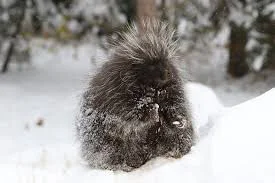
porcupine.jpg

River valley concern or question
If you have a river valley concern or question, contact us at nsrivervalley@gmail.com
Your friends and neighbours can sign up for this newsletter at https://www.edmontonrivervalley.org/
If you have a photo, information, news or event about Edmonton’s river valley and think it should be in this newsletter, email it to nsrivervalley@gmail.com

Sincerely yours,
Harvey Voogd
North Saskatchewan River Valley Conservation Society
nsrivervalley@gmail.com
https://www.edmontonrivervalley.org/
Facebook @NSRVCS
Instagram @nsrvcs

NSRVCS News - December 3, 2020

logo.jpg
camel.jpg

Camel humps nature reserve trail
This short walk provides a glimpse of one of the industries that existed in the early days of Cloverdale, the brickyard. If you go up the stairs to Strathearn Drive, you will be rewarded with a wonderful view of the river valley and city skyline.

In the 1880s settlers started businesses here because they had good access to the river for transportation, fishing and drinking water; the gold in the river gravels; the fertile soil for cultivation; the sand and clay for making bricks; the coal in the banks of the valley for fuel; and the trees for sawmills and lumberyards.

A sign at the entrance to the Camel Humps Nature Reserve reads: At the turn of the century our river valley was an ideal location for industry. Between 1907 and 1915 the Hardstone Brick Company made bricks at its site using sand from the riverbank. They piled the waste, mainly clay, into huge mounds.

Nature quickly took root in the organic waste and has reclaimed this industrial site as its own. Today, the tree-covered piles are locally known as the Camel Humps and are recognized as an environmentally sensitive area. To download a detailed PDF or a map, go to https://encf.org/walks/camel-humps-nature-reserve/

junco.jpg

This bird burrows through snow in search of seeds
Dark-eyed juncos play important ecosystem roles by helping with seed dispersal and controlling insect populations. They also bring great joy to birdwatchers as they are regarded as one of the most common feeder birds in Canada. You can attract juncos to your yard by feeding a seed blend containing millet and hulled sunflower seeds.

Juncos are ground feeders whose diet changes seasonally. During the breeding season insects make up the bulk of their diet. In the non-breeding season, they forage for seeds, insects, and arthropods. On an annual basis, a junco’s diet is made up of approximately three parts seeds to one-part insects.

You may not like these weeds in your yard, but the seeds of chickweed, ragweed, knotweed, pigweed, lamb’s quarters, and crabgrass are some of the main natural seed sources used by juncos. They are known to burrow through snow in search of seeds that have been covered over. Learn more at https://edmonton.wbu.com/botm-dark-eyed-juncos

rundle.jpg

Rundle park, where does the name come from
The history of missionaries as they relate to the development of post-contact Canada is long, complicated, and often very emotional, especially when it relates to Indigenous groups, cultures, and identities. When one evokes the name Rundle in Edmonton, most people tend to focus on Rundle Park along the North Saskatchewan River. But where does the name Rundle come from?

Rev. Robert Rundle was with the Wesleyan Methodist Missionary Society. Arriving at Fort Edmonton in the fall of 1840 at the age of 29, he had difficulty getting people to attend his Protestant services because many of the Métis and European labourers were Catholic. By 1845, he had learned enough Cree and Assiniboine to begin leading services in those languages instead of English.

His cause for leaving in 1848 was not due to a replacement, but an injury that required treatment in England. And while he could not have foreseen the work of his successors, Rundle was one of the first links in a chain that would lead to the establishment of the Indian Residential School System and its devastating legacy.

Rundle was a prolific letter writer and selected letters have been published as the Rundle Journals, which you can borrow from the Edmonton Public Library. Learn more at https://citymuseumedmonton.ca/2020/11/04/rev-robert-rundle-the-missionary-and-his-cat/

snowshoe.jpg

Snowshoeing good for exploring or exercise
Snowshoeing, a traditional mode of transportation for Indigenous people, remains one of the best and most practical ways to travel on deep snow. If the snowshoer is sufficiently bundled up in warm clothes, it is virtually fail-proof,

Evidence, existing as early as 4000 BC in Central Asia, shows the earliest form of snowshoes were basic slabs of wood which were strapped onto the feet. This basic invention travelled with early humans as they migrated elsewhere, with the idea developing into skis in Northern Europe and into snowshoes in North America.

Snowshoeing allowed for easier hunting and travelling and was used as a mode of transportation until the late 1800’s, when recreational snowshoeing clubs became popular. Today, it provides transportation for exploring, bird and wildlife viewing or exercise. Good snowshoeing locations at https://www.edmonton.ca/activities_parks_recreation/snowshoeing.aspx

bench.jpg

River valley concern or question
If you have a river valley concern or question, contact us at nsrivervalley@gmail.com
Your friends and neighbours can sign up for this newsletter at https://www.edmontonrivervalley.org/
If you have a photo, information, news or event about Edmonton’s river valley and think it should be in this newsletter, email it to nsrivervalley@gmail.com

Sincerely yours,
Harvey Voogd
North Saskatchewan River Valley Conservation Society
nsrivervalley@gmail.com
https://www.edmontonrivervalley.org/
Facebook @NSRVCS
Instagram @nsrvcs

NSRVCS News - November 26, 2020

logo.jpg
coyote.jpg

Citizen patrols will scare coyotes
Volunteers armed with tennis balls, sticks and cans filled with coins will be a kind of soldier in the conservation battle to keep Alberta's urban coyotes wild. A new program will see citizens trained to seek the animals out in Edmonton's residential areas and give them a good scare.

If the animals don't flee when approached, volunteers will throw balls, wave sticks and generally make a ruckus. It's a cruel-to-be-kind approach. The idea is to keep the canines fearful of humans, said biologist Colleen Cassady St. Clair.

Urban coyotes can become too bold, leading to unwanted interactions with people and pets. Similar scare tactics have been used on bears living in national parks and other protected areas for more than two decades, St. Clair said.

Volunteers will be canvassing for coyotes between January and May. Around eight volunteers will be needed in each neighbourhood and will be deployed in areas where emboldened coyotes have been recently spotted. Read more at https://www.cbc.ca/news/canada/edmonton/edmonton-urban-coyote-project-patrols-1.5810391

skating.jpg

Free skating begins in the river valley
The Victoria Park oval and iceway opened for public skating on November 21, the first of the city-run rinks to be ready to go this season. The oval and iceway are open every day from 10am to 10pm.

The Victoria Park iceway is a three-loop skating trail wrapping through the majestic forests of Victoria Park offering visitors a magical and enchanted winter experience in the heart of downtown Edmonton. Parking available in the Victoria Park main parking lot, Victoria Park east lot and at the Victoria Golf Course.

Rundle Park Iceway is currently not open due to maintenance. Learn which outdoor rinks are open and their current condition at http://coewebapps.edmonton.ca/facilitynotifications/default.aspx?args=6,109

cree.jpg

Sipiwiyiniwak, the river cree
Edmonton lies in Treaty 6 territory, a traditional gathering place, travelling route and home for many Indigenous Peoples. Treaty 6 was first signed in 1876 at Fort Carlton and Fort Pitt in Saskatchewan between the Nehiyawak/Cree, Dene Suliné, Nakota Sioux, and the Crown.

Later, many other Nations signed adhesions to the treaty to provide for their communities. Today Treaty 6 encompasses 17 First Nations. Treaty 6 recognition day is every August 23rd. It was initiated by The City of Edmonton to commemorate the signing of Treaty 6 at Fort Carlton on August 23rd, 1876.

Kisiskâciwanisîpiy is the Nehiyawewin (Cree) word for the North Saskatchewan River, it means swift flowing river. City Ward 7 has been given the Enoch Cree name sipiwiyiniwak in honour of the people of the Enoch Cree Nation being River Cree.

In the past they were known as River Cree by other tribes. The Nation’s River Cree Resort and Casino name reflects this history. More information on natural areas in amiskwaciy-wâskahikan, the Cree word for Edmonton, at https://www.ealt.ca/indigenous-connections-blog-list/amiskwaciy-wskahikan-edmonton-history

concern.jpg

River valley concern or question
If you have a river valley concern or question, contact us at nsrivervalley@gmail.com
Your friends and neighbours can sign up for this newsletter at https://www.edmontonrivervalley.org/
If you have a photo, information, news or event about Edmonton’s river valley and think it should be in this newsletter, email it to nsrivervalley@gmail.com

Sincerely yours,
Harvey Voogd
North Saskatchewan River Valley Conservation Society
nsrivervalley@gmail.com
https://www.edmontonrivervalley.org/
Facebook @NSRVCS
Instagram @nsrvcs