NSRVCS Newsletter - June 10, 2021

logo.jpg
preservation.jpg

Council’s Urban Planning Committee has approved a motion to look at possible tools to protect and encourage tree preservation on private property. An Administration report in response to this motion is due in Spring 2022.

The motion arose out of a recent discussion on a bylaw to protect and preserve trees on public property. Public trees which are referred to as the city’s urban forest consist of 380,000 boulevard and open space trees and 3,000 hectares of natural stands. Mature trees make up 15 percent of the total inventory for boulevard and open space trees, excluding natural stands.

The proposed bylaw for public tree preservation and protection was referred to Administration to complete engagement with stakeholders regarding permit review, site inspection capacity, managing the permitting program and other related concerns. It is due back at the committee on August 24. Information at https://www.edmonton.ca/residential_neighbourhoods/gardens_lawns_trees/trees-urban-forestry.aspx
river.jpg

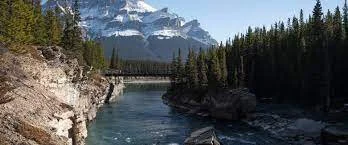
Granting a river rights could help protect it
On April 19, Edmonton endorsed an initiative for the complete length of the North Saskatchewan River in Alberta to be designated as part of the Canadian Heritage River System. The system is a joint provincial, territorial, and federal program that aims to promote and conserve rivers with cultural and environmental value.

Though the designation may impact decision making when it comes to policies that affect the river, it does not come with concrete regulations or legislation. But what if the river had the legal rights of a person and a corporation?

In February, the Innu Council of Ekuanitshit and the Minganie Regional County Municipality declared the 300km Muteshekau Shipu or Magpie River in Quebec a legal person, a move that may provide greater certainty for this majestic river’s future.

While a first in Canada, granting legal personhood to natural entities is part of a global movement to recognize the rights of nature in law. Indigenous communities around the world are leading the way in upholding the rights of sacred and ancestral rivers, forests, and mountains. Learn more at https://theconversation.com/rights-for-nature-how-granting-a-river-personhood-could-help-protect-it-157117

influence.jpg

Influence council decisions and help make your city better
The Edmonton Insight Community is an inclusive and accessible online citizen panel made up of diverse Edmontonians who provide feedback on City policies, initiatives, and issues. It is open to anyone over the age of 15 who is an Edmonton resident or owns property in Edmonton.

Members complete surveys and participate in discussion forums on a wide range of topics at least twice a month. The Insight Community is a quick and easy way to influence City council decisions and help make your city better.

You have valuable knowledge about your community and a unique perspective that can help make our city better. By joining the Edmonton Insight Community, you can share this knowledge quickly and easily from your phone, tablet, or computer directly with the people who can make your ideas happen.

More information and how to join this online citizen panel at https://www.edmonton.ca/programs_services/public_engagement/edmonton-insight-community.aspx

valley.jpg

River valley concern or contribution
If you have a river valley concern or question, contact us at nsrivervalley@gmail.com
Your friends and neighbours can sign up for this newsletter on our web site.
If you have a photo, information, or event about Edmonton’s river valley and think it should be in this newsletter, email it to us.

Sincerely yours,
Harvey Voogd
North Saskatchewan River Valley Conservation Society
780.691.1712

NSRVCS Newsletter - June 4, 2021

logo.jpg
coyotes.jpg

Coyotes swarm dog walker in central Edmonton park
Stephanie MacIntyre and her dog Luna were out for a routine walk in the Forest Heights neighbourhood when she says they were suddenly surrounded by a snarling pack of coyotes around 9:30 pm.

MacIntyre said she channeled her past experiences in mosh pits at metal concerts and reacted aggressively, instead of being scared. “I put on a heavy metal yell, and I started growling back at them. As they were coming at me, I was charging at them, until they finally started to skedaddle. Then we got outta there.”

MacIntyre said neither her, nor Luna, a border collie-sized dog, were hurt. But they were shaken up. Professor Colleen Cassady St. Clair says this is the worst time of year for encounters with coyotes.

“It’s pup-rearing season for coyotes and that’s when they are maximally defensive of the whole area around their den site. Dogs definitely attract coyotes as potential threats to their pups,” she said. See more at https://globalnews.ca/news/7911817/edmonton-park-dog-coyotes/

fly.jpg

BiodiverCity Challenge Edmonton is June 10-13
Participate in the Edmonton region’s annual photo BioBlitz. A bioblitz is a communal citizen-science effort to record as many species within a designated location and time as possible.

Between June 10–13, join our region’s naturalists, species experts, and environmental groups in documenting as many species as you can! Simply upload your photos of birds, plants, mammals, moss, lichen, mushrooms, and insects to iNaturalist or NatureLynx. Your contributions will be used to help understand more about the species that call our region home.

Inspired by the City Nature Challenge, a global urban biodiversity contest, where cities compete against one another to monitor biodiversity within their cities, the Edmonton BiodiverCity Challenge invites residents from Leduc to St. Albert to take part in a photo BioBlitz using iNaturalist or NatureLynx, a citizen science app brought to you by the Alberta Biodiversity Monitoring Institute.

The first-ever Edmonton BiodiverCity Challenge in 2020 had 150 participants, who shared 2,608 biodiversity sightings of 466 species. More information at https://biodivercity.ca/

hawrelak.jpg

How did Hawrelak and Fort Edmonton become parks
In 1912, the area that is now Hawrelak Park was named Windsor Terrace and was slated for development as a residential subdivision with 500 small lots. The city obtained title to the land in 1922 after the Strathcona Land Syndicate forfeited on their taxes. The land lay unused until after the Second World War when Edmonton began a gravel extraction and crushing operation on the flats where the lower lake is today.

After a 1954 proposal, it was Mayor William Hawrelak who first started raising money for a 350 acres riverside park in the area. Originally called Mayfair Park, construction of the man-made lakes began in 1959; they were opened in 1964 with minimal amenities available. The official opening of Mayfair Park was on Canada’s centennial, Canada Day 1967. The design of Mayfair won the Vincent Massey award for park planning in 1973.

In 1912 the Women’s Canadian Club proposed to the province that they preserve and restore Fort Edmonton and maintain it as a museum. The Fort was still standing, as it had since 1830, in its final location on south side of the Provincial Legislature Building which had been under construction for five years by then. The plea by the Women’s Canadian Club was unsuccessful and the Fort was torn down in 1915.

For the next fifty years, various groups of citizens advocated for the resurrection of the Fort in part or in whole. Finally, in 1966, the Edmonton Journal reported that City Council “approved development of a historical park project on a site of not less than 100 acres.”

Along with other preparations for Fort Edmonton Park, the city wheeled Peter Erasmus’ house from Pakan, Alberta; and transplanted the MacDonald Residence, “the only remaining dwelling of six first built outside the original Fort Edmonton”. Fort Edmonton Park opened on October 14, 1970. More at https://www.edmontonsarchitecturalheritage.ca/index.cfm/neighbourhoods/river-valley-west-central/

owl.jpg

Biodiversity and climate change impact on Edmonton
Alberta’s climate is changing, and Alberta’s biodiversity is changing right along with it. By the end of this century, the average temperature of our province will likely increase at least 2C. People living in Edmonton will experience temperatures that are currently experienced by Calgarians 300 km to the south.

We can already observe some impacts on our landscape due to climate change: The timing of plant flowering, has shifted in response to warmer spring temperatures so we now see the first spring blooms of wildflowers like the Prairie Crocus up to two weeks earlier than previously expected.

One of the largest changes we may see is a reduction in the size of the boreal forest in the north as it slowly succumbs to disturbances like fire and is replaced by species more commonly found in parkland ecosystems further south. White Spruce forests will likely transition to Trembling Aspen forests as climate warms. Learn more at https://www.abmi.ca/home/biodiversity/biodiversity-climate-change.html

Photo by Lewis Cardinal and taken at kihciy askiy (Sacred Earth) cultural grounds near the Whitemud Park trailhead.

Photo by Lewis Cardinal and taken at kihciy askiy (Sacred Earth) cultural grounds near the Whitemud Park trailhead.

River valley concern or contribution
If you have a river valley concern or question, contact us at nsrivervalley@gmail.com
Your friends and neighbours can sign up for this newsletter on our web site.
If you have a photo, information, or event about Edmonton’s river valley and think it should be in this newsletter, email it to us.

Sincerely yours,
Harvey Voogd
North Saskatchewan River Valley Conservation Society
780.691.1712

NSRCVS Newsletter - May 27, 2021

logo.jpg
butterfly.jpg

Mourning Cloak the longest living butterfly
This butterfly is found across Canada and can be found in several habitats, including Edmonton’s river valley. The average adult life span is a remarkable 10 months, but they can live as long as a full year.

While Mourning Cloak butterflies do forage on flowers for nectar, they generally prefer tree sap, such as maple, poplar, oak, and birch. They are a species of butterfly that ‘mudpuddles’, which means they get minerals from damp sand, manure, compost as well as rotting fruit and other moist organic matter.

Always the first butterfly of spring, they overwinter as adults in tree crevices, log piles and other sheltered places and emerge in early spring. Mourning Cloaks are cold-blooded, like all insects they cannot make their own internal heat and need to warm up before they can move quickly or even fly.

To generate heat, these butterflies vibrate their wing muscles so they can safely leave their winter roost, avoid predators, find food and mate. They have been seen as late as November in certain parts of Canada, although October is more common. More info at https://cwf-fcf.org/en/resources/encyclopedias/fauna/insects/mourning-cloak-butterfly.html

guide.jpg

North Saskatchewan River Guide
This free river guide emphasizes and reinforces the long and noble relationship that humans have with the North Saskatchewan River. It is designed to remind us of its significant cultural, historical, recreational, and environmental value.

The guide provides a river map from the beginning of the North Saskatchewan to where it joins the South Saskatchewan at Saskatchewan River Forks, east of Prince Albert. 1:50,000 scale maps were used to create the maps in this guide and care has been taken to ensure accuracy.

Sprinkled in descriptions of each reach of the river are bird, plant, animal and fish facts as well eco-tips, history about that area, and river adventure tips about camping, rapids classes and canoeing. Download the 87-page PFD at https://www.nswa.ab.ca/wp-content/uploads/2018/12/North-Saskatchewan-River-Guide.pdf

junco.jpg

Juncos frequent visitor to bird feeders
Partners in Flight estimates the North American population of Dark-eyed Juncos at approximately 260 million, second only to the American Robin in overall population size in North America.

According to Project Feeder Watch, juncos are sighted at more feeding areas across North America than any other bird. Over 80% of those responding report juncos at their feeders. Juncos are known to burrow through snow in search of seeds that have been covered over.

On an annual basis, a junco’s diet is made up of approximately three parts seeds to one-part insects. During the nesting period, the percent of insects can increase up to 50-60% of their diet. You may not like these weeds in your yard, but the seeds of chickweed, ragweed, knotweed, pigweed, lamb’s quarters, and crabgrass are some of the main natural seed sources used by juncos.

Juncos typically have two broods per year with the female building her nest on or near the ground and laying three to five eggs. The male does not incubate the eggs but does deliver food to the young and helps the female to defend against predators. The young leave the nest in 9-12 days. Learn more at https://edmonton.wbu.com/botm-dark-eyed-juncos

bunny.jpg

River valley concern or contribution
If you have a river valley concern or question, contact us at nsrivervalley@gmail.com
Your friends and neighbours can sign up for this newsletter on our web site.
If you have a photo, information, or event about Edmonton’s river valley and think it should be in this newsletter, email it to us.

Sincerely yours,
Harvey Voogd
North Saskatchewan River Valley Conservation Society
780.691.1712