River Valley News - May 25, 2023

City announces new 190 acre River Valley Park in NE Edmonton   

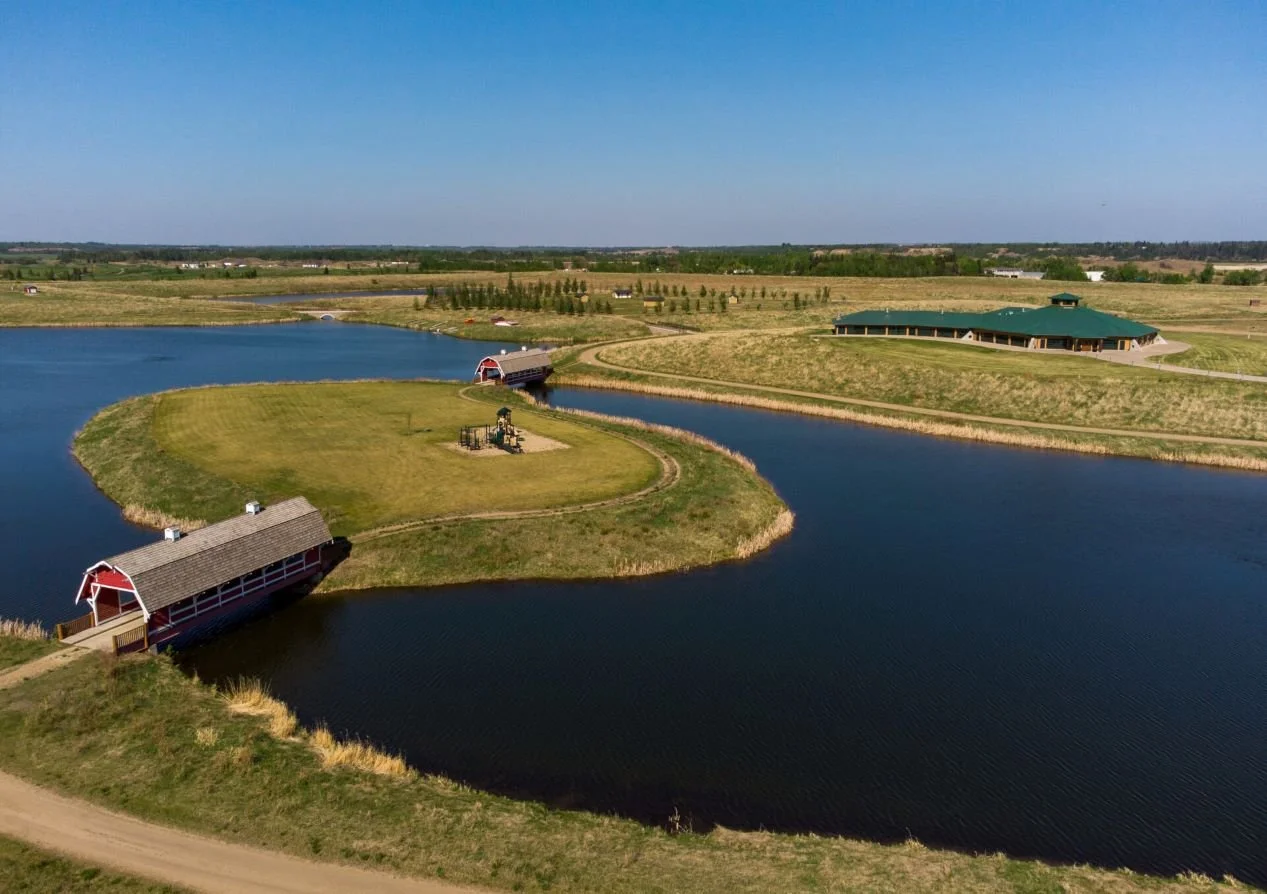
The city's River Valley park system expands this summer with the addition of a new public park in Northeast Edmonton. Nestled along the North Saskatchewan River, these 190 acres of developed parkland connects with popular River Valley trails and includes unique features such as charming barn bridges, an ornamental lake, a large events centre for gatherings and weddings, trail connections, children’s playground and public washrooms.

“Edmontonians have told us loud and clear that they want to expand River Valley access to enjoy more opportunities to connect with friends, family and the natural world around them,” said Mayor Amarjeet Sohi. “I hope this new park will serve as an important gathering place for generations of residents as our city continues to grow.”   

The picturesque park, previously known as Our Lady Queen of Peace Ranch North, is located at 17 Street NE and 153 Avenue NE, and its acquisition comes at a time when the City of Edmonton is investing in the wellbeing of Edmontonians, providing opportunities for quality outdoor recreation experiences and expanding the Ribbon of Green network for biodiversity and ecological integrity. 

While the City acquired the park on May 15, it will not open to the public until late Summer 2023 because staff need to perform proper inspections, maintenance work and prepare the facilities and grounds for public use.

https://www.edmonton.ca/activities_parks_recreation/parks_rivervalley/northeast-river-valley-park

How much is a city owned tree worth

City-owned trees are valued down to the last cent, as illustrated on the bright yellow Tree Protection Zone signs along stretches of Stony Plain Road closed during LRT construction. Fenced-off trees stand on both sides of the arterial road and even along some side streets.

The American elms have among the highest price tags. One near 132nd Street and 104th Avenue is valued at $24,793.35. Three others are valued between $14,000 and $21,000. One nearby ash is tagged at $4,520.08, another at $2,702.26. A scraggly spruce is $2,288.06.

The City values trees using the Guide for Plant Appraisal, published by the International Society of Arboriculture. The formula considers size, condition and growing limitation. It posts the value “to demonstrate to both the public and anyone working around the tree that trees are valuable assets.”

A November 2022 City blog post says: “The project agreement for the Valley Line West states that a fence goes up around a tree designated as protected or preserved if it is within 20 metres of construction.” It adds that 300 trees on City property are being removed in the “current phase of tree removal” on the Valley Line West LRT route along Stony Plain Road/104 Avenue between 121st Street and 139th Street. https://urbanaffairs.ca/edmonton-ish/heres-why-the-city-is-placing-pricetags-on-trees/


Wildlife friendly things to do around your home

Windows, buckets and vents are part of the human landscape, but they can pose significant hazards to wildlife. Collisions with windows kill an estimated one billion birds each year worldwide.

During the day, birds see through windows, not realizing there is an obstruction, or they may see the reflections of trees or the sky and think that there is nothing in their way. Place bird feeders and baths within one metre from a window. Place decals on large windows. Some stores sell subtle decals that reflect ultraviolet light, which is visible to birds but not to humans.

Fledglings, baby hares, and even frogs can get trapped in window wells, rain barrels, and buckets. Install covers or screens on your window wells and rain barrels. Store buckets upside down so they do not fill with rainwater or place a stick inside a bucket of water so wildlife has a way to climb out.

Private residences and buildings have a variety of vents. Improperly covered dryer or stove vents are a popular spot for sparrows to nest. The sparrows collect nesting materials to line their nest and this can create a fire hazard in your vent. https://www.ealt.ca/safe-habitats-for-wildlife

Mountain Bluebird usually spotted because of the male’s sky-blue colour

Lise writes “What a delight to read about Mountain Bluebirds in the newsletter. I am a member of the Calgary Area Nest-box Monitors’ Society which was formed over 40 years ago, to provide cavity nesting spots for these beautiful birds. Today, about 100 members monitor 5,000 boxes, covering 2,000 km in ranges of favourable habitat, from the foothills of the Rockies west of Calgary, and east of Didsbury and Olds.

About one-third of members band birds, and all members monitor the birds’ activities, from nesting attempts to numbers of eggs, hatchlings, and fledglings. In 2022, our bluebirds showed a remarkable success rate: 5,836 birds.

The Abduction of Liberty by Ryan McCourt, Belgravia Art Park. DCM Photography. https://www.edmontonpublicart.ca/#!/details/104

Comment or contribution

Please note that articles may not reflect the position of NSRVCS. River Valley News is meant to be a clearinghouse for the wide variety of opinions and ideas about Edmonton’s River Valley. Email river valley photos, event information, comments, or questions to nsrivervalley@gmail.com

Sincerely yours,

Harvey Voogd

North Saskatchewan River Valley Conservation Society

780.691.1712

River Valley News - May 18, 2023

Amisko Wacîw Mêskanaw is North America's longest river valley trail

The Amisko Wacîw Mêskanaw, or Beaver Hill Road, winds for more than 100 kilometres, crossing 8,000 hectares of parkland and connecting six municipalities along the North Saskatchewan River. It pays tribute to the historic Cree name for the trail, which was a significant corridor for trade and a gathering ground and ceremonial place for Indigenous communities throughout the region.

Linking Parkland County, Edmonton, Strathcona County, Fort Saskatchewan and Sturgeon County, the trail runs through Treaty 6 territory and the Métis Nation of Alberta Region 4. The trail project has been in the works since the early 1990s, driven by the River Valley Alliance.

Markers bearing the name will be placed every 50 kilometres, and a trail symbol designed by Dene/Métis Artist Matthew Weigel will be added to existing infrastructure to help with wayfinding.

https://edmonton.ctvnews.ca/honouring-the-beaver-new-name-unveiled-for-100km-trail-through-edmonton-river-valley-1.6395450

Mountain Bluebird usually spotted because of the male’s sky-blue colour

Part of the thrush family, Mountain Bluebirds are smaller than an American Robin, but larger than a sparrow. They nest in natural cavities, on buildings, and in nest boxes. Nests are constructed from dry grass, stems, or pine needles, then lined with finer plant material, and can take more than a week to complete.

Typically, 4-8 eggs are laid and females will produce 1-2 clutches per year. They feed their young grasshoppers, beetles, and caterpillars. Mountain Bluebirds are adept at catching insects mid-air and will hunt for food on the ground, sometimes pouncing on prey.

When nesting season is over, Mountain Bluebirds will form flocks, eventually migrating south, with their southerly wintering grounds dipping into central Mexico. Specifications for building a Mountain Bluebird nest box can be found at https://bluebirdtrails.org/nest-box-building

Sound reflects the biodiversity and complexity of an ecosystem

There is a growing movement of people dedicated to protecting quiet places, not just for the sake of human well-being, but also because the loss of quiet spaces can have significant impacts on biodiversity and ecosystem health.

Many people are familiar with dark sky preserves, which provide some of the best stargazing experiences in the world. But instead of combating light pollution, Quiet Parks International tackles the problem of noise. The goal is not to make spaces quieter, it is to protect areas that are already quiet.

Sound is an indicator for the overall health of an ecosystem, according to Matt Mikkelsen. “Why does sound matter? It’s a really good indicator for the overall health of an environment. So when you have a healthy soundscape … that also means that other parts of that ecosystem are probably also functioning pretty well.” 

Discoveries in the field include reduced reproductive success in eastern bluebirds nesting near noisy natural gas compressors and an increased heart rate in monarch butterfly caterpillars when exposed to highway noise.

https://thenarwhal.ca/protecting-quiet-spaces-natural-sounds/

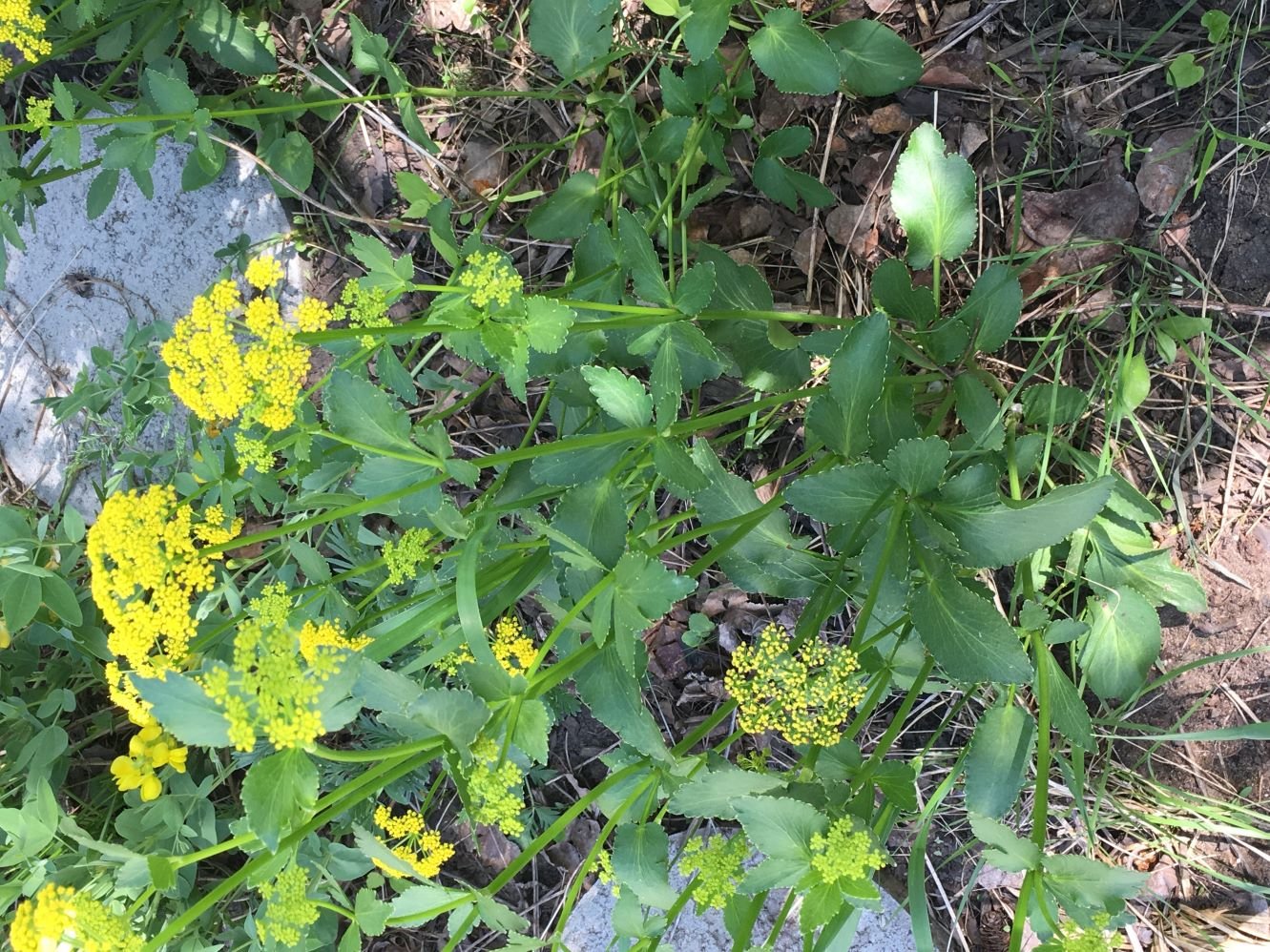
Zizia aptera is a member of the carrot family

Zizia aptera is a flowering plant native to North America. Its common names include meadow zizia, golden alexanders, heart leaved golden alexanders, and prairie golden alexanders. It is an attractive mid-sized plant with glossy green foliage and golden-yellow flat-topped flowers.

These plants provide nectar and pollen as food for many insects active in the spring such as bees, flies, beetles, and other beneficial insects. Use to brighten a lightly shaded woodland corner or a sunny perennial bed.

Both the flowers and stalk are edible and the flowers can be prepared like broccoli. It has been used medicinally by both First Nations people and in western herbal medicine. Golden Alexander or zizia was used for headaches, fever, hysteria, epilepsy, chorea, leucorrhea, backaches and increasing sexual drive in men. https://www.edmontonnativeplantsociety.ca/wfindex/zizia-aptera

Map highlights historic, old, unique and rare YEG trees

Sherry writes “NAIT capstone students working with Shrubscriber and the Alberta Tree Register created a database of unique trees within the province. The developed map alongside the database allows users to view the existing trees and add new trees. Please check it out at https://albertatreeregister.github.io/Map/

The Convergence by Tony Bloom, Victoria Promenade https://www.edmontonpublicart.ca/#!/details/76

Comment or contribution

Please note that articles may not reflect the position of NSRVCS. River Valley News is meant to be a clearinghouse for the wide variety of opinions and ideas about Edmonton’s River Valley. Email river valley photos, event information, comments, or questions to nsrivervalley@gmail.com

Sincerely yours,

Harvey Voogd

North Saskatchewan River Valley Conservation Society

780.691.1712

River Valley News - May 11, 2023

Map highlights historic, old, unique and rare YEG trees

The Historic Trees of Edmonton map, originally created by Josh Kirsch, highlights historic, old, unique and rare trees in Edmonton and surrounding areas. Dustin Bajer contributed lots of the trees that are included.

You can find trees under a wide variety of headings including Edmonton’s Widest Trees, Largest of Different Tree Species, and Heritage tree nominations. Oldest Grade 1 Tree, in Edmonton’s Favourite Tree’s category, is a White Spruce at 10741-75 Avenue NW, planted in 1952 and nominated by Allan Williams.

A 23.65 foot wide tree, at 11127-72 Ave NW, in the Parkallen neighbourhood, has been nominated as the widest tree in Edmonton. Nominated by Kelly Kowalchuk, it is believed to be 100+ years old. More at https://www.google.com/maps/d/u/0/viewer?mid=19R_1iainW3ZsrcfqrA5sxS--R4nNFt3j&ll=53.55980764757472%2C-113.45179214649374&z=14&fbclid=IwAR1ow8UVCz4A3pwXWuY2P-klhQPUTa_pxBBXtLsbnIni37qqTmeLPyMSR7c

How do birds know when to migrate

Marg Reine photo

Lengthening days set off a cascade of events in migratory birds that culminates in the birth of a clutch of chicks. To time this arrival for the highest likelihood of conditions favorable to reproducing, a migratory bird tracks each day’s light length, or photoperiod.

That tracking happens instinctively in the animals, which use special photoreceptors in their brain to detect light. Once those photoreceptors register that the days are lengthening in late winter and early spring, they trigger activity in a host of body systems.

Birds molt, for instance, shedding their worn feathers and growing new ones. Their hormones change, influencing their digestive patterns and leading them to eat more, put on weight and build up flight muscle. In some birds, once they’ve eaten enough, a digestive hormone called ghrelin begins to make them restless and nudges them to take flight. And the birds’ reproductive tracts begin to change to ensure that they will be fertile by the time they breed.

When all the pieces fall into place, birds are well prepared to raise their chicks while making the most of the long days and the seasonal boom in bugs, berries and other resources their summer homes offer.

https://www.scientificamerican.com/article/how-do-birds-know-when-to-migrate/

Spruce tips harvesting, cooking and recipes

Spruce tips, the young growth on branches of spruce trees, are not an herb in the typical sense, but they are for all intents and purposes. No species of spruce is poisonous though, so what you can do is just go around to different trees and taste them until you find one that tastes good.

 Like with many foraged foods, you need to be careful with how you treat the trees. Always pick from mature trees as young trees need time to grow. Never pick more than 20% of the tips from a single tree. Do not pick tips from the apical meristem or top of a young tree, which would stunt its growth.

Cooking with spruce tips is misleading since using heat makes them lose their vibrant color. Think of them as an herb you would use raw. Add them raw to salads or sprinkle over vegetable dishes. Spruce tips in desserts will typically be pureed or in an infusion, and always strained if possible since leftover particles can get bitter.

The strong taste of spruce tips should be a deterrent from eating multiple handfuls, but it is possible for some people to get an upset stomach from eating them, which could be due to the fact that spruce tips are naturally high in Vitamin C. https://foragerchef.com/spruce-tips/

Frederick Todd envisioned YEG with a ribbon of green as its heart

Adriana writes “I applaud the item on landscape architect Frederick Todd. As co-artist in residence at Yorath House with Marlena Wyman in early 2022, I did an extensive article on Edmonton’s “Beautiful Views: Edmonton’s Westerly Park,” which you might want to inform your readers about. Here is the link: https://yegarts.tumblr.com/post/677459133706928128/yorath-house-artist-residency-blog-post?fbclid=IwAR2hRQluj9hK3-Lsc9jxAoNvi96WMoBgdn9pUe0UrRymnBA7sDB-ZHygyZg

I not only deal with Todd’s report to the City in which he brought to bear “garden city” principles, I also talk about the history of Laurier Park and the development of the early parks department. I think that this is still relevant today as threats to the River Valley continue.”

The Dancer by Bella Totino-Busby & Verne Busby, Yorath House, Buena Vista Park. https://www.edmontonpublicart.ca/#!/details/297

Comment or contribution

Please note that articles may not reflect the position of NSRVCS. River Valley News is meant to be a clearinghouse for the wide variety of opinions and ideas about Edmonton’s River Valley. Email river valley photos, event information, comments, or questions to nsrivervalley@gmail.com

Sincerely yours,

Harvey Voogd

North Saskatchewan River Valley Conservation Society

780.691.1712