River Valley News - June 15, 2023

Wildlife passages reconnect natural ecosystems fragmented by urban development

Kurt Bauschardt photo

In Edmonton, the integration of wildlife passages, which allow land, aerial and aquatic animals to move safely through their habitat, reconnected dozens of natural ecosystems fragmented by urban development. It also reduced collisions involving vehicles and animals by more than 50 per cent between 2006 and 2015, according to the city.

Grant Pearsell, a former City of Edmonton executive who led the creation of the city’s ecological planning system, recalls one of the key challenges of designing these wildlife passages: Getting everyone on the same page. “What we found when we started the project was that ecologists and engineers didn’t speak the same language,” he recalls. “So, talks would break down.”

The solution: Create a tool that provides the specifications engineers need such as the dimensions, components and locations of a passage, based on the size, movement and habitat preferences of the various creatures in the city.

Working with animal behaviour experts at the University of Alberta, the city developed engineering guidelines that, among other things, organized the city’s animals into design groups, moose and deer, for example, are in the large terrestrial group while grey partridge and sharp-tailed grouse are in the ground-dwelling birds group.

Examples of recommendations in the guidelines include gently sloping underpass sidewalls for moose or deer, which could confuse straight walls for ledges where predators can hide. For amphibians like frogs, steel structures which conduct heat, trapping cold in the winter should be avoided because amphibians won’t use a passage if it’s too cold. https://www.theglobeandmail.com/business/article-green-space-and-wildlife-passages-preserve-urban-ecosystems-and/

Horses can sleep standing up but must lay down daily to get REM sleep

Horses slumber while standing to balance their need for sleep against the ever-looming threat of predators. They are big animals, and it takes time and energy for them to get off the ground. A standing horse is therefore much better able to run away when roused from sleep.

Horses have specialized anatomical features known as a stay apparatus that enable them to stay on their hooves while catching some z's. When a horse relaxes its leg muscles, the stay apparatus ligaments and tendons act as tension bands that stabilize the shoulder, knee and ankle joints in the legs. This enables the horse to remain standing without having to maintain much tension in their muscles.

Adult horses can get by on as little as 5 hours of sleep per day, and most of it while standing up. But an adequately rested horse requires at least 25 minutes of REM sleep per day, which can only happen while lying down. Because of this, horses must lie down every day.

Horses need to feel comfortable and safe before they are willing to lie down and sleep. In feral horse populations, if multiple horses lie down to get REM sleep at the same time, there will always be at least one horse that remains standing, likely to watch for potential predators. https://www.livescience.com/animals/land-mammals/why-do-horses-sleep-standing-up

Indigenous voices lacking in Edmonton’s Hawrelak Park project

In an opinion piece, Kristine Kowalchuk says as Indigenous History Month begins, it is worth reflecting on Council committee meetings on both the City of Edmonton’s Indigenous Framework annual report and the lessons learned in the Hawrelak Park project.

As far as we know, Hawrelak Park has never been the subject of Indigenous consultation. The current rehabilitation project was a major opportunity to correct a historic mistake. Yet this has not happened. When Edmonton River Valley Conservation Coalition and members of the Indigenous community raised concerns about the lack of Indigenous consultation for this project, we heard many excuses.

Consider what the $134-million budget for Hawrelak Park could do if it were redirected instead to Indigenous-led systems in our city, including river valley stewardship. This change would be transformational. We encourage city council to seriously reflect on the need for decolonial decision-making on all issues to end the colonial violence that continues in the river valley and city streets today.

We urge them to halt the Hawrelak Park project as a first act of ensuring that city land-use decisions align with the Indigenous Framework and begin again with meaningful consultation. https://edmontonjournal.com/opinion/columnists/opinion-indigenous-voices-lacking-in-edmontons-hawrelak-park-project

1913 Magrath Mansion in Highlands declared an historic resource

Completed in 1913, the mansion was owned by William and Ada Magrath. William and his partner, Bidwell Holgate, formed the Magrath-Holgate Company to buy land in Highlands to build a suburb catering to Edmonton’s entrepreneurs and professionals. Ada Boulevard running in front of the mansion was named for Mrs. Magrath.

They hired architect Ernest Morehouse to design their stately mansion and the other high-end houses to be build in the new development. Morehouse designed 13 neighbourhood buildings between 1912-1915, including the Gibbard Block and the Highlands Methodist (now United) Church. Edmonton’s economy plunged into a recession in 1913 with only 50 of the 550 lots in the area having been developed.

William Magrath died in 1920 and the mansion was seized by the City in 1931 for unpaid taxes. The mansion’s classical revival style of architecture is shown in the side central staircase and the two-storey colonnade supported by classical columns. The grandeur of the mansion was intended to convey the vision the Magraths had for Highlands.

Concordia University of Edmonton, Alberta’s second oldest post-secondary institution, now owns the Magrath mansion. It is currently used for educational activities and donor, community, alumni and fundraising events, with all proceeds going toward student support. https://www.historicplaces.ca/en/rep-reg/place-lieu.aspx?id=6768

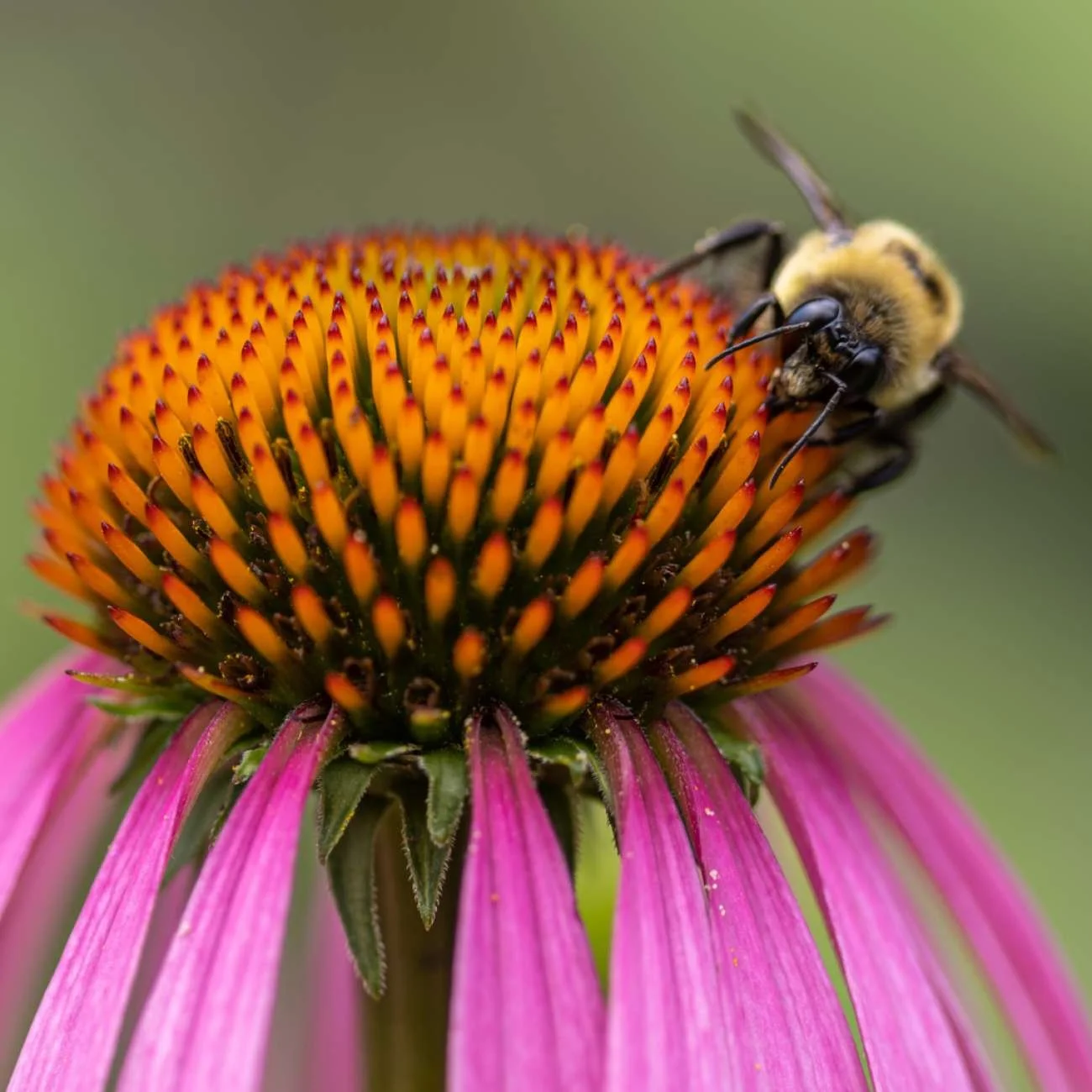
Pollinator week celebrates bees, birds, butterflies and other pollinators

Rod writes “Thanks for the informative article about Pollinator Week, June 19-25. Note that mosquitos are pollinators as well, including for some orchid species and some smaller flower species in wetlands. Credit where credit is due! https://www.fs.usda.gov/wildflowers/pollinators/pollinator-of-the-month/aedes_communis.shtml#:~:text=In%201913%2C%20it%20was%20first,that%20live%20in%20wetter%20environments

Pehonan by Tiffany Shaw-Collinge, INIW River Lot 11. Connor McNally still.

https://www.edmontonpublicart.ca/#!/details/186

Comment or contribution

Please note that articles may not reflect the position of NSRVCS. River Valley News is meant to be a clearinghouse for the wide variety of opinions and ideas about Edmonton’s River Valley. Email river valley photos, event information, comments, or questions to nsrivervalley@gmail.com

Sincerely yours,

Harvey Voogd

North Saskatchewan River Valley Conservation Society

780.691.1712

River Valley News - June 8, 2023

Alberta Biodiversity Challenge is June 8-11

Biodiversity provides the building blocks of nature itself. Every organism plays an important role in their habitat, with each species contributing to create the unique ecosystems we have around us. The more native plants and animals in an area, the healthier the ecosystem becomes which is both beneficial for humans and for the climate.

Most recently referred to as nature-based solutions, humans are increasingly using nature and its biodiversity as an effective mitigation and adaptation strategy to address the impacts of our changing climate. The first step to maintaining local biodiversity is understanding it and as a Citizen Scientist you can help!

The Biodiversity Challenge invites Albertans to take part in a photo BioBlitz, between June 8-11, using the iNaturalist citizen science app. Take photos of native biodiversity for example, the flora and fauna you find in nature - not your flower beds, cats, or dogs and upload your sightings to iNaturalist by June 18.

Sounds too daunting but still want to get involved. June 10-11 visit the Edmonton Valley Zoo June where educators will help walk you through the process as well as other family fun activities to help educate about Edmonton’s wild and local biodiversity. https://changeforclimate.ca/story/celebrating-the-role-of-biodiversity

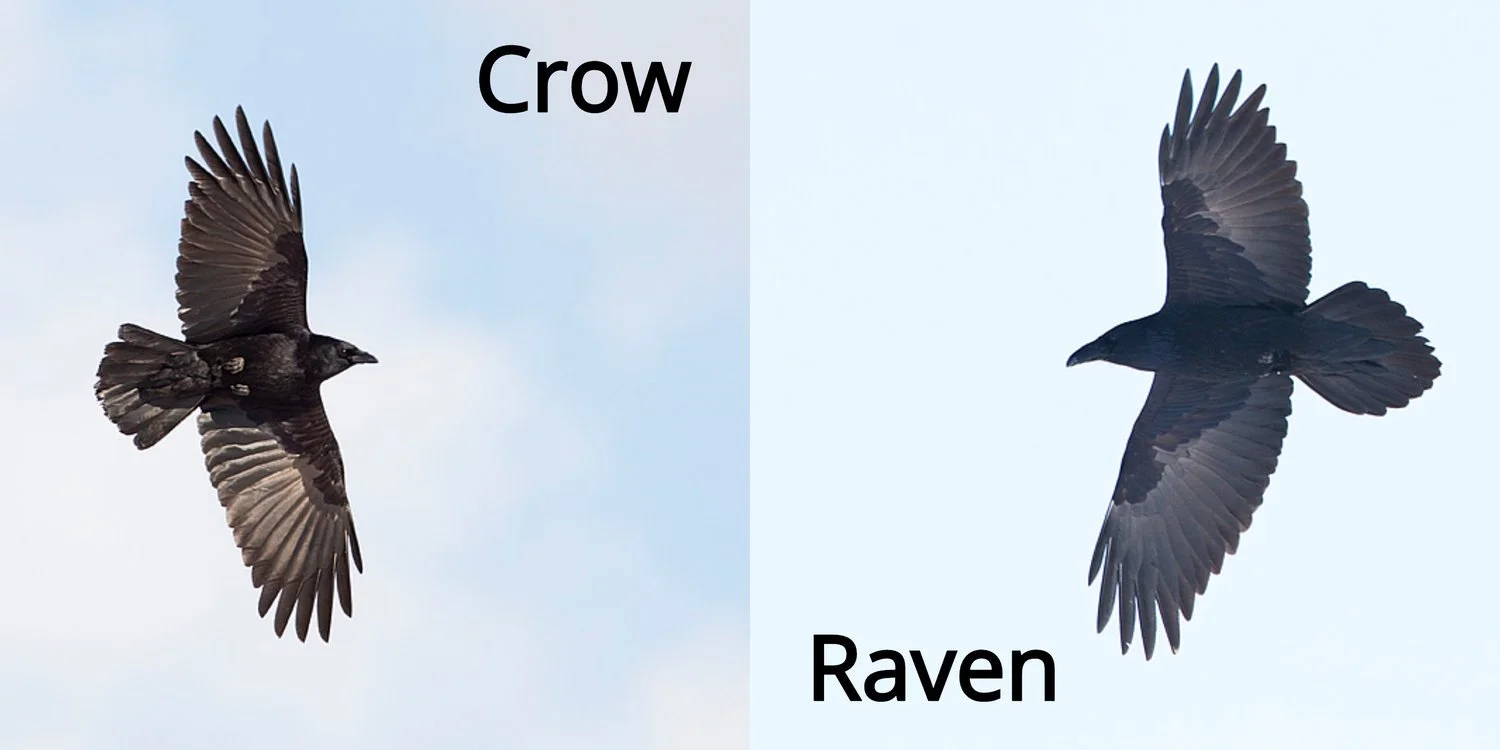
How to spot the difference between crows and ravens

Gerald Romanchuk photo

Ravens and crows are large black birds, both part of the Corvidae family. They have many similarities, so how can you tell these two birds apart? 

The shape of their tail feathers is one indication. Crows have more rounded tails, while ravens have a more pointed tail. You can remember that by thinking that the crow has a C-shaped tail and C is for crow. Ravens have a V-shaped tail and there is a letter V in the word raven. Little memory tricks like these are helpful for remembering details about birds and other wildlife.

Ravens are generally larger than crows and have much larger and more curved beaks. Another way to tell the two apart without seeing them up close is by their sounds. The crow makes a caw sound, whereas the raven makes a deeper croaking sound.

In addition, ravens tend to move in pairs, whereas their crow counterparts travel in large flocks called murders, sometimes numbering into the thousands. Furthermore, ravens tend to glide more, whereas crows flap their wings a lot more when flying around. https://www.ealt.ca/blog/fun-facts-raven-or-crow

Pollinator week celebrates bees, birds, butterflies and other pollinators

Pollinator Week Canada, June 19-25, is an annual event in support of pollinator health. It is a time to celebrate pollinators and spread the word about what we can do to protect them. The week has grown into an international celebration, promoting the valuable ecosystem services provided by bees, birds, butterflies, bats, beetles, moths, wasps, and flies.

Between 75 to 95% of flowering plants on earth need help with pollination. Pollinators provide pollination services to over 180,000 different plant species and more than 1200 crops. That means that 1 out of every three bites of food you eat is there because of pollinators. In addition to the food that we eat, pollinators support healthy ecosystems that clean the air, stabilize soils, protect from severe weather, and support other wildlife.

This year the emphasis is on the connections between climate and pollinators. Pollinators are dying because their food and homes are disappearing, diseases have increased, and rising temperatures and natural disasters are affecting their ability to survive, all of which are related to climate change. The conservation of pollinators and their habitats can help combat climate change by supporting healthy ecosystems, air, soil, water, and plants.

https://pollinatorpartnership.ca/en/pollinator-week-canada#

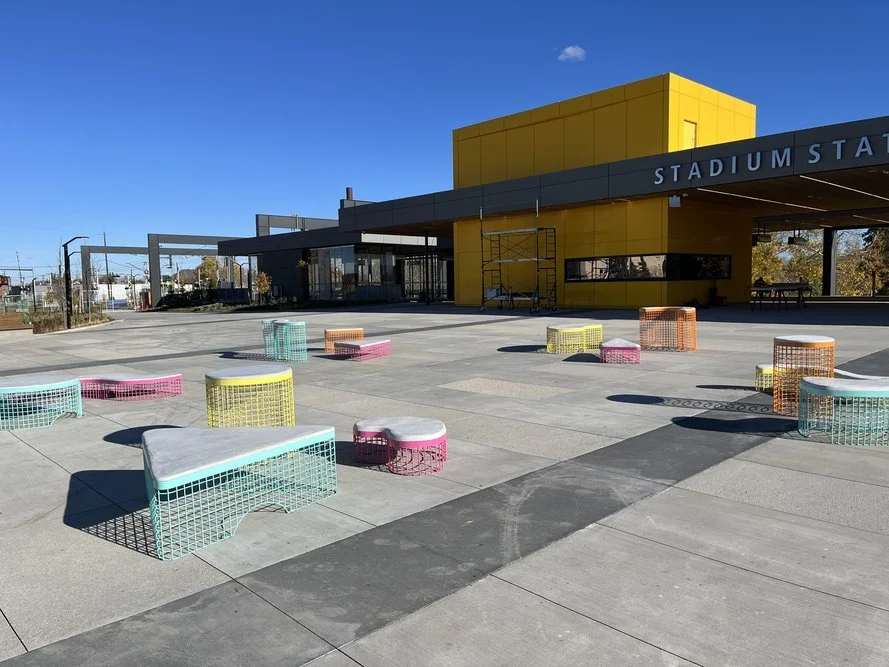
Dream by Multiple Edmonton artists, Stadium LRT Station.

https://www.edmontonpublicart.ca/#!/details/329 

Comment or contribution

Please note that articles may not reflect the position of NSRVCS. River Valley News is meant to be a clearinghouse for the wide variety of opinions and ideas about Edmonton’s River Valley. Email river valley photos, event information, comments, or questions to nsrivervalley@gmail.com

Sincerely yours,

Harvey Voogd

North Saskatchewan River Valley Conservation Society

780.691.1712
River Valley News - June 1, 2023

June 10 meditation and trail walk in Parkland County

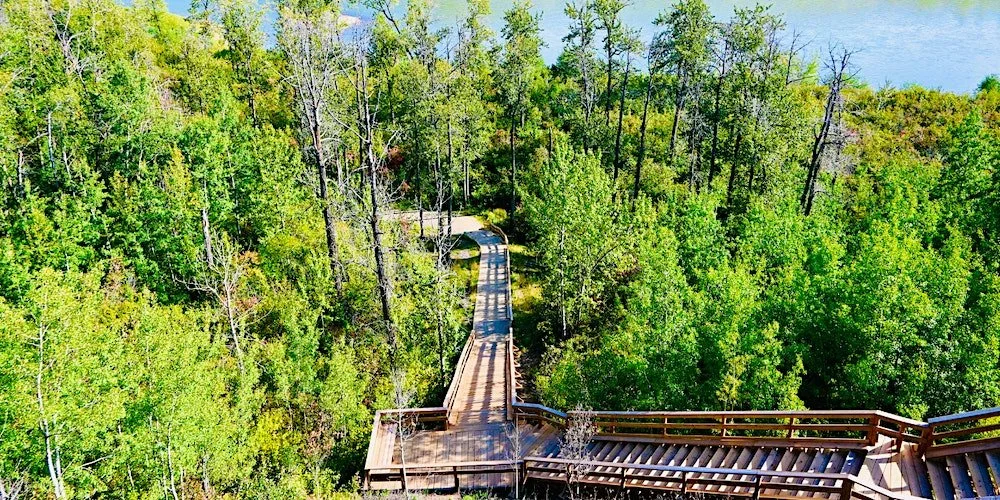
River Valley alliance is hosting this event on June 10, which will begin across the river from Devon at Prospectors Point. The walk will be to the new stairs, where there will be a guided meditation led by Amanda Papadopolous.

Meditation will bring awareness in and allow time to be present in nature. After silent contemplation, participants will turn around and head back to the parking lot. The walk will take about 90 minutes walking at a leisurely pace with plenty of time to take in nature and rest if needed.

There are some large inclines along the route, so it may not be suitable for all abilities. The trail is a double-wide granular trail with some switchbacks that may be considered difficult for those with strollers. The event is free but please register at https://www.eventbrite.ca/e/rva-june-community-meditation-trail-walk-tickets-639518706667

Despite a midlife crisis, Streetcar No. 33 has served YEG since 1912

The Edmonton Radial Railway Society runs streetcars from May long weekend to Thanksgiving. While most of the fleet services the Fort Edmonton Park line, three cars cover the High Level Bridge route. The metropolitan flavour of Edmonton is reflected in these cars, with #930 Melbourne Australia, #247 Osaka, Japan, and #33 Edmonton. 

Streetcar No. 33 looks shiny and new, despite being 110 years old, with a red and green exterior and high gloss varnish in the wood-paneled interior. In June 1912, No. 33 began operating in Edmonton and remained in service until 1951. Upon retirement, its electrical parts and wheel components were removed and sold for scrap. The body of streetcar No. 33 was sold and put out to pasture on a farm.

On May 1, 2010, streetcar No. 33 made its first run on the tracks in over 50+ years, in Fort Edmonton Park. The following year, it was moved to the High Level Bridge route where it has been a staple of the fleet ever since. The rebuild of Streetcar No. 33 took 17 years, 35,000 volunteer hours and $151,000 to bring it back to its original factory state. https://citymuseumedmonton.ca/2023/05/18/edmonton-streetcar-no-33/

Early blue violet widespread throughout Alberta

Other than seeds and rhizomes, the entire early blue violet plant is edible. Leaves can be used in salads and to make tea, and candied violet flowers can be used as garnish for desserts. Violet vinegar can be made by adding blossoms to white wine vinegar.

The leaves are very high in Vitamins A and C, with 1¼ cup of early blue violet leaves having about the same amount of Vitamin C as 4 oranges. In parts of the United States, violets are called wild okra and are often used to thicken soups.

Medicinally, early blue violet was used as a poultice for bruises, and a violet syrup was made to relieve epilepsy, inflamed eyes, insomnia, jaundice, and sore throats. In modern times, violets have been used to colour and flavour medicines.

Blackfoot Indians used the blue colour to dye arrows. Violets often appear in ancient artwork and poetry. Mohammed loved the violet, as did Napoleon and the violet became the emblem of the Bonapartists.

https://plantwatch.naturealberta.ca/choose-your-plants/early-blue-violet/index.html

Tipi an innovative, practical and locally sourced transportable shelter

Many Indigenous Nations, including the Cree, Chipewyan, Beaver, Nakoda, and Blackfoot gathered along the banks of the North Saskatchewan River to trade with one another and to participate in religious and political ceremonies. The Beaver Hills area was part of a complex trading system that stretched throughout Canada and North America. These trading routes and systems not only allowed for the exchange of goods, but also the transference of knowledge and practice.

Although First Nations Peoples living on the plains are known to have maintained their land through growing crops and landscape manipulation, they also engaged in a pattern of movement by following seasonal sources of food and other resources. Since travel was such an essential part of life, shelter had to be temporary, transportable, and incorporate available materials.

The resulting structure was the tipi. These innovative and highly practical structures used locally available materials like buffalo hides and wooden poles and were small enough to be transported easily. Tipis were also designed to adapt to changing conditions such as cold winters, wind, and hot, bug-infested summers. The architecture involved in the erection of a tipi involved advanced geometry and arithmetic, which allowed the lodging to serve as not only housing, but many other uses vital to everyday life. https://www.edmontonsarchitecturalheritage.ca/time-periods/pre-contact-and-fur-trade/

Cloverdale Coyote

Jayne Bawden writes “I took a picture of a coyote eating dried crab apples that fell off a tree in Cloverdale. This was taken on 93 St in my neighbour’s yard between 97 and 98 Ave. We share our neighbourhood with these beautiful creatures.”

Comment or contribution

Please note that articles may not reflect the position of NSRVCS. River Valley News is meant to be a clearinghouse for the wide variety of opinions and ideas about Edmonton’s River Valley. Email river valley photos, event information, comments, or questions to nsrivervalley@gmail.com

Sincerely yours,

Harvey Voogd

North Saskatchewan River Valley Conservation Society

780.691.1712