River Valley News - July 6, 2023

National Urban Park initiative recommended to proceed to planning stage

On July 12, Council’s Urban Planning Committee will discuss a recommendation that Edmonton proceed to the planning stage of the National Urban Park initiative. Since 2022, the City of Edmonton, Parks Canada and Indigenous partners have explored the possibility of designating a national urban park in the Edmonton region.

A national urban park would provide an opportunity to contribute to biodiversity protection and climate change adaptation, provide access and recreation opportunities for current and future Edmontonians and visitors, and support reconciliation with Indigenous peoples.

The planning phase will develop a park vision, refine its boundaries, determine a governance model, begin more detailed planning, and facilitate potential access to federal funding to support the development of the national urban park. The planning stage would not commit the City to designating a national urban park.

The report and attachments going to the committee are at https://pub-edmonton.escribemeetings.com/Meeting.aspx?Id=646222f3-1d97-40da-a9af-429d5cc5b71e&Agenda=Agenda&lang=English&Item=24&Tab=attachments

Speeding motorboat in Whitemud Creek prompts investigation

River valley users and officials are reacting after a video surfaced on social media of a motorboat speeding down Whitemud Creek. The area is a wildlife corridor, home to various types of fish, birds, and animals, and is widely used by canoeists and kayakers. Video shows the boat with multiple people on board narrowly missing a canoe travelling in the opposite direction.

"The point where the jet boat goes past the individual in the canoe, it appears to me to be within a foot and a half, maybe two feet at the most, and the canoeist was tucked right into the bank. That doesn’t give much room for safety," said naturalist Wayne Oakes who not only worries about the people that use the creek, but the animals who live there.

"It's not uncommon to see deer in the middle of the creek, moose, all kinds of waterfowl, beaver, muskrat. They don't have the ability to quickly get out of the way when something is zooming up the creek." He says motorized boats should stick to the river. "With a great, big, beautiful open river just a few metres downstream from us, that's the place for your big, high-powered vessels. Not up a little, tiny, picturesque creek like the Whitemud."

The Edmonton Police Service and the city of Edmonton's Marine Unit are investigating the incident.

https://edmonton.ctvnews.ca/video-of-fast-motorboat-in-edmonton-creek-prompts-investigation-1.6460497

RVA trail walk with the Fort Saskatchewan Naturalist Society

Join the River Valley Alliance and the Fort Saskatchewan Naturalist Society on Saturday, July 29 from 10am to Noon as they walk a trail from the Sheep Shack at the Fort Heritage Precinct to an area near the new Hwy 15 Bridge.

The walk will include descriptions of the dozens of natural plants, shrubs, trees, and berries that grow in the community. The trail is also habitat for birds of many species and their nests. Along the trail we will search for a tree to place a bird house donated by the Naturalist Society.

The walk is 2.2km on paved trail and will be walked at a leisurely pace with plenty of time to take in nature and snap photos. Space is limited. Free registration and event information at

https://www.eventbrite.ca/e/rva-july-community-trail-walk-with-the-fort-saskatchewan-naturalist-society-tickets-667070143757?aff=oddtdtcreator

Thank You

Asha writes "I love the newsletter. I learn something new with every edition. Thanks for putting it together."

Pumpkins and Moons by Ken Macklin, Belgravia Art Park. DCM Photography. https://www.edmontonpublicart.ca/#!/details/118

Comment or contribution

Please note that articles may not reflect the position of NSRVCS. River Valley News is meant to be a clearinghouse for the wide variety of opinions and ideas about Edmonton’s River Valley. Email river valley photos, event information, comments, or questions to nsrivervalley@gmail.com

Sincerely yours,

Harvey Voogd

North Saskatchewan River Valley Conservation Society

780.691.1712

River Valley News - June 29, 2023

Moose on the loose in downtown Edmonton

A moose was seen running near the Ice District early morning on June 26. Video taken around 6 am, shows a moose trotting toward Rogers Place in the middle of an empty road. "Pedestrians were scared and running away from it," the man who shot the video told CTV News Edmonton.

The moose was seen as early as 5 a.m. southbound on 109 Street and on 9620-103A Ave., a spokesperson with the ministry of public safety and emergency services said. The last report, just before 6 a.m., said the moose was heading south toward the river.

"It is expected that the moose found its way into the river valley, based on the time of the day, proximity to the river valley and direction of the moose’s travel," Sheena Campbell said.

https://edmonton.ctvnews.ca/watch-moose-spotted-in-downtown-edmonton-1.6456647

YEG river valley a ribbon of green, but not a protected park

Often referred to as the largest urban park in North America, Edmonton’s river valley is a series of connected green spaces. There are policies meant to prevent chipping away of green spaces, but this is different from a protected park.

According to Kecia Kerr, Executive Director of the Northern Alberta chapter of the Canadian Parks and Wilderness Society, an analysis they conducted showed that between 2000 and 2015, we lost 6.5% of the green spaces in the river valley. That is an area about the size of the Kinsmen Park every year.

Kerr says a national urban park in our river valley would provide additional protection so there would not be a loss of green spaces. It could be a legacy project, provide federal funding for infrastructure, interpretation programs, focus on conserving green space, connecting Canadians to nature and advancing reconciliation with Indigenous people, and there would be no fee.   

Though a national urban park, it is expected to be a partnership model involving the City and other partners such as the Confederacy of Treaty Six First Nations and the Metis Nation of Alberta. The park boundaries of not yet been determined, but Kerr says think big, go from Devon and connect all the way to Elk Island National Park. https://www.cbc.ca/listen/live-radio/1-17-edmonton-am/clip/15993047-what-mean-national-urban-park-edmonton

Lego bricks highlight Edmonton spaces and pop culture

Muttart Brick by Brick premiered at the Muttart Conservatory this week. Created by the Northern Alberta Lego Users Group (NALUG), the exhibit displays multiple models built with Lego bricks. Two highlights are the High Level Bridge, as well as a to scale model of the Muttart Conservatory. Other custom works include a historical replica of Edmonton buildings, space models and characters from pop culture.

NALUG member and exhibit organizer Michel Magnan said Muttart asked him to build a scale model of the conservatory, which is now on permanent display in the conservatory’s hub area. Built at a one-stud-per foot scale, the model involves some 45,000 pieces and portrays even hidden areas of the facility, such as the underground tunnel that leads to a greenhouse across the street.

Attractions program manager Sarah Gericke said she came up with the idea for this exhibit in 2021 while playing with Lego with her family during the pandemic. She reached out to NALUG members who agreed to work on a show. https://www.stalbertgazette.com/local-news/plastic-princesses-meet-plants-at-muttart-7198081

Fires underscore the need to let mature forests get old

New trees are no substitute for old trees. It turns out the age and composition of forests makes a big difference in what role they play in preventing wildfires and storing carbon. Old growth forest is the best at both, but there is very little old growth left.

But a large amount of the forests on public lands is what foresters call mature forest, which is nearly as good as old growth and in fact is on the brink of becoming old growth. It is these older forests that will help us prevent future forest fires and will do the most to reduce climate change, and it’s these forests that we need to protect at all costs.

An immature forest is composed of trees of small stature and similar age. These forests pose a high risk of wildfire due to the abundance of fine fuel, small branches and leaves, near the ground. As natural thinning occurs, the leafy canopy remains intact and gradually rises above the forest floor as the trees grow. These forests efficiently absorb carbon dioxide and store it in the tree trunks and roots. By separating the fine, leafy fuels from the forest floor, the likelihood of wildfire diminishes.
The forest continues to thin as it approaches maturity. The surviving trees will get bigger, accumulating additional carbon and storing some of it within the debris of the forest floor. In a mature stage, the shady understory of the forest keeps things moist, and much of the debris consists of larger logs that are not easily ignited, so the dead stuff is less likely to serve as fuel for a fire.

https://www.politico.com/news/magazine/2023/06/11/to-fight-wildfire-our-forests-need-to-grow-old-00101360

Migratory Paths by Catherine Ross, Edmonton Convention Centre. Dane Ryksen photo.

https://www.edmontonpublicart.ca/#!/details/325

Comment or contribution

Please note that articles may not reflect the position of NSRVCS. River Valley News is meant to be a clearinghouse for the wide variety of opinions and ideas about Edmonton’s River Valley. Email river valley photos, event information, comments, or questions to nsrivervalley@gmail.com

Sincerely yours,

Harvey Voogd

North Saskatchewan River Valley Conservation Society

780.691.1712

River Valley News - June 22, 2023

Leaf litter an important part of ecosystems

Though the name can be deceiving, leaf litter can be made up of leaves, twigs, fallen bark and other pieces of plant matter. This litter is vital for having healthy soils and plants. It also is an indicator of biodiversity. Worms, snails, spiders, insects, fungi, and bacteria all make leaf litter their home.

When leaf litter accumulates on the forest floor, it releases nutrients like carbon, nitrogen, phosphorus and other organic compounds into the soil through decomposition. These nutrients are then taken in by plants who use them to grow.

Litter also helps control the soil temperature. In the summer, leaf litter keeps the soil moist and damp by protecting it from the sun. In the winter, it acts as an extra layer of insulation, like a nice scarf or pair of mittens, for plants as they wait for spring. https://www.ealt.ca/blog/the-many-meanings-of-litter

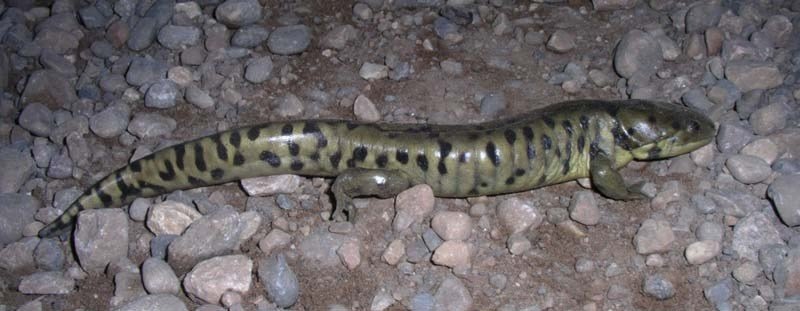
Elusive tiger salamanders live in Edmonton area wetlands

Sydney Toni, a knowledge translations specialist with Alberta Biodiversity Monitoring Institute, says scientists know that boreal chorus frogs, wood frogs and tiger salamanders have been visiting wetlands in the Edmonton area. The proof? Environmental DNA, or eDNA, in water samples.

"All organisms shed DNA, be it hairs or tissue, and you can collect that in environmental samples and analyze it to see what's there," Toni says. Native to North America, tiger salamanders spend most of their time living in underground burrows. They don't have a call, like a frog, that would register on audio monitoring equipment.

Amphibians around the world are on the decline due to habitat loss, contaminants, disease, and climate change. There are 10 species of amphibians in Alberta and half of them can be found in the Edmonton area. 

https://www.cbc.ca/news/canada/edmonton/tiger-salamander-sydney-toni-brian-eaton-amanda-schmidt-abmi-innotech-alberta-1.6194102

Variety of tree species better at fighting climate change

"In Canadian forests, as compared to temperate and tropical forests, tree diversity is low," said Scott Chang, a professor of renewable resources at the University of Alberta. Tree diversity is a term used to describe three specific qualities in our forest environment.

The first two qualities are species richness, which is measured by the number of trees in an area, and evenness, which Chang describes as how equally the species are distributed. The last factor comes down to the actual trees and the different functions they perform in a forest. 

Chang said that the implications from recent research should be implemented in the Canadian government's 2 Billion Trees Commitment, an initiative that is working to help organizations plant two billion trees in Canada over the next decade.

"If they can use multiple tree species for instructing those tree plantings instead of just a single tree species, there is a potential benefit that can be gained to increase carbon sequestration," Chang said.

https://www.cbc.ca/news/canada/edmonton/if-a-forest-has-a-variety-of-tree-species-is-it-better-at-fighting-climate-change-a-u-of-a-study-says-yes-1.6858279

Wildlife passages reconnect natural ecosystems fragmented by urban development

Grant texts “ Check out this link to some Nature Based Solutions comics https://nbscomics.com/#comics

Horses can sleep standing up but must lay down daily to get REM sleep

Wendell emails “Cool article on horses and sleep!”

Indigenous voices lacking in Edmonton’s Hawrelak Park project

Janes writes, “Excellent article about Hawrelak Park project. So many Edmontonians are upset about how this was planned, or rather the seeming lack of planning. The exclusion of an Indigenous perspective is extremely sad as well as disgraceful.”

Carousel by Nicole Galellis, Borden Park. DCMPhotography.ca https://www.edmontonpublicart.ca/#!/details/140

Comment or contribution

Please note that articles may not reflect the position of NSRVCS. River Valley News is meant to be a clearinghouse for the wide variety of opinions and ideas about Edmonton’s River Valley. Email river valley photos, event information, comments, or questions to nsrivervalley@gmail.com

Sincerely yours,

Harvey Voogd

North Saskatchewan River Valley Conservation Society

780.691.1712