River Valley News - Dec. 15/25

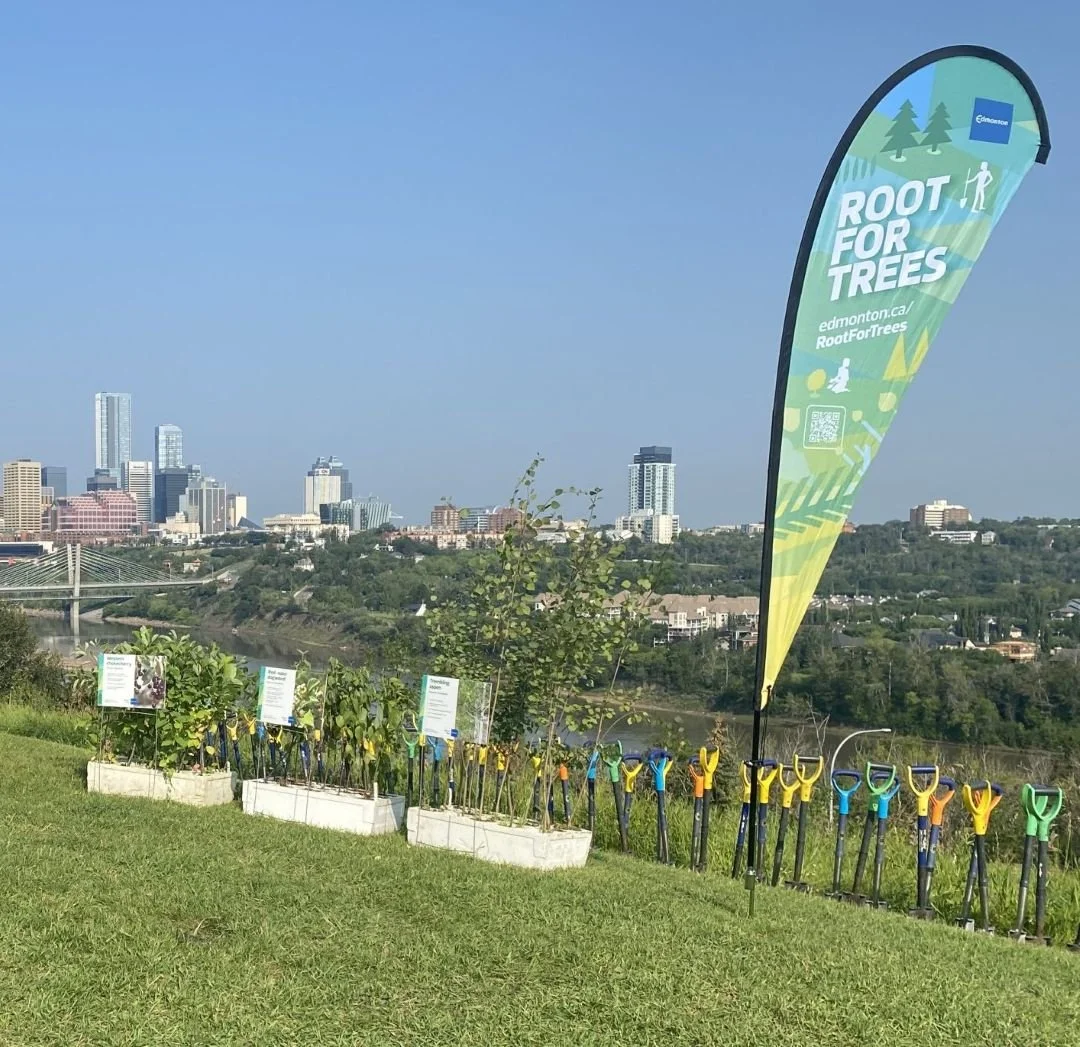
Photo Credit: CityNews Edmonton

A Record-Breaking Year for Edmonton’s Urban Forest

Edmonton set a new record in 2025 by planting 484,091 trees and shrubs, significantly expanding the city’s urban forest. This surpasses the 2024 total of 342,157 plantings, with most work delivered through the City’s naturalization program and the volunteer‑powered Root for Trees initiative, which alone added over 45,000 trees and shrubs. Plantings took place at 59 locations across the city, and the Grow Together program helped ensure a more equitable canopy by adding boulevard and open‑space trees in three neighbourhoods.​

These “net new” trees move Edmonton closer to its long‑term City Plan goals of planting 2 million trees and reaching 20 per cent canopy cover by 2071; since 2021, 810,546 trees and shrubs have been planted toward that target. The work is supported by $48 million from the federal 2 Billion Trees program and about $66 million in approved municipal capital funding, with planting running from 2022 through 2030. City and federal officials emphasize that a larger, healthier urban forest will improve air quality, enhance climate resilience, support biodiversity and make neighbourhoods cooler, greener and more welcoming for residents.

For more information, head to Root for Trees | City of Edmonton. If you are looking to receive program updates, fun facts about trees and interesting nature-themed activities to do around Edmonton, sign up for the Canopy Newsletter here. 

Photo Credit: Nature Conservancy Canada

Local Land Donation Protects 39 Hectares of RV Habitat

An Edmonton resident, Ken Casey, has donated his 39-hectare property near Genesee Lake in Leduc County to the Nature Conservancy of Canada (NCC), where it will be known as Casey Forest. The land lies along the North Saskatchewan River and contains largely untouched mixed-wood forest and wetlands that help provide clean water to nearby communities.

NCC notes that the property has a very high biodiversity index, meaning many different plant and animal species live there, including spruce, poplar, aspen, willow, and alder. Species of concern observed near the site include Peregrine falcons, Barred owls, and American kestrels, adding to the ecological importance of protecting this habitat.

Casey Forest connects with other conserved parcels along the river, creating a growing network of protected land that now covers roughly 106 hectares of forest and shoreline in that area. The donation was made through the federal Ecological Gifts Program, which offers tax incentives for conserving ecologically significant land, and NCC credits partners such as Cenovus Energy for helping make the project possible for future generations.

Local man donates beloved section of land near Genesee Lake to NCC | Devon Dispatch 
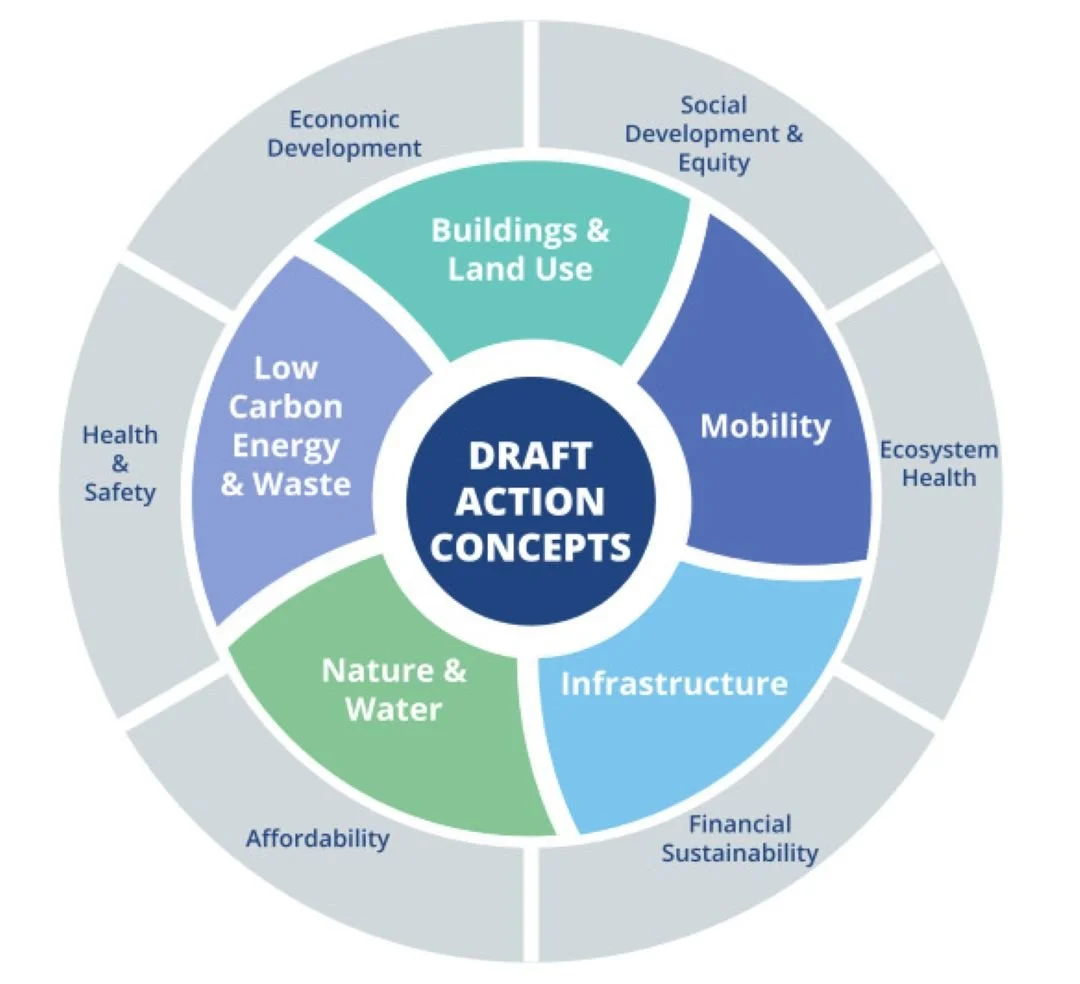

Photo Credit: City of Edmonton

Shaping Edmonton’s Climate Future and River Valley Trails

Edmonton is asking residents to help shape how the city responds to climate change at the same time as it invests in the future of the river valley. The City is updating its 2027–2030 Climate Action Plan and developing a new Wildland-Urban Interface Wildfire Risk Strategy, with online engagement open into December and January so people can share priorities for reducing emissions, adapting to hotter, drier summers, and protecting natural areas, including the river valley.​ To participate in public engagement opportunities for the Climate Action Plan, visit engaged.edmonton.ca/climateactionplan  by January 20, 2026. Residents can also review the draft Wildland-Urban Interface Wildfire Risk Strategy overview and share their thoughts from December 8 -  22 by visiting engaged.edmonton.ca/wildfirestrategy

Furthermore, the City Council’s recent fall budget adjustments add a one-time investment of $1.6 million to develop a River Valley trail strategy, which will guide how Edmonton plans, connects and maintains trails along the North Saskatchewan River while balancing recreation, access and environmental protection. The same budget decisions also respond to broader financial pressures, resulting in a 6.9 percent property tax increase for 2026—approximately $816 per $100,000 of assessed home value for the average household—and begin restoring the City’s Financial Stabilization Reserve so it is better prepared for future shocks.​

Taken together, the new funding and engagement opportunities give Edmontonians a chance to influence both the long-term vision and near-term plans for the river valley and the wider city. Residents can weigh in on climate priorities, wildfire risk management and neighbourhood planning through the City’s online engagement hub Engaged Edmonton, helping ensure budget choices and strategies on paper reflect community values on the ground.
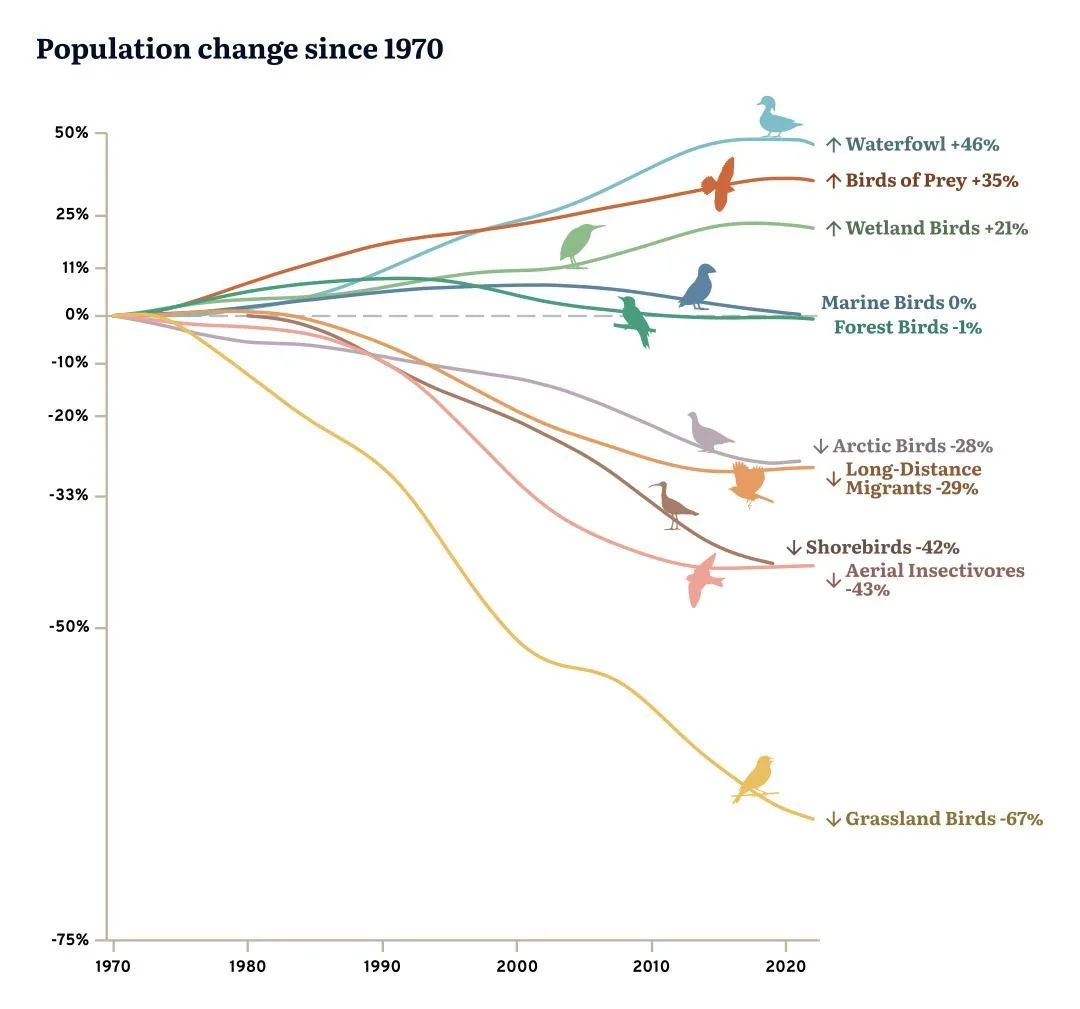

Photo Credit: naturecounts.ca 

Quieter Skies: Why a Healthy RV Matters for Declining Bird Populations

Bird populations are declining across Canada, and Edmonton’s river valley is one of the most important local refuges we have to help slow that trend. National assessments show that over one-third of regularly occurring Canadian bird species have declined since 1970, with especially steep drops for grassland birds and insect‑eating aerial insectivores such as swallows and swifts. These losses are linked to habitat destruction, climate change, pesticides, and falling insect abundance, which together make it harder for birds to find food, nesting sites, and safe migration routes.

In Edmonton, people notice this as quieter skies over their neighbourhoods and fewer birds at feeders or along familiar trails. Citizen‑science programs and monitoring projects, such as Project FeederWatch, report that some winters and breeding seasons now bring fewer individual birds to typical observation sites, and climate‑driven shifts in weather and food can move birds away from places where they used to be common. Declining insect populations add another layer of pressure, especially on species that rely heavily on flying insects during breeding and migration.

The North Saskatchewan River valley cuts a green corridor through the city, offering a mix of forests, wetlands, and open areas that still support rich communities of birds and the insects they depend on. Protecting and restoring this landscape—through measures like limiting habitat fragmentation, expanding naturalized areas, planting native trees and shrubs, and carefully planning new trails—helps safeguard nesting sites, stopover habitat, and food webs that birds need to recover. In a time of broad declines, keeping the river valley healthy and connected is one of the most direct ways Edmontonians can support birds, insects, and the wider web of life close to home.

The State of Canada’s Birds Report 

Vanishing birdsong: How climate change is altering Canada’s soundscape | Canadian Geographic 

Trends and Highlights from the 2022-23 Project FeederWatch Season - Birds Canada 

Explaining the 73 per cent decline in global wildlife populations (and what we can do about it) - WWF.CA 

Introducing The State of Canada’s Birds 


Louis Riel / Heather Shillinglaw / 1996 / acrylic on plaster

St. Albert and the Northwest Resistance at Musée Héritage Museum, St. Albert Place

Date: November 25 to April 4

In the spring of 1885, the Government of Canada officially took up arms against its citizens for the only time in the nation’s history. The 1885 Northwest Resistance brought widespread unrest to the Prairies. St. Albert was significantly invested in the conflict as the Sea of the Dioceses and a predominantly Métis community. Discover the role of St. Albert in the build-up and during the conflict, as well as the aftermath of the 1885 Northwest Resistance.

St. Albert and the Northwest Resistance 


Comment or Contributions

Please note that articles may not reflect the position of NSRVCS. River Valley News is meant to be a clearinghouse for the variety of opinions and ideas about Edmonton’s River Valley.

Email river valley photos, event information, comments, or questions to nsrivervalley@gmail.com.

Forward this link to anyone you think may want to sign up for this newsletter https://www.edmontonrivervalley.org/newsletter-signup

River Valley News - Nov. 20/25

Photo credit: dirtonmyshirt.com
River Valley Plants: Common Yarrow (Achillea millefolium)

The Common Yarrow, or Achillea millefolium, is far more than just a ubiquitous roadside weed; it is a fragrant, deeply historic herb found throughout Alberta, including the open spaces and disturbed areas of the River Valley. Identified by its height (ranging from 30 cm to 70 cm) and its aromatic, feathery, fern-like leaves, its species name millefolium translates to "a thousand leaves," referencing its finely dissected foliage. In late June, this hardy perennial bursts into bloom, displaying dense, flat-topped clusters of many small, typically white flowers that can continue colouring the landscape until September.

The yarrow boasts a fascinating history rooted in both military myth and Indigenous medicine. Its genus name, Achillea, refers to the Greek hero Achilles, who legend says used the plant to heal his soldiers’ wounds. This military association is echoed in its old folk names like “soldier’s woundwort” and “staunchweed,” reflecting its historical use as a styptic to stop bleeding in battle—an effective property that was also widely utilized by First Nations Peoples across the Rocky Mountains to treat cuts, burns, and aches.

Common Yarrow is a native, incredibly resilient plant that thrives in dry conditions and poor soils, making it common along riverbanks, roadsides, and open meadows. It is highly valued for its extensive, deep root system and its ability to spread, which makes it an excellent choice for ground cover and soil erosion control. Ecologically, its clustered flower heads provide a rich and abundant source of nectar for various insect larvae and certain butterflies, like the Blue Copper. Despite its slightly bitter taste, the Yarrow is a persistent and beautiful component of the River Valley ecosystem.

Common Yarrow  


Photo credit: Alberta.ca
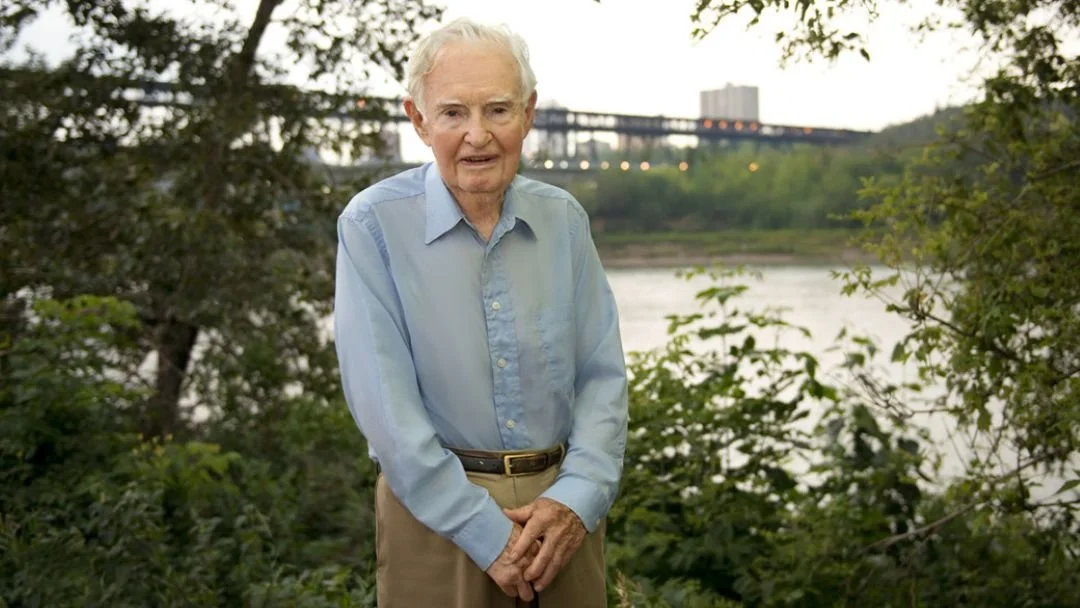
The Storyteller's Green Space: Tony Cashman Park

The history of Edmonton is preserved not just in museums and archives, but in the names woven into the city’s landscape. Tony Cashman Park, located at 103A Street and 16 Avenue SW, is one such tribute—a quiet piece of green space honouring one of Alberta's most passionate and popular local historians. The park serves as a lasting memorial to a man whose life’s work was dedicated to ensuring that the stories of Edmonton's past were not just remembered but vibrantly brought to life for everyone.

Born in Edmonton in 1923, Tony Cashman was a celebrated author, radio broadcaster, and playwright who possessed an "uncanny ability to bring the people in his stories to life." During the 1950s and 60s, he became a household name through his weekly radio segment, “The Edmonton Story,” which ran for a decade and featured over 700 local tales. Cashman believed history should be told through the eyes of the common person who lived it, rather than just through dates and elite decisions. This distinctive, humorous, and deeply human style made history accessible and engaging, earning him accolades like the Edmontonian of the Century in 2004 and an induction into the Alberta Order of Excellence in 2014.

The City of Edmonton recognized Cashman’s profound impact by naming a park in his honour in 2011. In 2021, a new plaque was installed at the park, further cementing his place in the city's narrative. As his son, Paul Cashman, noted at the plaque dedication, "After 98 years of writing Edmonton's history, now he is part of Edmonton's history.” It was Tony Cashman’s hope that visitors to the park would take a moment to learn about him and, perhaps, become inspired to explore the rich history of their own city, continuing the storytelling tradition he championed for a lifetime.

Tony Cashman gets new plaque at city park named after him

Tony Cashman | Alberta.ca 


Photo credit: Northern Photo Services Ltd.
High Level Bridge: History and Heritage

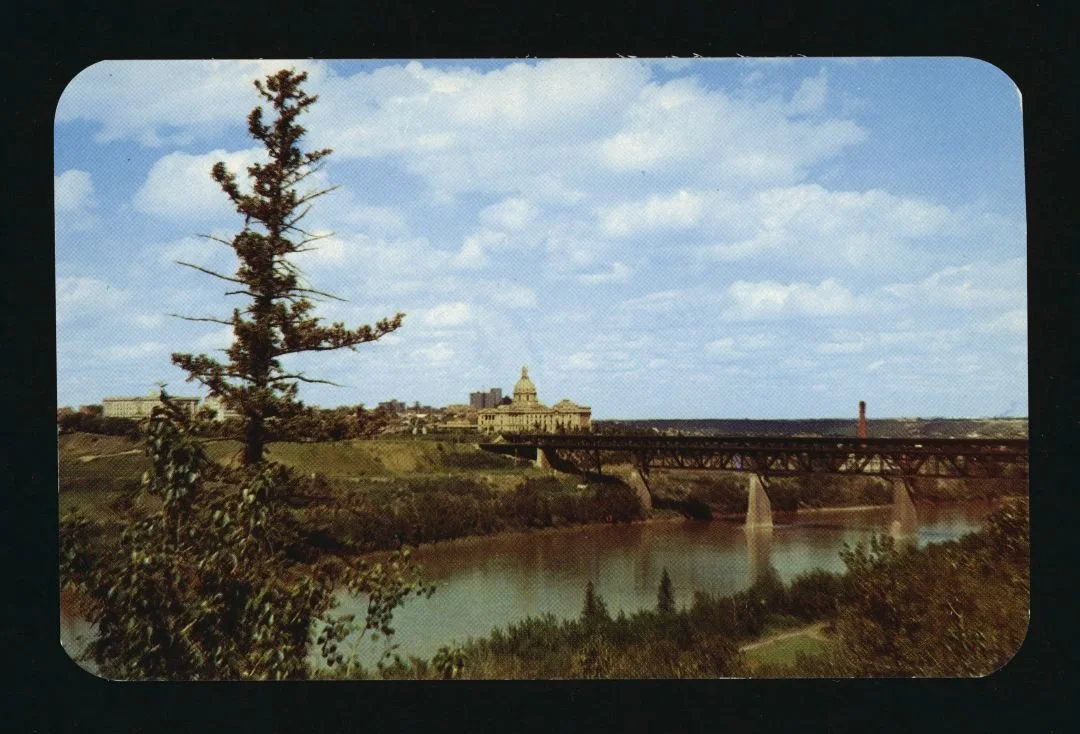
The High Level Bridge is a massive steel truss, multi-function bridge constructed between 1910 and 1913. As one of four great steel truss bridges built by the Canadian Pacific Railway (CPR) in Canada before WWI, it is a significant historic place. The design is notable for employing two distinct truss types—the Pratt Truss and the Warren Truss—for its steel substructure, which is set on a combination of concrete piers and steel legs. The structure is 2,550 feet long and features two decks positioned twenty feet apart, with the rail deck base sitting 156 feet above the North Saskatchewan River.

The bridge holds unique historical importance for its role in uniting the separate communities on the river's north and south banks. It was a major factor in the amalgamation of the City of Strathcona and the City of Edmonton on February 1, 1912. The High Level Bridge linked 109 Street in downtown Edmonton with 109 Street on Edmonton's south side. The construction costs, exceeding $2 million, were shared by the CPR, the cities of Edmonton and Strathcona, and the provincial and dominion governments, demonstrating the railway's immense historical importance.

Significantly, the High Level Bridge held unique standing in Western Canada for originally combining four modes of transportation: train, streetcar, automobile, and pedestrian traffic. While streetcar traffic ceased in 1951 and CPR trains stopped in 1989, the lower deck still carries vehicular traffic and a pedestrian walkway, and a tourist streetcar operates seasonally on the upper deck. The structure remains a massive landmark and an icon for the city of Edmonton

https://www.edmonton.ca/city_government/documents/InfraPlan/HighLevelBridge.pdf 


Operation Total Recall: The Citizen-Led Effort to Recall UCP MLAs

What has this article got to do with the river valley? Nothing!!! This just reflects the left leaning bias of your staff which is offensive. 

Your history and stories about our river valley have always been interesting and enjoyable but please refrain from political opinion.

Bruce

Operation Total Recall: The Citizen-Led Effort to Recall UCP MLAs

Is the River Valley News becoming political? I hope not. Please stick to history, facts.

Victoria

Operation Total Recall: The Citizen-Led Effort to Recall UCP MLAs

“Please note that articles may not reflect the position of NSRVCS. River Valley News is meant to be a clearinghouse for the variety of opinions and ideas about Edmonton’s River Valley.”

I am attaching your note from your newsletter. While I have found your newsletters interesting and engaging, articles like the recall campaigns are increasingly creeping into your publication. These articles are political and totally out of place in the newsletter. Your lack of oversight is ruining your publication.

Regards,

Brenda


Touchstone / Bruno Canadien / 2025 / Bronze / NAIT LRT Station

https://www.edmontonarts.ca/public-art/touchstone 


Comment or Contributions

Please note articles may not reflect the position of NSRVCS. River Valley News is meant to be a clearinghouse for the variety of opinions and ideas about Edmonton’s River Valley.

Email river valley photos, event information, comments, or questions to nsrivervalley@gmail.com.

Forward this link to anyone you think may want to sign up for this newsletter https://www.edmontonrivervalley.org/newsletter-signup
River Valley News - Nov. 16/25

Photo credit: Library and Archives Canada 3302907

The Railway Divide: How A Bridge Construction Delay Created Strathcona

Following the eviction of local Indigenous Peoples, European settlers began arriving primarily by train in 1891 to the area that would become Strathcona, initiating a rapid growth spurt common across the prairies. The railway initially ended on the south side of the North Saskatchewan River—first at a temporary terminus across Whyte Avenue, and then at a second station built shortly after—because extending the line across the river to the HBC's Fort Edmonton was too costly and required a bridge. This delay caused the tiny township of South Edmonton to grow independently around the station, eventually becoming known as Strathcona, named after the HBC governor, Lord Strathcona.

While Fort Edmonton had been a major trading hub since 1795, the Canadian Pacific Railway (CPR) bypassed it in 1883, favouring a route through Calgary. This forced Edmontonians to wait eight more years for a spur line from Calgary, as the week-long, arduous journey was hindering the local economy. The railway was crucial to allow people, goods, and economic activity to flood into the Edmonton area quickly.

To save costs and profit from land sales, the CPR officially terminated the line in Strathcona, where it owned land, rather than build a bridge across the North Saskatchewan River immediately. Though Edmontonians still needed to ferry the river, the railway's arrival was celebrated, reducing the journey from Calgary to a single day. Both Edmonton and the new community of Strathcona saw immediate population growth following the line's opening.

For more information check out The End of the Line by Elyse Abma-Bouma


Photo credit: Global News Edmonton

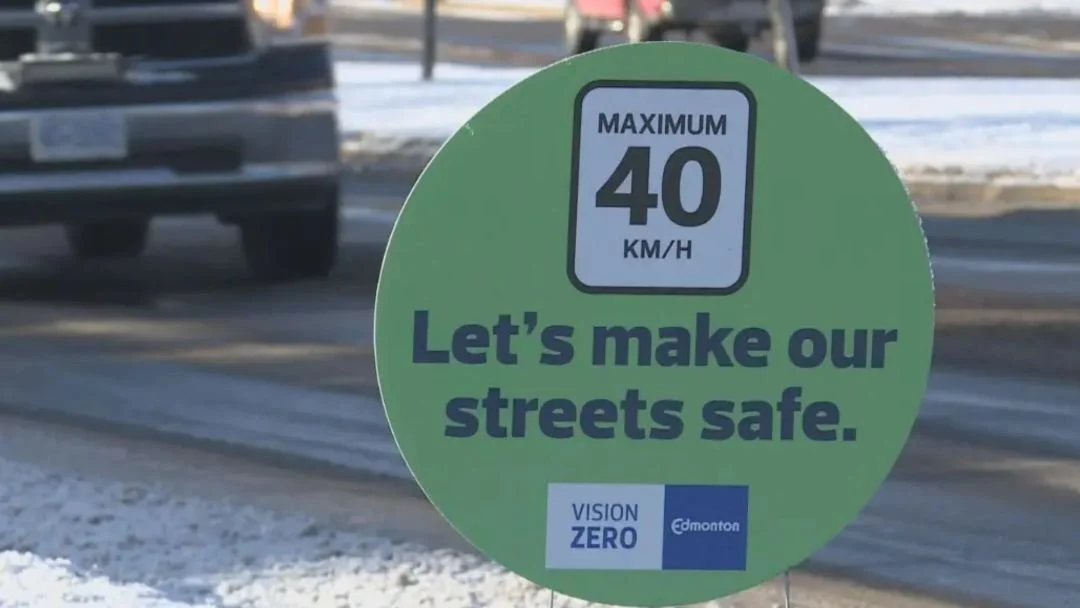
🚶 Rising Traffic Fatalities Highlight Danger for Edmonton Pedestrians

Edmonton is facing a significant and troubling surge in traffic collision fatalities, with 29 deaths recorded this year, a dramatic increase from the 12 deaths reported in 2020. Authorities link this trend to reckless driving behaviour, high rates of speeding, and traffic violations, suggesting a correlation with the recent reduction in the use of mechanisms like photo radar.

A critical concern within this rising fatality rate is the danger to vulnerable road users, with ten of the total deaths this year involving pedestrians alone, up from six the previous year. This alarming trend underscores the city's failure to provide safe, reliable paths for people who choose active transportation options like walking or cycling to navigate the city.

Advocacy groups like Paths for People are urging the city to focus heavily on improving infrastructure, emphasizing that safe streets require intentional design, including high-visibility intersections and better bike and pedestrian infrastructure. Implementing these safety measures is essential to achieve the city's Vision Zero goal, which aims to eliminate all serious traffic-related injuries and fatalities for everyone.


Photo credit: ualberta.ca

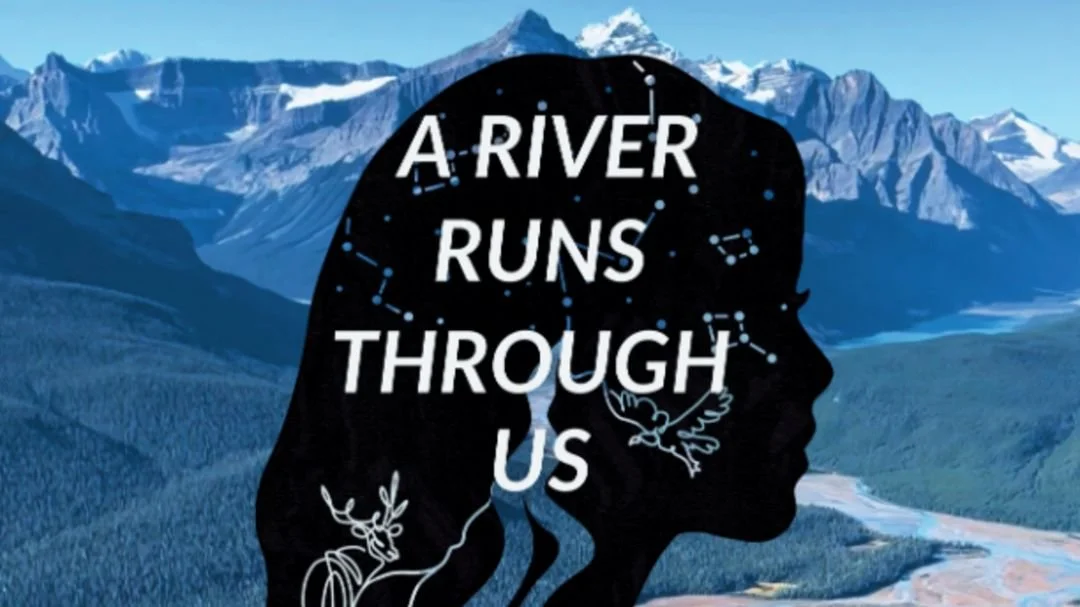
A River Runs Through Us - The Story of the NSR

The University of Alberta’s Faculty of Science is hosting a screening of the film  "A River Runs Through Us - The Story of the North Saskatchewan River," scheduled for November 19, 2025, from 6:30 PM to 9:00 PM at the Horowitz Theatre on North Campus. The core of the evening is a special film screening that explores the multifaceted story of this crucial waterway.

The documentary aims to tell the story of the North Saskatchewan River through a diversity of voices, including scientists, local communities, stewardship groups, and Indigenous peoples. The film highlights the river's immense significance, noting that it is far more than just a water source; it is a lifeline that has shaped cultural identities, ecosystems, and industries since time immemorial.

The event is open to the public, with a cost of $10 for community members and alumni, while students with a valid OneCARD and children under 17 can attend for free. Doors open at 6:30 PM, with the film screening beginning at 7:00 PM, offering a profound exploration of the river that carves its way through the province's rugged landscapes and historic communities.

A River Runs Through Us - The Story of the North Saskatchewan River | Events


Photo credit: r/alberta user Appropriate_Duty_930

Operation Total Recall: The Citizen-Led Effort to Recall UCP MLAs

Operation Total Recall is a grassroots, non-partisan movement in Alberta initiated to hold elected officials accountable through the province's existing recall legislation. The campaign was specifically spurred by the provincial government's use of the notwithstanding clause to pass the controversial "Back to School Act" following a major teachers' strike. The movement’s website tracks and supports efforts to recall the dozens of UCP MLAs who voted in favour of that specific legislation.

The primary objective of these localized recall campaigns is to secure enough successful votes across the province to challenge the ruling party's majority in the Legislative Assembly. Under Alberta law, a successful petition requires gathering a very high percentage of signatures from eligible voters within a specific electoral division. Organizers hope that achieving several recalls will trigger a lack of confidence and ultimately force a provincial general election.

The process has faced challenges, with organizers criticizing the provincial government for allegedly limiting Elections Alberta's funding, which they argue interferes with citizens’ ability to administer and verify the petitions. Despite these hurdles, recall applications have been approved for several key UCP representatives, including the Minister of Education, signalling the seriousness of these citizen-led efforts to send a strong democratic message about government accountability.

Alberta's back-to-work bill spurs MLA recall campaign


Community Windows / Coda Girvan / 2025 / Castle Downs Park

https://www.edmontonarts.ca/public-art/community-windows 


Comment or Contributions

Please note that articles may not reflect the position of NSRVCS. River Valley News is meant to be a clearinghouse for the variety of opinions and ideas about Edmonton’s River Valley.

Email river valley photos, event information, comments, or questions to nsrivervalley@gmail.com.

Forward this link to anyone you think may want to sign up for this newsletter https://www.edmontonrivervalley.org/newsletter-signup