In This Issue
Winter’s Written Record: Tracking coyotes, deer, and owls in the valley snow.
The Elusive Red Fox: Secretive habits and the arrival of March litters.
A Tale of Two Bridges: Comparing Edmonton’s Clover Bar giant to Red Deer’s restored landmark.
RiverWatch EcoCamps: Hands-on science and rafting for youth this summer.
The Story Snow and Ice Tell in the RV
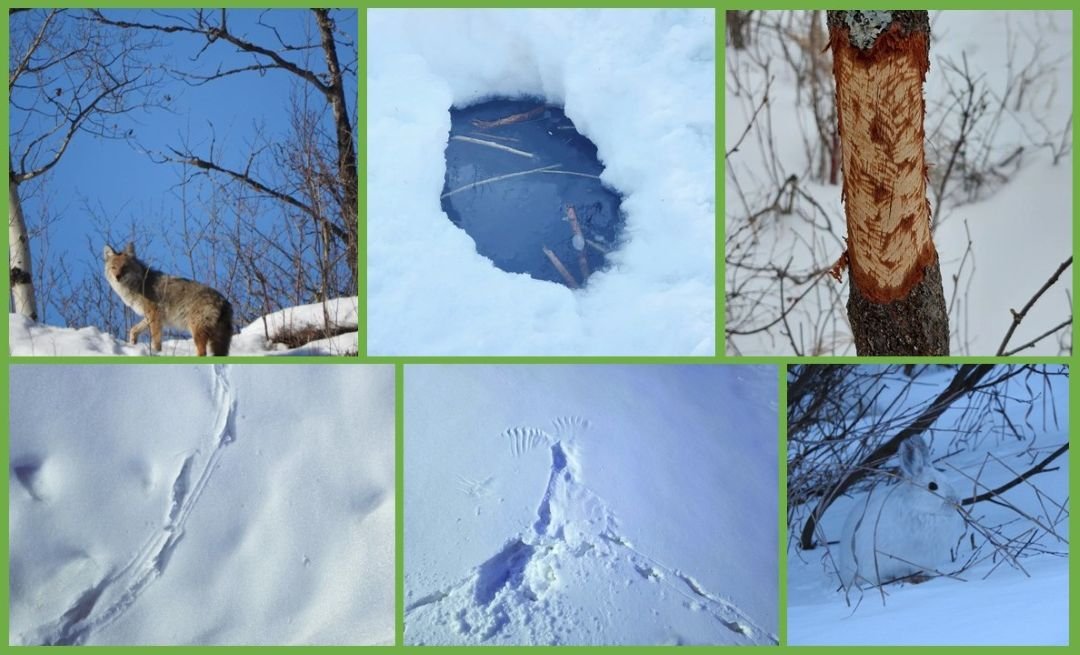
The North Saskatchewan River Valley and its tributary ravines are a high-traffic wildlife highway etched into the snows of winter. Along the valley’s multi-use trails, you will primarily encounter the purposeful, straight-line "registering" tracks of coyotes, where the hind paw lands directly in the front print to conserve energy. Near dense brush and willow thickets, look for the heart-shaped hooves of white-tailed deer and the massive, deep-sinking tracks of moose. In wooded sections, the distinctive "V" pattern of the snowshoe hare is common, featuring oversized hind feet that act as natural snowshoes, often accompanied by the winding "waddle" and tail-drag of a porcupine.
Beneath the surface lies the subnivean zone, a seasonal microhabitat where deer mice and voles navigate a network of tunnels for warmth. This hidden world is constantly monitored from above; predators like the Great Horned Owl use acute hearing to pinpoint movement under the crust. The most dramatic evidence of this is a "wing print"—a ghostly, fan-shaped dusting of feathers on the snow where an owl has dived to snatch a rodent. While less specialized, ravens also patrol these areas, opportunistically hunting mice that venture onto the snow's surface.
Survival also leaves a permanent mark on the valley’s vegetation. Young trembling aspens often show exposed white wood where snowshoe hares have nibbled bark at the snow line, while porcupines leave irregular patches much higher in the spruce canopy. At the river’s edge, the landscape changes with the ice; look for beaver slides, wide, smooth troughs in the snow where wood has been hauled to the water. In quieter backwaters, you may find muskrat "push-ups"—small, frozen mounds of mud and vegetation sitting atop the ice that serve as vital breathing holes and mid-river dining stations.
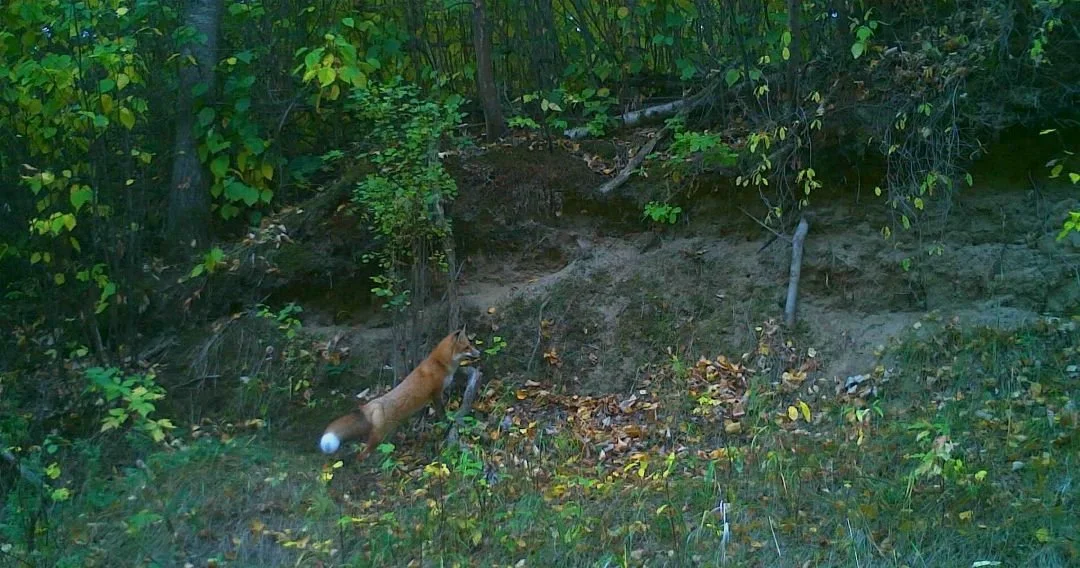
Photo credit: EALT website
The Clever but Elusive Red Fox
While the larger coyotes often dominate the open trails, the Red Fox is a more secretive resident of the North Saskatchewan River Valley. Generally shy and nervous by disposition, foxes prefer "edge" habitats where the dense forest of the ravines meets open clearings. Throughout the coldest months, they take shelter in thickets and heavy bush, relying on their acute hearing to hunt for mice moving deep beneath the snow crust.
As winter begins to break in March, the focus shifts toward the next generation. This is a pivotal month for Edmonton’s foxes, as it marks the arrival of their first litters. Vixens seek out dry, south-facing dens—often repurposed burrows on steep streambanks or hidden spots beneath fallen logs—to give birth to an average of five pups. During these early weeks, the male fox is a dedicated provider, hunting the river valley’s rodents to bring food back to the vixen while she keeps the pups warm against the lingering spring chill.
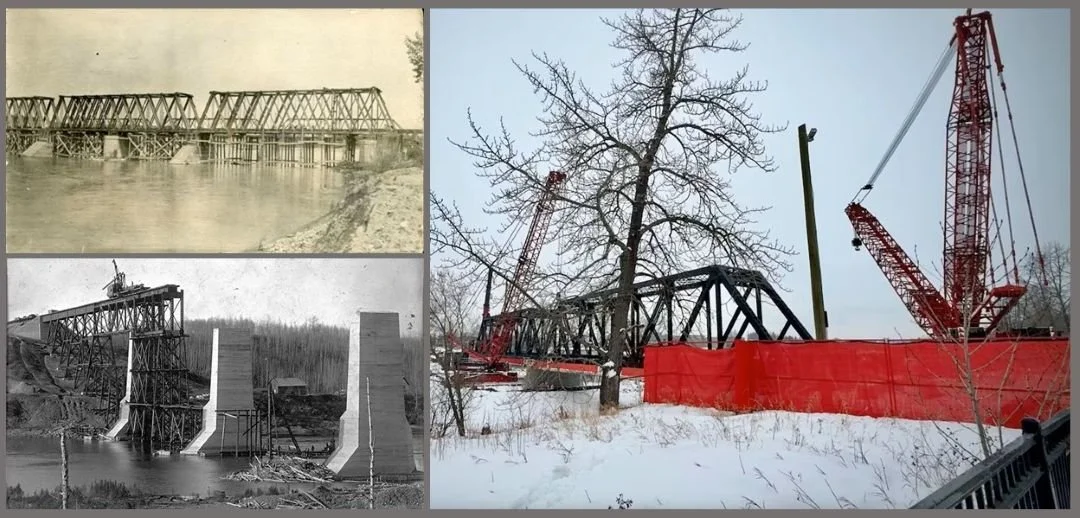
Photo credit: City of Red Deer / Strathcona County / Lina Elsaadi
A Tale of Two Century-Old Bridges
While the North Saskatchewan River Valley is defined by its natural beauty, part of its more recent history is anchored by the massive steel structures that first connected Alberta to the world. Two bridges, built just a year apart at the dawn of the 20th century, currently showcase two very different ways we preserve our industrial heritage.
In East Edmonton, the Clover Bar Rail Bridge (or Beverly Bridge) remains a towering, active giant. Standing 42 meters high, this 504-meter-long iron truss system was completed in 1908 by the Grand Trunk Pacific Railway. It is a rare example of a "Golden Age" structure that is still in heavy use today, carrying modern trains on the same concrete piers laid down in 1907.
To the south, a contemporary of the Clover Bar bridge recently made headlines for its survival. The historic Red Deer CPR Bridge, also built in 1908, was the subject of a massive $22.3-million restoration. In a "landmark lift," three cranes hoisted the 118-year-old steel trusses onto new foundations to save them from demolition. While Edmonton’s bridge continues its original industrial mission, Red Deer’s has been reborn as a pedestrian landmark.
Both structures represent an era of bold engineering. Whether still hauling freight or serving as a walkway, these steel giants are "human tracks"—permanent marks of history etched into the landscape of our river valleys.
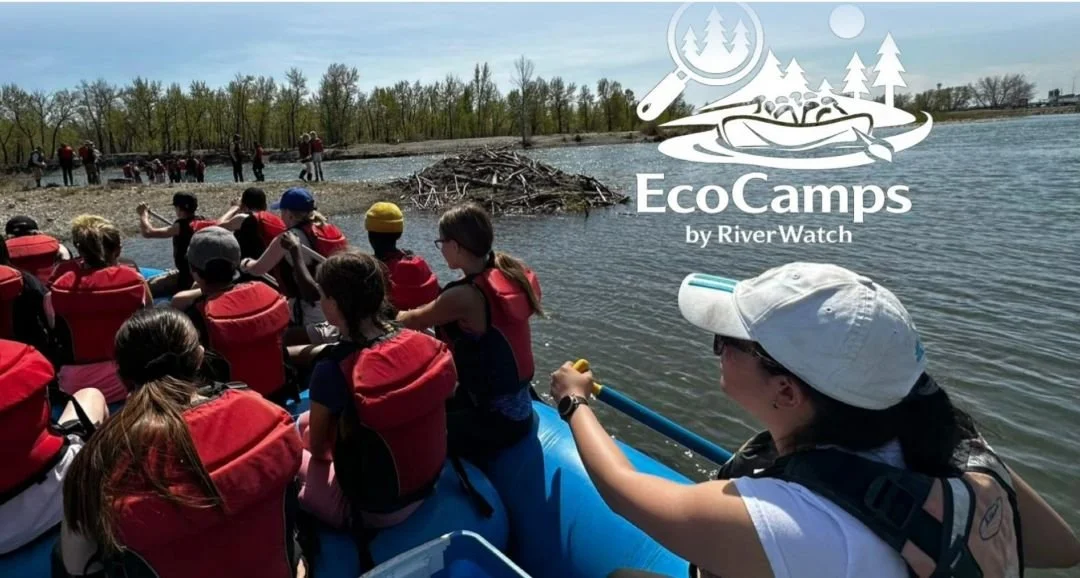
Photo credit: RiverWatch website
Adventure with Purpose: RiverWatch Summer EcoCamps
For youth looking to trade screen time for river time, RiverWatch is launching its first-ever Summer Science EcoCamps in the North Saskatchewan River Valley. Designed for ages 12–14, these immersive five-day programs transform participants into "Junior River Guides." Campers spend three days navigating the river in professional rafts and two days exploring the hidden ecosystems of the valley's creeks and shorelines. Guided by certified professionals, the experience blends high-energy outdoor adventure with meaningful environmental stewardship.
The curriculum goes beyond traditional camp games, focusing on "science in action." Using authentic scientific tools, campers test water quality and study how the city's urban infrastructure impacts the health of the river. Because only two week-long sessions are planned for Edmonton this summer, spots are extremely limited. Public registration opens on April 13, 2026, but families can join a priority waitlist now to gain early access and ensure they don't miss out on this unique opportunity to connect with our city's waterway.

Peggy & Balmer
Join filmmaker Tom Radford at Bison Lodge on Tuesday, March 31 (6:30–8:30 PM) for an evening exploring his latest work, Alberta at the Edge of History. This Edmonton & District Historical Society event dives into local heritage through Radford's new book and documentary.
Comment or Contributions
Please note that articles may not reflect the position of NSRVCS. River Valley News is meant to be a clearinghouse for the variety of opinions and ideas about Edmonton’s River Valley.
Email river valley photos, event information, comments, or questions to nsrivervalley@gmail.com.
Forward this link to anyone you think may want to sign up for this newsletter https://www.edmontonrivervalley.org/newsletter-signup