River Valley News - Sept 4/25

Late Summer Serenity: Community Minded Events Around the River Valley

Here are a few upcoming events that highlight the beauty of our surroundings and help support our fellow friends and river valley appreciators:

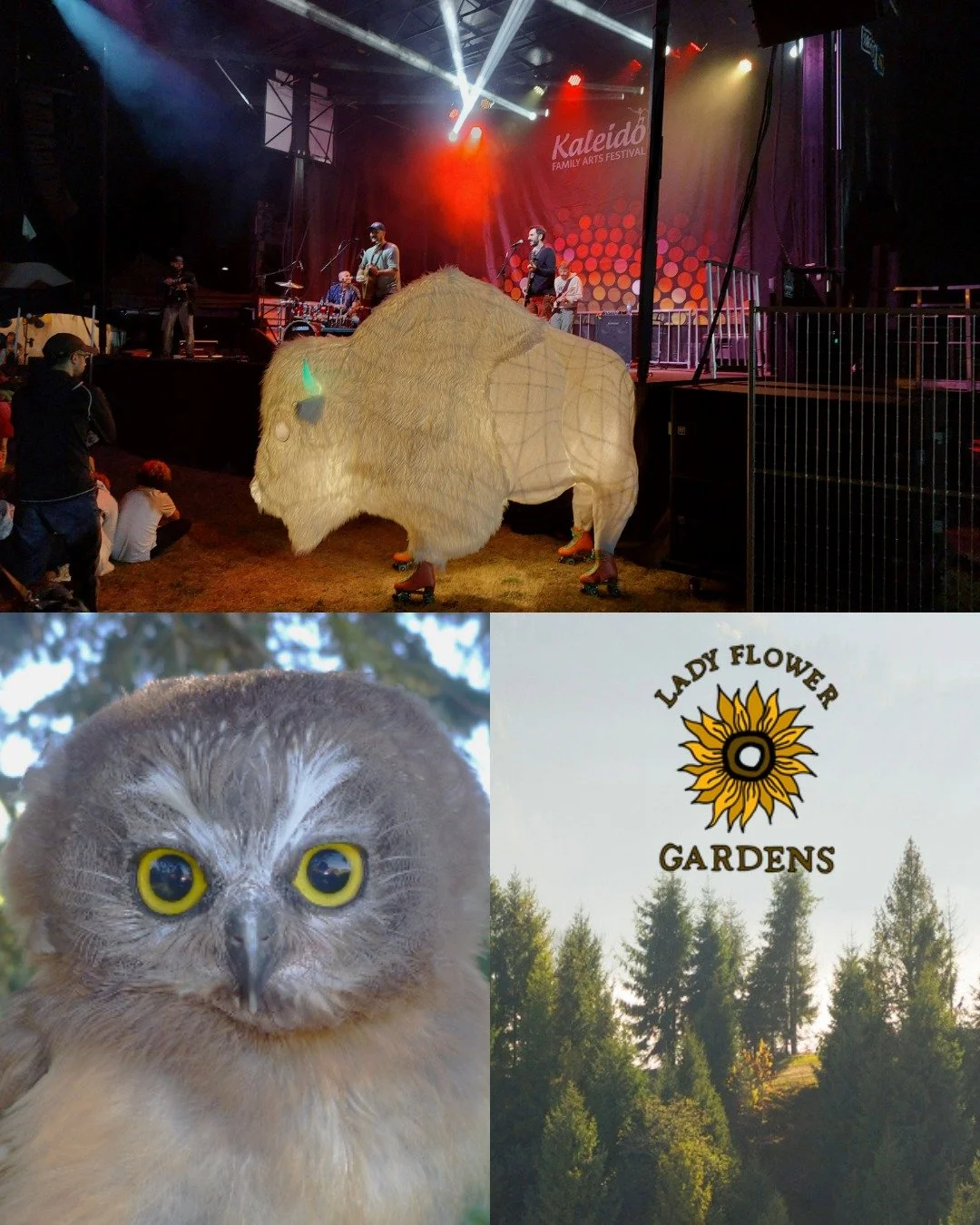
Kaleido Family Arts Festival / September 5–7, 2025 various times

The Kaleido Family Arts Festival, presented by Arts on the Ave, will celebrate its 20th anniversary with a vibrant showcase of music, theatre, and art throughout Edmonton's Alberta Avenue Arts District. Kaleido is a wildly joyful, wonderfully wacky, radically open celebration of the arts in the heart of the Alberta Avenue Arts District. The streets will be lit up with music, theatre, dance, zany street performances, mouthwatering eats, vibrant artisans, pop-up galleries, and magical moments.

Strathearn Art Walk & Music Festival / September 5–7, 2025 various times

Strathearn Art Walk is a free, family-friendly art market and music festival in Edmonton. This celebration of the arts strives to bring the community together and celebrate emerging and professional artists and musicians. Join them this September as they feature local creativity along the beautiful river valley and scenic city skyline, bringing together a breathtaking view of all our city has to offer.

Alberta Bike Swap Edmonton / September 7th various times

Would you be interested in buying a quality used bike in Edmonton, without the guesswork or marketplace stress? Alberta Bike Swap Edmonton returns on Sunday, September 7, 2025, at the Alberta Aviation Museum, providing a safe and streamlined way to buy, sell, or donate bikes in your community. For full details visit https://albertabikeswap.ca/events/edmonton/

Beaverhill Bird Observatory Casino Fundraiser / September 8th - 9th various times

The Beaverhills Bird Observatory, established in 1984, is the second oldest migration monitoring observatory in Canada. Their extensive long-term datasets enable the BBO to track changes in bird populations, migratory routes, breeding success, and survivorship. The BBO will also be holding a Casino event, which is a crucial source of funding for the organization. So if you'd like to help support their fantastic work, this is a great way to do so! As with other AGLC Casinos, training is provided. Sign up for shifts at https://volunteersignup.org/DEEYB

Lady Flower Gardens Music Festival / September 14 from 1-7 pm

Lady Flower Gardens is a non-profit organization that empowers disadvantaged citizens struggling with mental health and addictions by providing hands-on agricultural training and fresh produce for both participants and Edmonton's Food Bank. Every year they host a Fall Festival where all festival proceeds go directly back to LFG operations. The festival features live performances from talented local artists, a silent auction, food and drink freshly prepared with ingredients from our garden, bouquets for purchase, a wide variety of kids activities with Edmonton Forest School, guided forest tours, and more!

Kids Learn to Protect Watershed  Health with Education Kits

The NSWA Youth Water Council created the Watershed Keepers Education kits to help introduce young people to the importance of protecting watershed health. It is a hands-on watershed kit for young explorers (Grades 4-6) that shows different factors that can impact the well-being of our watershed and what they can do to help.

These kits are a great way to explore the rivers and lakes in your community and become a steward of your local environment. They also offer a hands-on approach to watershed science, allowing you to observe and record real environmental data. Each kit includes tools like a rain gauge and water quality testing kit so you can learn about pollution and understand how everyday actions impact your watershed. You can also explore the local flora by identifying plant species and bringing them to life with an origami kit.

By taking the Watershed Keeper pledge, you commit to protecting the health of your local watershed for future generations. It's a fun and engaging way to learn about the environment and make a real difference. Contact youthwatercouncil@nswa.ab.ca if you are an educator interested in getting a kit for your students.
A Tale of Two Caterpillars

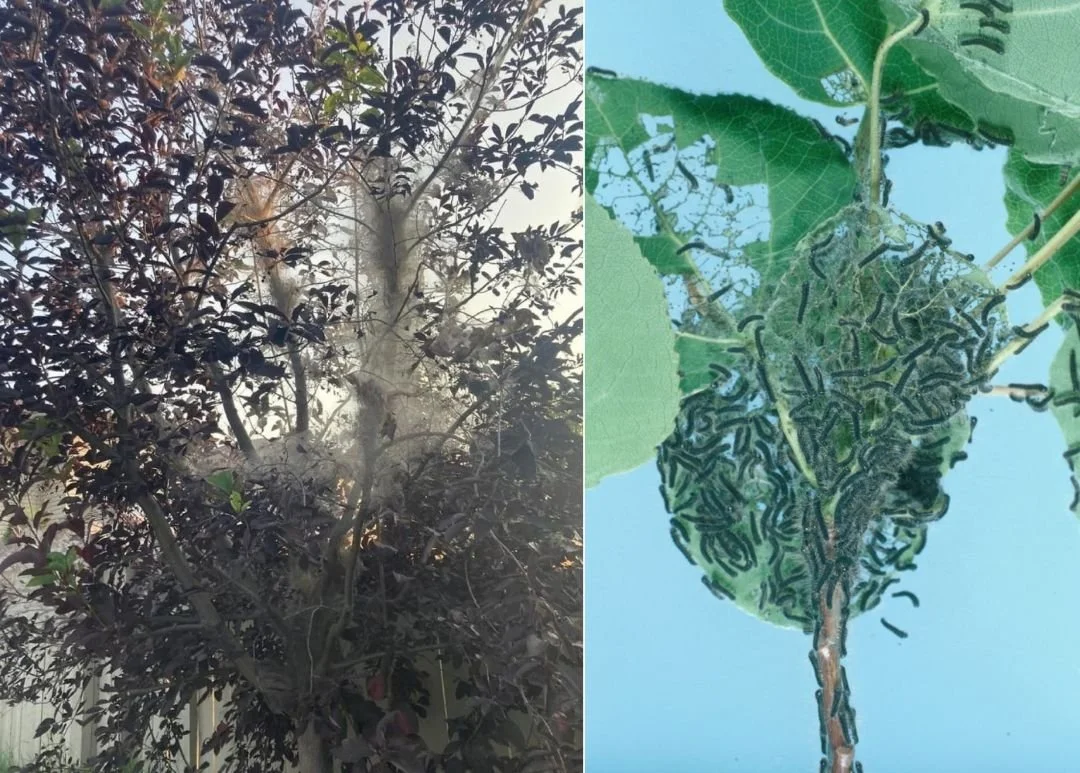
The fall webworm and Forest tent caterpillar are often confused with one another because both create prominent webs on fruit, shade, and woodland trees. Forest tent caterpillars occur in spring and early summer whereas the fall webworm appears in mid-August. Forest tent caterpillars are also much larger in size compared to the fall webworm, and seem to prefer trembling aspen and poplar trees whereas fall webworms prefer apple, poplar, ash, choke cherry, pin cherry, elm, maple, willow and white birch trees. However both the fall webworm and the forest tent caterpillar can be found on a variety of deciduous trees.

The fall webworm is native to North America. Infestations were more prevalent in eastern Canada in the past but with warmer temperatures, infestations on the Prairies have become more common. Initial signs of fall webworm include numerous webs on the outer branches of a tree. As the larvae develop, more and more webs will be spun to protect and hide the larvae. As the larvae grow, they feed on the leaves of the tree: first skeletonizing the leaf and then consuming the entire leaf.

The larvae appear in August-September and are approximately 25mm and have pale yellowish-brown bodies with broad, dark bands down their backs. Long whitish hairs protrude from black and orange impressions along their body. In September, the larvae drop to the ground and burrow into the tree litter and soil, where they form cocoons in which they pupate. Fall webworms will not kill a healthy tree however, their damage can be unsightly.  Reduce damage by removing the nests and webbing, or the entire infected branch can be pruned off and burned if the infestation is large enough.

For a useful website to aid in the identification of tree damaging insects, animals, and other diseases head to Tree Damage Identification | Wetaskiwin County, AB - Official Website

A Simple DIY Solution for Better Air

With the return of air quality advisors and thick wildfire smoke, building your own air purifier is a great way to take control of your indoor air quality and get a breath of fresh air during smoky days. The Corsi-Rosenthal Cube is an affordable, do-it-yourself air purifier that can significantly improve indoor air quality. Constructed from just a box fan and four MERV-13 furnace filters, this simple device provides whole-room air cleaning comparable to much more expensive commercial HEPA filters. It's a highly effective way to protect your health by clearing the air of airborne virus particles, pollen, dust, and especially the hazardous microscopic particles found in wildfire smoke.

Wildfire smoke is composed of tiny particulate matter, a dangerous mix of acids, chemicals, and metals that are small enough to be inhaled deep into the lungs and bloodstream. Research shows this type of pollution is significantly more hazardous than other forms of air pollution. By using a Corsi-Rosenthal Cube, you can help mitigate these risks, reducing the immediate health effects of smoke such as coughing, shortness of breath, and an increased heart rate.

Building a Corsi-Rosenthal Cube is a straightforward project that requires just a few items: a 20-inch box fan, four 20-inch MERV-13 filters, duct tape, and a piece of cardboard. First, tape the four filters together to form an incomplete cube, making sure the airflow arrows on each filter point inward. Next, seal the bottom of the cube with the cardboard and duct tape. Finally, place the box fan on the top of the cube, ensuring it is positioned to blow air out of the cube. This simple setup creates a powerful and efficient air filter.

For complete instructions, including pictures and diagrams, visit DIY box fan filters – Corsi-Rosenthal box - Clean Air Crew

WISH 24’ x 56’ Vignettes Flower Mural by Leigh Wright and Vinny Le

Location: Triovest ATB Place, downtown Edmonton

Comment or Contributions

Please note articles may not reflect the position of NSRVCS. River Valley News is meant to be a clearinghouse for the variety of opinions and ideas about Edmonton’s River Valley.

Email river valley photos, event information, comments, or questions to nsrivervalley@gmail.com.

Forward this link to anyone you think may want to sign up for this newsletter https://www.edmontonrivervalley.org/newsletter-signup
River Valley News - Aug 28/25

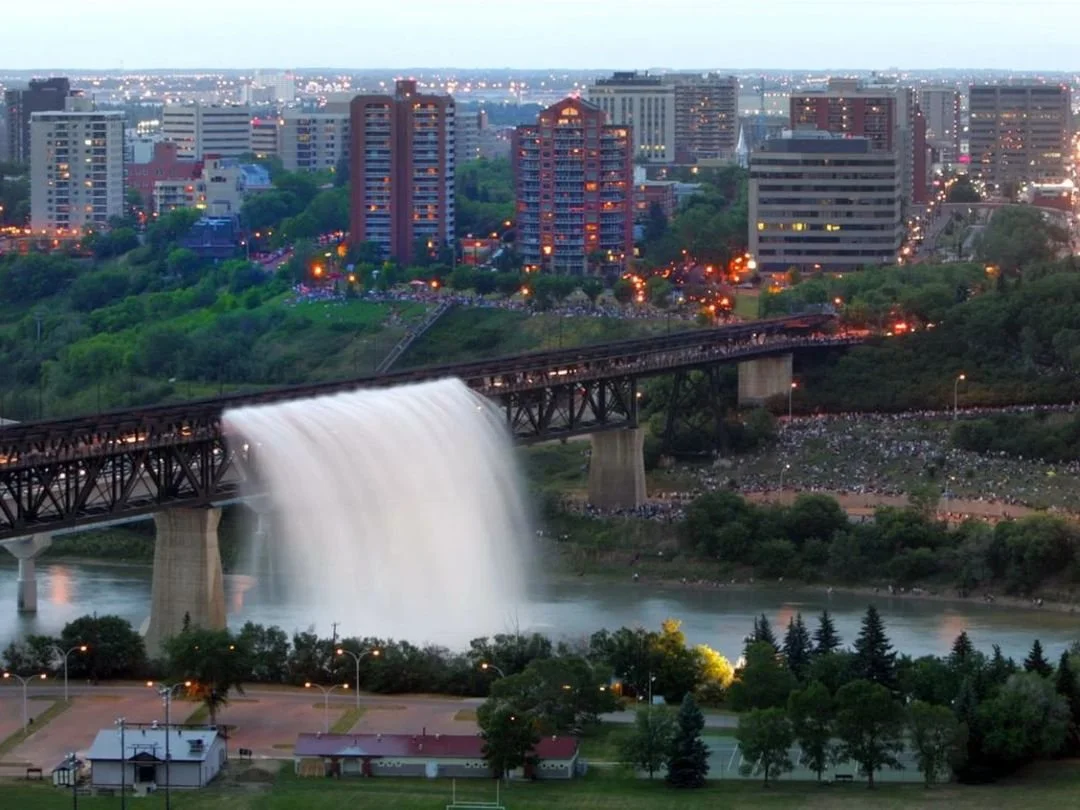
Photo credit: Postmedia 2004

The Rise and Fall of Edmonton's Great Divide Waterfall

On September 1st, 1980 the Great Divide Waterfall on Edmonton’s High Level Bridge, created by artist Peter Lewis, flowed for the first time to mark Alberta’s 75th anniversary. The waterfall — funded to the tune of $100,000 in provincial anniversary money and $500,000 more in donations of time and equipment — created a carnival atmosphere amid the throng of spectators and officials gathered for the event.

“This is Edmonton Water’s finest hour,” said a jubilant Mayor Cec Purves who, with other civic officials, fired off flare guns as the waterfall began to flow. Thousands of people gathered in the river valley, whooping and cheering as they waited for the water to flow. Campfires dotted the bank of the North Saskatchewan River. Small boats and kayaks hovered under the bridge. One skeptical constable on duty said: “Isn’t this something. We don’t have a hospital east of 97th Street, but we’ve got a waterfall over the High Level Bridge.” It started with a trickle but within minutes, as the pressure in the pipes began to build, the waterfall streamed forth. 

The falls lasted in the city until 2009, when the city stopped running the waterfall over concerns the chlorinated water could be affecting the river below. In 2012, Edmonton city councillors considered upgrading the falls to meet environmental standards, but the equipment needed to de-chlorinate the water was deemed too expensive. The debate about restoring the waterfall was again raised in 2014; however, the city council voted to shut it down for good. Today, we are all very familiar with the High Level Bridge art installation added to the bridge in 2013. Called “Light the Bridge,” the piece contains 60,000 LED lights installed along the bridge, lit up in different colours each evening.

Photo credit: Macleans.ca

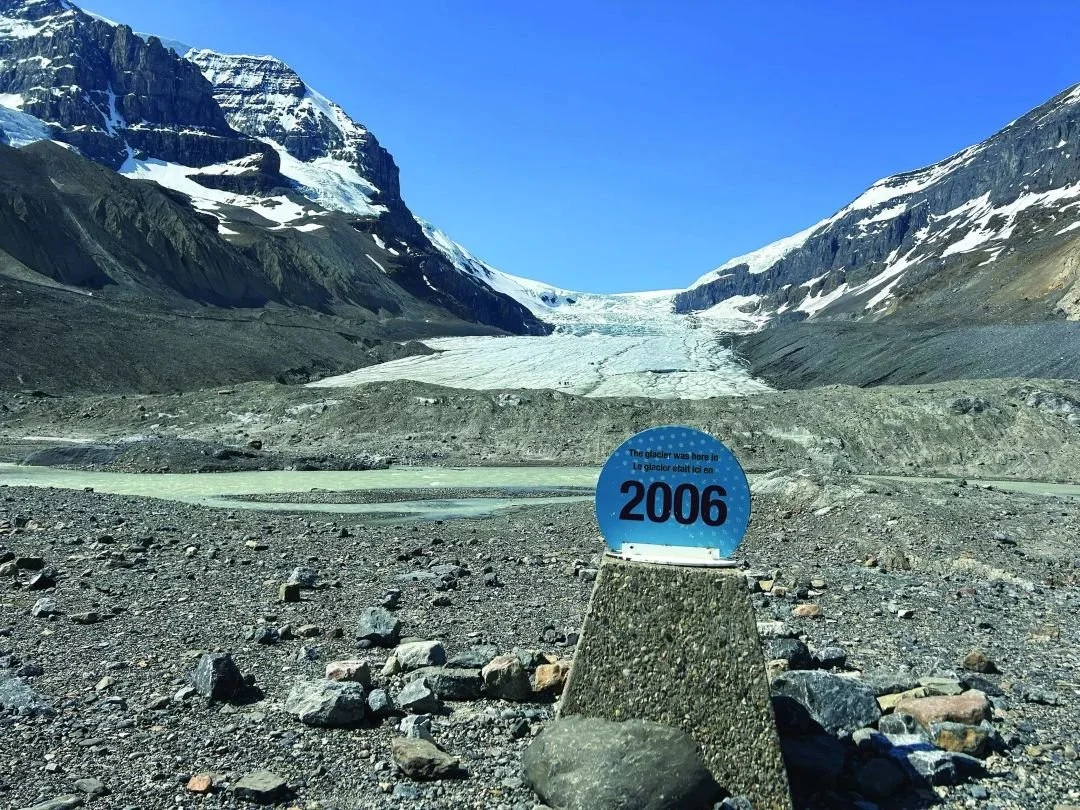
"Icy": A New Citizen Science Program for Glaciers

Science is all around us. It plays a part in getting us to work, powering our buildings, and making sure the food and water we consume is safe. Every day, researchers are working to improve our society and discover new things about the world in which we live. There are science projects and science experiments happening in your community that you can get involved in. Some may only be available at certain times of year or in certain areas, but with a little exploring you can find exciting ways to take part in science.

Parks Canada, British Columbia Parks, and the University of Waterloo’s GeoReach are launching “Icy”, a citizen science program that invites you to help monitor glacier changes! The program is rolling out in British Columbia and Alberta in two national parks and four provincial parks. More Parks Canada sites might participate in the future. Your photos will support vital scientific research, tracking glacial changes like retreat, thinning, and even disappearance.

Joining this initiative is a great way to support glacier and mountain ecosystem research while learning about the natural world. By taking regular photos of glaciers and surrounding areas, you’ll help track changes over time and uncover patterns like glacier recession. Your data will inform conservation efforts and help make decisions. By taking part in this initiative, you’ll also get access to the collected data, offering a chance to learn more about glaciers in your area!

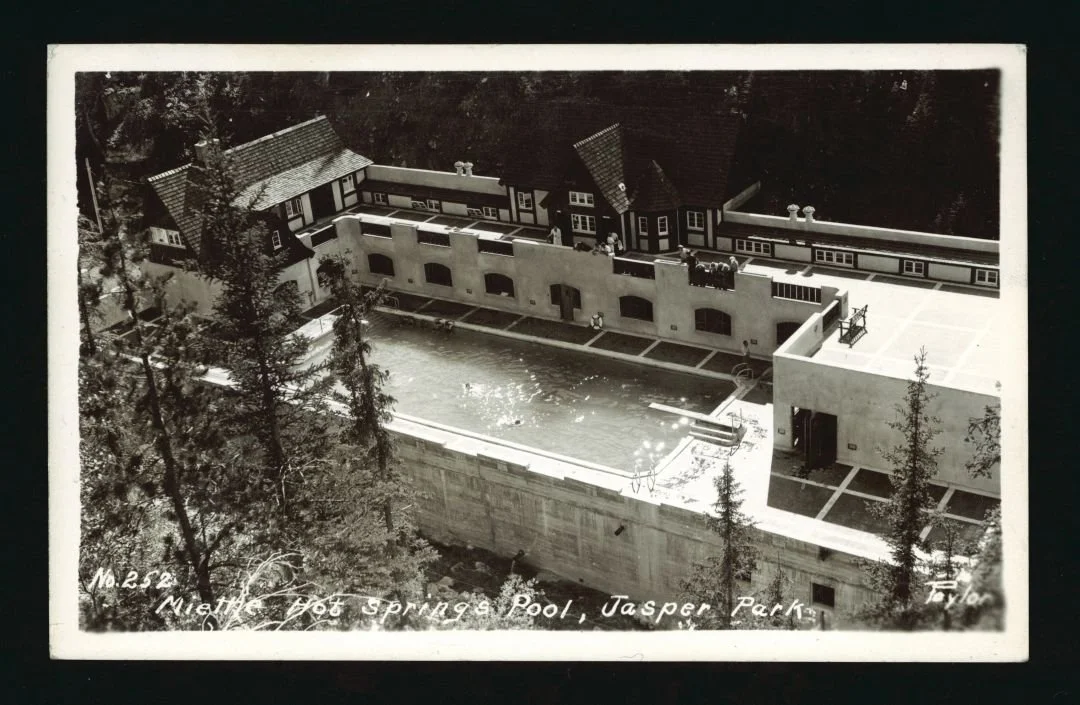
Photo credit: Internet Archives

From Depression to Destination: Building the Miette Road

The Great Depression broke Canada. In the years following the stock market crash, its gross national product dropped twenty-five percent. Personal income in Alberta fell by forty-eight, farm wages by fifty. The value of farmland itself plummeted by forty percent, while nationwide unemployment rose to thirty. Everywhere dust hounded crops and fires plagued town. And yet, nothing was done. Cities, provinces, the Dominion, each squabbled, passing the buck from one party to the other. No-one wanted the responsibility — and price-tag — associated with Depression-relief.

Fortunately, J.B. Harkin’s Dominion Park Branch took a more proactive approach. Where all other levels of government saw the country’s increasingly radicalized unemployed as an unwanted problem, the Park Commissioner saw opportunity. If a series of work camps were erected across Canada’s national parks, he argued, these men’s unused labour could transform them into revenue-generating tourist attractions. “In return,” Eric Strikwerda writes, “the men would get three square meals a day, a warm bed, and a healthy, natural setting in which to wait out the hard times.”

One of the most ambitious projects was building a road to the secluded Miette Hot Springs in Jasper National Park. For years, the springs were only accessible by a pony trail, but the Parks Branch aimed to transform it into a proper road for vehicles. Beginning in May 1930, workers toiled seasonally through difficult conditions, including heavy rains and harsh winters, to carve a 17-kilometer path. Despite a halt in funding in 1931 due to a new federal act, the project received renewed appropriations in 1932. By November 1933, the road was usable by vehicles, and its formal opening on June 1, 1934, was a success, attracting tourists and locals who had never been able to visit the springs before. Workers completed the final stages of the project by November 1934, after four summers of labor. The Miette Road not only became a popular scenic route but also provided over a million days of work for thousands of men during the darkest days of the Depression.

For the full story by Dane Ryksen go to https://www.forgottenedmonton.com/blog/miette-road.

Bear with Salmon 2014 by Dean Drever 

Location: Epcor Tower, Edmonton, Alberta

Comment or Contributions

Please note articles may not reflect the position of NSRVCS. River Valley News is meant to be a clearinghouse for the variety of opinions and ideas about Edmonton’s River Valley.

Email river valley photos, event information, comments, or questions to nsrivervalley@gmail.com.

Forward this link to anyone you think may want to sign up for this newsletter https://www.edmontonrivervalley.org/newsletter-signup
River Valley News - Aug 21/25

Photo credit: City of Edmonton Facebook

A call to action: Protecting the future of the NSRV

The North Saskatchewan River Valley is more than just a scenic landmark; it's a vital ecosystem facing a critical legal test. Ansh Gulati, a law student working with the Edmonton River Valley Conservation Coalition (ERVCC), recently authored an opinion article in the Edmonton Journal that argues the City's new Area Redevelopment Plan (ARP) falls short of providing the necessary protection.

One of the main concerns Ansh voices is the use of weak, non-binding language in the draft bylaw. He highlights the change from "shall" to "should" as a key shift that weakens the city's legal obligations to protect the valley. This subtle but significant change, along with a lack of clear guidance on environmental assessments and mitigation, could allow for development that harms the valley's biodiversity and ecological function.

The article emphasizes that true protection requires a robust and enforceable legal framework. It also calls for the bylaw to move beyond symbolic gestures and include meaningful, constitutionally mandated consultation with Indigenous communities. 

Ansh concludes that “Council must not approve a new river valley bylaw until these critical legal and structural issues are resolved. After all, a bylaw is the most binding form of municipal law. The need of the hour is a robust, comprehensive, and enforceable bylaw: one that tackles the current bylaw’s shortcomings and builds upon it in a substantive and meaningful way, from a legal perspective.”

Opinion: Edmonton's new river valley bylaw falls short

River Valley Alliance 2025 call for calendar submissions

The RVA is excited to announce the 2025 RVA Call For Calendar Submissions! They are seeking 13 stunning images to feature in their upcoming calendar—one for each month and a special one for the cover. To represent the diversity and beauty of our region, they need images from each of our six municipalities: Devon, Parkland County, Edmonton, Strathcona County, Fort Saskatchewan, and Sturgeon County. They are looking for a variety of seasonal shots, so whether it’s a frosty winter morning or a vibrant summer sunset, they want to see your best work!

For full details and submission guidelines visit 2025 RVA Call For Calendar Submissions - River Valley Alliance

Additionally, the River Valley Alliance offers a variety of events focused on outdoor activities and appreciating nature. The upcoming events for September 2025 include:

Youth and Family Geocaching Adventure: This event takes place on Saturday, September 13, from 10am to 12pm at West Rivers Edge Pavilion in Fort Saskatchewan. It is a geocaching event designed for youth and families.

Fall Medicine – Moccasin and Medicine Trail Walk Series: This guided trail walk is on Sunday, September 14, from 10am to 12pm.

Autumn Birding Walk – A Guided Birdwatching Experience: This guided birdwatching experience is on Sunday, September 21, from 9am to 12pm.

For a full list of events and registration details visit Events - River Valley Alliance

Photo credit: Operation Fruit Rescue Edmonton webpage

Operation Fruit Rescue Edmonton - Apple Cider Celebration

At Operation Fruit Rescue Edmonton (OFRE, pronounced “offer”), they’re all about building community through the simple act of harvesting fruit. Founded in 2009, their journey began with a passion for locally grown food and a commitment to ensuring that no fruit goes to waste. For over a decade, they’ve connected Edmonton’s fruit tree owners with eager volunteers, rescuing thousands of pounds of fresh produce that might have otherwise gone unpicked. 

Every apple tells a story—and during this three-weekend family apple celebration, you’ll help write the next chapter. From pedal-powered cider pressing to youth-friendly harvest workshops, OFRE’s fall festival connects kids, parents, and neighbours to the rhythms of food, land, and community.

Each event in the Apple Cider Celebration series offers something special. The first two weekends are community-focused cider pressing events—come press, taste, and connect. The final event is their grand finale: a full-day family celebration with the most hands-on workshops.

Apple Cider Celebration - Operation Fruit Rescue Edmonton

Photo Credit: Boreal chorus frog. Photo © A. Teucher

Vanishing Voices: The Disappearing Amphibians of Alberta

Amphibians are a unique classification of animals that often live double lives, partly in the water and partly on land. Alberta has three types of amphibians: frogs, toads, and salamanders. For 60 years, the AWA has worked to protect and preserve what makes Alberta unique: our wilderness and the rich complexity of biodiversity that comes with it. 

The AWA is still advocating for many of the same things they were at the beginning: the appreciation and protection of our wild spaces and wildlife as a public good, and more mindful development that takes ecological integrity into high regard.

Because of their sensitive skin and specific habitat requirements, amphibians are facing many new challenges due to human activity. Land-use changes, urban development and roadways, chemical additions to ecosystems, water pollution, extended periods of drought, and Chytrid fungus are all culprits in their declining numbers across the world, including right here in Alberta.

Amphibians often serve as indicator species within their habitats (think “canary in the coal mine”), revealing harmful changes in the environment early on. Protecting critical habitats and species helps ensure that all ecosystem services are preserved for the health and resilience of everyone. 

For this to happen, we must first remind ourselves to celebrate the sounds of a frog chorus just as we anticipate the calls of migratory birds in spring. For more information and to read the full article by Sara Heerema go to The Story of Alberta’s Abandoned Amphibians.

From Gold Dust to Green Space: The Story of Miner's Flat

Alice writes: Thank you as always for the newsletter! The article on prospecting in the most recent issue reminded me of this particular poem — it’s from a sequence about the river valley that appeared in my collection “The Occupied World.”

Flour gold

The spoon dredge

swirls mud into smooth batter

from the river’s round bowls.

It trawls the slurried beds

for flakes so light

they will float – a gold flour

sifted from sand.

The Gold Rush rises in the miners’ pans

like a loaf.

And the spoon dredge wants more

sweet cake

from the river’s cold oven.

Clover Bar. Gold Bar –

gravel ridges

thrust in the river,

licked like fingers.

Raft Race by Toti Lewis / EPL Stanley Milner 2nd Level

Stanley A. Milner Library ART GUIDE

Comment or Contributions

Please note articles may not reflect the position of NSRVCS. River Valley News is meant to be a clearinghouse for the variety of opinions and ideas about Edmonton’s River Valley.

 Email river valley photos, event information, comments, or questions to nsrivervalley@gmail.com.

 Forward this link to anyone you think may want to sign up for this newsletter https://www.edmontonrivervalley.org/newsletter-signup