
River Valley News - Nov. 20/25

Photo credit: dirtonmyshirt.com
River Valley Plants: Common Yarrow (Achillea millefolium)

The Common Yarrow, or Achillea millefolium, is far more than just a ubiquitous roadside weed; it is a fragrant, deeply historic herb found throughout Alberta, including the open spaces and disturbed areas of the River Valley. Identified by its height (ranging from 30 cm to 70 cm) and its aromatic, feathery, fern-like leaves, its species name millefolium translates to "a thousand leaves," referencing its finely dissected foliage. In late June, this hardy perennial bursts into bloom, displaying dense, flat-topped clusters of many small, typically white flowers that can continue colouring the landscape until September.

The yarrow boasts a fascinating history rooted in both military myth and Indigenous medicine. Its genus name, Achillea, refers to the Greek hero Achilles, who legend says used the plant to heal his soldiers’ wounds. This military association is echoed in its old folk names like “soldier’s woundwort” and “staunchweed,” reflecting its historical use as a styptic to stop bleeding in battle—an effective property that was also widely utilized by First Nations Peoples across the Rocky Mountains to treat cuts, burns, and aches.

Common Yarrow is a native, incredibly resilient plant that thrives in dry conditions and poor soils, making it common along riverbanks, roadsides, and open meadows. It is highly valued for its extensive, deep root system and its ability to spread, which makes it an excellent choice for ground cover and soil erosion control. Ecologically, its clustered flower heads provide a rich and abundant source of nectar for various insect larvae and certain butterflies, like the Blue Copper. Despite its slightly bitter taste, the Yarrow is a persistent and beautiful component of the River Valley ecosystem.
Common Yarrow  


Photo credit: Alberta.ca
The Storyteller's Green Space: Tony Cashman Park

The history of Edmonton is preserved not just in museums and archives, but in the names woven into the city’s landscape. Tony Cashman Park, located at 103A Street and 16 Avenue SW, is one such tribute—a quiet piece of green space honouring one of Alberta's most passionate and popular local historians. The park serves as a lasting memorial to a man whose life’s work was dedicated to ensuring that the stories of Edmonton's past were not just remembered but vibrantly brought to life for everyone.

Born in Edmonton in 1923, Tony Cashman was a celebrated author, radio broadcaster, and playwright who possessed an "uncanny ability to bring the people in his stories to life." During the 1950s and 60s, he became a household name through his weekly radio segment, “The Edmonton Story,” which ran for a decade and featured over 700 local tales. Cashman believed history should be told through the eyes of the common person who lived it, rather than just through dates and elite decisions. This distinctive, humorous, and deeply human style made history accessible and engaging, earning him accolades like the Edmontonian of the Century in 2004 and an induction into the Alberta Order of Excellence in 2014.

The City of Edmonton recognized Cashman’s profound impact by naming a park in his honour in 2011. In 2021, a new plaque was installed at the park, further cementing his place in the city's narrative. As his son, Paul Cashman, noted at the plaque dedication, "After 98 years of writing Edmonton's history, now he is part of Edmonton's history.” It was Tony Cashman’s hope that visitors to the park would take a moment to learn about him and, perhaps, become inspired to explore the rich history of their own city, continuing the storytelling tradition he championed for a lifetime.
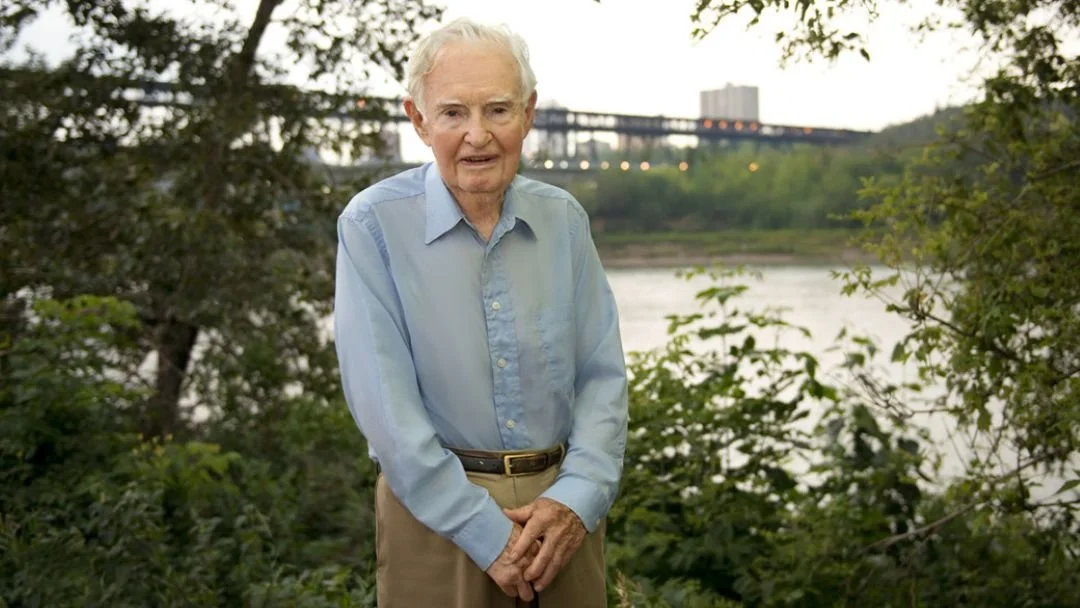
Tony Cashman gets new plaque at city park named after him

Tony Cashman | Alberta.ca 


Photo credit: Northern Photo Services Ltd.
High Level Bridge: History and Heritage

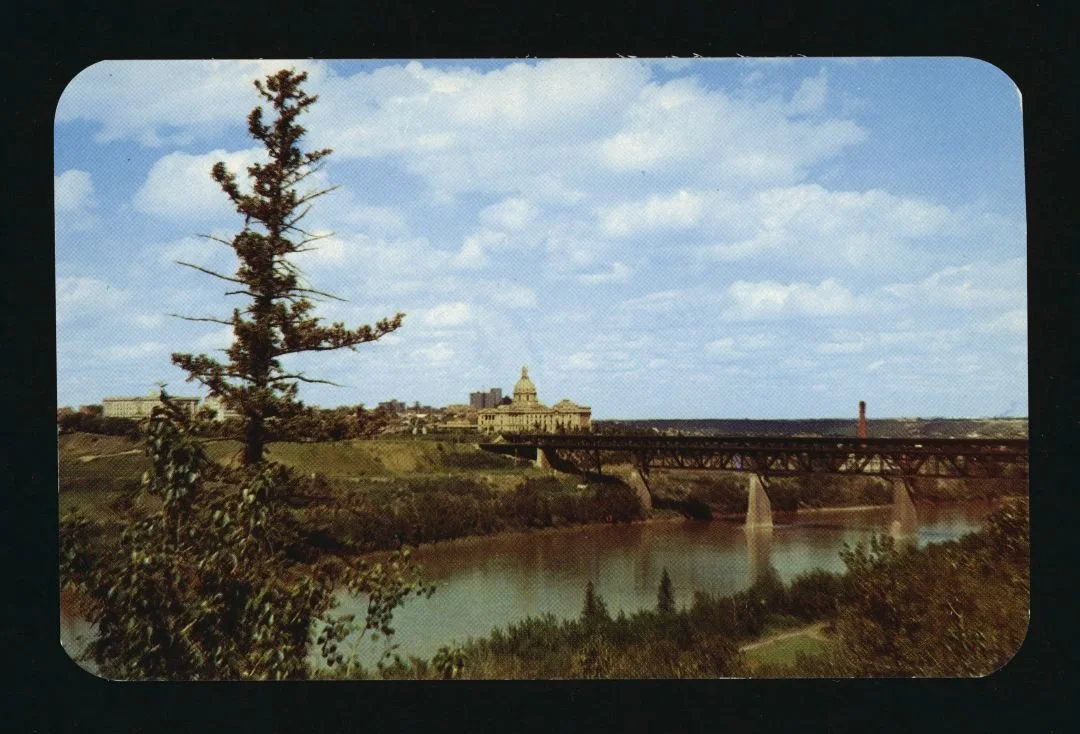
The High Level Bridge is a massive steel truss, multi-function bridge constructed between 1910 and 1913. As one of four great steel truss bridges built by the Canadian Pacific Railway (CPR) in Canada before WWI, it is a significant historic place. The design is notable for employing two distinct truss types—the Pratt Truss and the Warren Truss—for its steel substructure, which is set on a combination of concrete piers and steel legs. The structure is 2,550 feet long and features two decks positioned twenty feet apart, with the rail deck base sitting 156 feet above the North Saskatchewan River.

The bridge holds unique historical importance for its role in uniting the separate communities on the river's north and south banks. It was a major factor in the amalgamation of the City of Strathcona and the City of Edmonton on February 1, 1912. The High Level Bridge linked 109 Street in downtown Edmonton with 109 Street on Edmonton's south side. The construction costs, exceeding $2 million, were shared by the CPR, the cities of Edmonton and Strathcona, and the provincial and dominion governments, demonstrating the railway's immense historical importance.

Significantly, the High Level Bridge held unique standing in Western Canada for originally combining four modes of transportation: train, streetcar, automobile, and pedestrian traffic. While streetcar traffic ceased in 1951 and CPR trains stopped in 1989, the lower deck still carries vehicular traffic and a pedestrian walkway, and a tourist streetcar operates seasonally on the upper deck. The structure remains a massive landmark and an icon for the city of Edmonton

https://www.edmonton.ca/city_government/documents/InfraPlan/HighLevelBridge.pdf 

Operation Total Recall: The Citizen-Led Effort to Recall UCP MLAs

What has this article got to do with the river valley? Nothing!!! This just reflects the left leaning bias of your staff which is offensive. 

Your history and stories about our river valley have always been interesting and enjoyable but please refrain from political opinion.

Bruce

Operation Total Recall: The Citizen-Led Effort to Recall UCP MLAs

Is the River Valley News becoming political? I hope not. Please stick to history, facts.

Victoria

Operation Total Recall: The Citizen-Led Effort to Recall UCP MLAs

“Please note that articles may not reflect the position of NSRVCS. River Valley News is meant to be a clearinghouse for the variety of opinions and ideas about Edmonton’s River Valley.”

I am attaching your note from your newsletter. While I have found your newsletters interesting and engaging, articles like the recall campaigns are increasingly creeping into your publication. These articles are political and totally out of place in the newsletter. Your lack of oversight is ruining your publication.

Regards,

Brenda
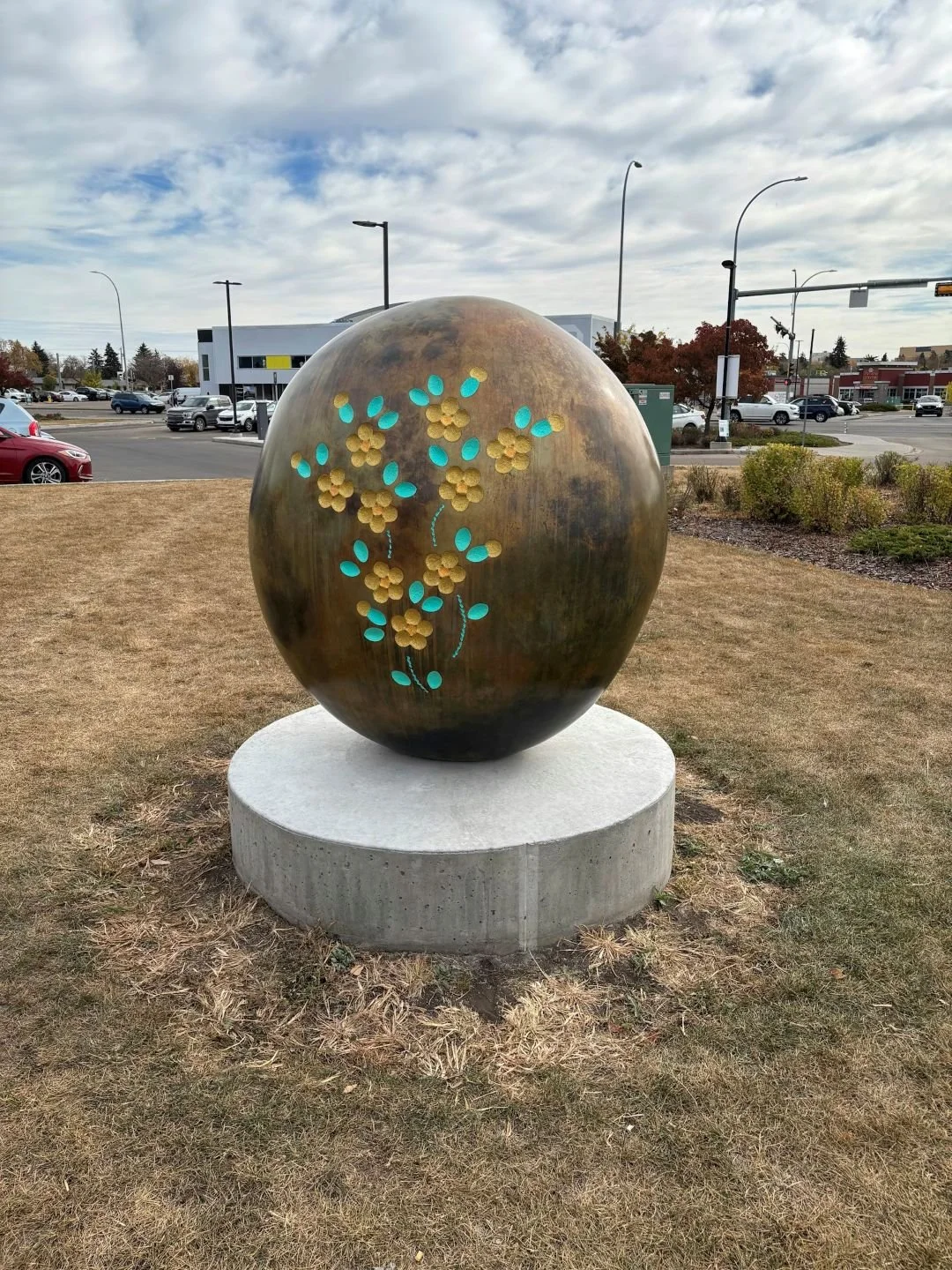

Touchstone / Bruno Canadien / 2025 / Bronze / NAIT LRT Station

https://www.edmontonarts.ca/public-art/touchstone 


Comment or Contributions

Please note articles may not reflect the position of NSRVCS. River Valley News is meant to be a clearinghouse for the variety of opinions and ideas about Edmonton’s River Valley.

Email river valley photos, event information, comments, or questions to nsrivervalley@gmail.com.

Forward this link to anyone you think may want to sign up for this newsletter https://www.edmontonrivervalley.org/newsletter-signup
River Valley News - Nov. 16/25

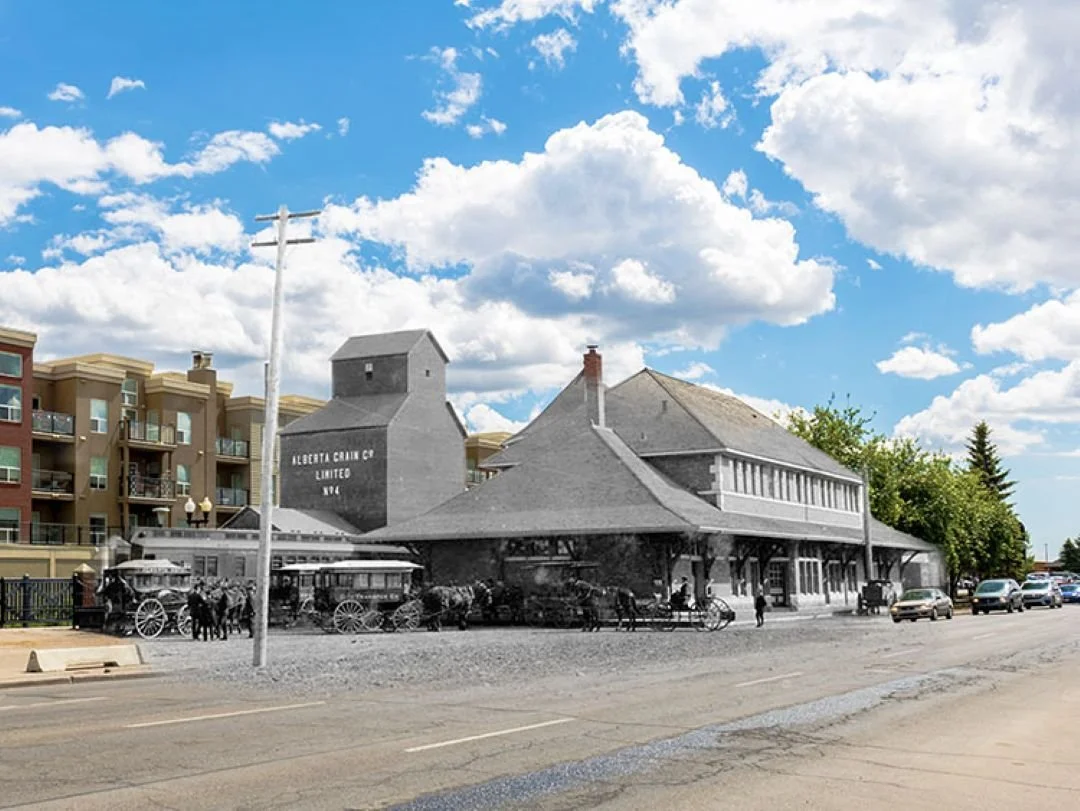
Photo credit: Library and Archives Canada 3302907

The Railway Divide: How A Bridge Construction Delay Created Strathcona

Following the eviction of local Indigenous Peoples, European settlers began arriving primarily by train in 1891 to the area that would become Strathcona, initiating a rapid growth spurt common across the prairies. The railway initially ended on the south side of the North Saskatchewan River—first at a temporary terminus across Whyte Avenue, and then at a second station built shortly after—because extending the line across the river to the HBC's Fort Edmonton was too costly and required a bridge. This delay caused the tiny township of South Edmonton to grow independently around the station, eventually becoming known as Strathcona, named after the HBC governor, Lord Strathcona.

While Fort Edmonton had been a major trading hub since 1795, the Canadian Pacific Railway (CPR) bypassed it in 1883, favouring a route through Calgary. This forced Edmontonians to wait eight more years for a spur line from Calgary, as the week-long, arduous journey was hindering the local economy. The railway was crucial to allow people, goods, and economic activity to flood into the Edmonton area quickly.

To save costs and profit from land sales, the CPR officially terminated the line in Strathcona, where it owned land, rather than build a bridge across the North Saskatchewan River immediately. Though Edmontonians still needed to ferry the river, the railway's arrival was celebrated, reducing the journey from Calgary to a single day. Both Edmonton and the new community of Strathcona saw immediate population growth following the line's opening.

For more information check out The End of the Line by Elyse Abma-Bouma


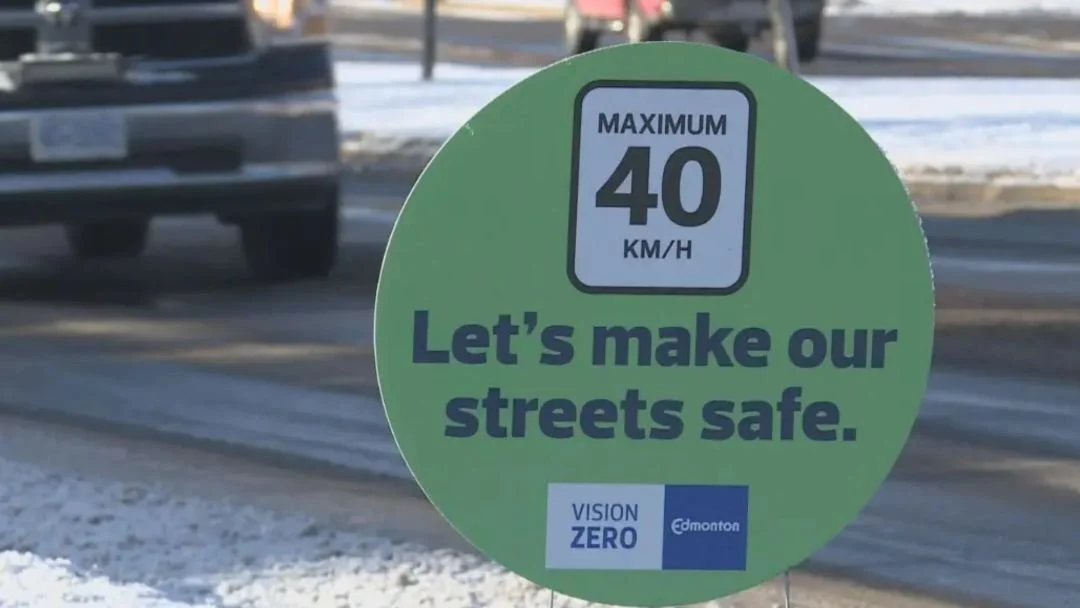
Photo credit: Global News Edmonton

🚶 Rising Traffic Fatalities Highlight Danger for Edmonton Pedestrians

Edmonton is facing a significant and troubling surge in traffic collision fatalities, with 29 deaths recorded this year, a dramatic increase from the 12 deaths reported in 2020. Authorities link this trend to reckless driving behaviour, high rates of speeding, and traffic violations, suggesting a correlation with the recent reduction in the use of mechanisms like photo radar.

A critical concern within this rising fatality rate is the danger to vulnerable road users, with ten of the total deaths this year involving pedestrians alone, up from six the previous year. This alarming trend underscores the city's failure to provide safe, reliable paths for people who choose active transportation options like walking or cycling to navigate the city.

Advocacy groups like Paths for People are urging the city to focus heavily on improving infrastructure, emphasizing that safe streets require intentional design, including high-visibility intersections and better bike and pedestrian infrastructure. Implementing these safety measures is essential to achieve the city's Vision Zero goal, which aims to eliminate all serious traffic-related injuries and fatalities for everyone.


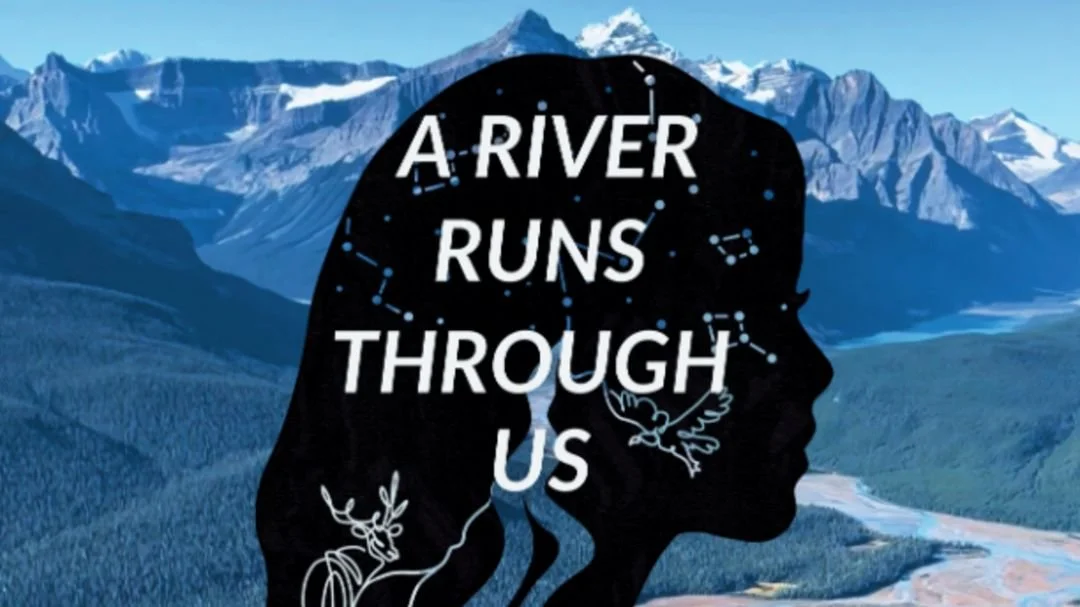
Photo credit: ualberta.ca

A River Runs Through Us - The Story of the NSR

The University of Alberta’s Faculty of Science is hosting a screening of the film  "A River Runs Through Us - The Story of the North Saskatchewan River," scheduled for November 19, 2025, from 6:30 PM to 9:00 PM at the Horowitz Theatre on North Campus. The core of the evening is a special film screening that explores the multifaceted story of this crucial waterway.

The documentary aims to tell the story of the North Saskatchewan River through a diversity of voices, including scientists, local communities, stewardship groups, and Indigenous peoples. The film highlights the river's immense significance, noting that it is far more than just a water source; it is a lifeline that has shaped cultural identities, ecosystems, and industries since time immemorial.

The event is open to the public, with a cost of $10 for community members and alumni, while students with a valid OneCARD and children under 17 can attend for free. Doors open at 6:30 PM, with the film screening beginning at 7:00 PM, offering a profound exploration of the river that carves its way through the province's rugged landscapes and historic communities.

A River Runs Through Us - The Story of the North Saskatchewan River | Events


Photo credit: r/alberta user Appropriate_Duty_930

Operation Total Recall: The Citizen-Led Effort to Recall UCP MLAs

Operation Total Recall is a grassroots, non-partisan movement in Alberta initiated to hold elected officials accountable through the province's existing recall legislation. The campaign was specifically spurred by the provincial government's use of the notwithstanding clause to pass the controversial "Back to School Act" following a major teachers' strike. The movement’s website tracks and supports efforts to recall the dozens of UCP MLAs who voted in favour of that specific legislation.

The primary objective of these localized recall campaigns is to secure enough successful votes across the province to challenge the ruling party's majority in the Legislative Assembly. Under Alberta law, a successful petition requires gathering a very high percentage of signatures from eligible voters within a specific electoral division. Organizers hope that achieving several recalls will trigger a lack of confidence and ultimately force a provincial general election.

The process has faced challenges, with organizers criticizing the provincial government for allegedly limiting Elections Alberta's funding, which they argue interferes with citizens’ ability to administer and verify the petitions. Despite these hurdles, recall applications have been approved for several key UCP representatives, including the Minister of Education, signalling the seriousness of these citizen-led efforts to send a strong democratic message about government accountability.

Alberta's back-to-work bill spurs MLA recall campaign


Community Windows / Coda Girvan / 2025 / Castle Downs Park

https://www.edmontonarts.ca/public-art/community-windows 


Comment or Contributions

Please note that articles may not reflect the position of NSRVCS. River Valley News is meant to be a clearinghouse for the variety of opinions and ideas about Edmonton’s River Valley.

Email river valley photos, event information, comments, or questions to nsrivervalley@gmail.com.

Forward this link to anyone you think may want to sign up for this newsletter https://www.edmontonrivervalley.org/newsletter-signup


River Valley News - Nov. 9/25

Photo credit: citymuseumedmonton.ca

How Citizens Saved MacKinnon Ravine

In the mid-1950s, Groat Ravine was controversially paved, setting a precedent for in-ravine freeway development. This project involved enclosing the original creek in a culvert and creating a four-lane road, which was part of the new Groat Road system. The road, featuring a new North Saskatchewan River bridge, funnelled traffic directly toward the new Westmount Shopping Centre (the City’s first Mall), symbolizing the city's commitment to automobile-centric middle-class consumerism.

Much like Groat Ravine, before it was paved, MacKinnon Ravine was described as quite “well used” at this stage by “picnickers, horseback riders and bicycles” and particularly by children. Unfortunately for those recreational enthusiasts, there had been significant development in the Town of Jasper Place, located to the west of Edmonton, where MacKinnon Ravine intersected with the city boundary, making it an ideal route to connect Jasper Place to Edmonton. As demonstrated by Groat Road, Edmonton’s river valley and ravine system could be utilized to minimize the disruption and cost associated with the construction of freeways. 

This plan sparked years of intense civic conflict as citizens rejected the priority given to car traffic over parkland and "human values." The opposition was first spearheaded by the Save Our Parks Association (SOPA) in 1965, a grassroots movement that forced a public plebiscite and was supported by key figures like Parks Superintendent Jack R. Wright, who publicly resigned after criticizing the sacrifice of parkland. This coalition successfully galvanized public opinion, leading later reform groups, such as the Urban Reform Group of Edmonton (URGE), to link ravine preservation with broader demands for government accountability and balanced transportation. These sustained, multi-layered citizen efforts eventually won out, compelling city leaders like Mayor Cec Purves to reverse the plans and culminating in the permanent cancellation of the freeway in June 1984.

To learn more about this important part of Edmonton's history, check out:

 "The Affordances of MacKinnon Ravine: Fighting Freeways and Pursuing Government Reform in Edmonton, Alberta"  an article by Shannon Stunden Bower

https://citymuseumedmonton.ca/2021/11/02/margaret-chappelle-the-artist-who-saved-the-mackinnon-ravine/ 

City Under Pressure - NFB a 1965 film by Theodore Conant


Photo credit: Edmonton Historical Board 

"Rowand's Folly": The Big House and the Legacy of Chief Factor John Rowand

Although there are no official records, the Big House at Fort Edmonton was estimated to have been built around 1843. Built for the Chief Factor of the Hudson’s Bay Company, John Rowand, it was the largest and most luxurious house in the area. Sometimes called Rowand’s Folly because of its size and elaborateness, it was built not only for his comfort but also to be an imposing structure to visitors, including Indigenous peoples. When Paul Kane sketched and painted the fort in 1846, the massive three-storey structure was its most prominent feature, visually dominating the palisade and rising above all other buildings.

The home was built of squared timbers and measured seventy feet deep by sixty feet wide. Written accounts state that its furnishings came from England, and guests were treated to fine china and silverware, something unheard of in a trading post. It apparently contained the first glass windows west of Fort Garry in Winnipeg, another Hudson’s Bay Company post at the confluence of the Red and Assiniboine rivers. A reconstruction of Rowand's original Big House, based on archival evidence, was built in 1973 and remains a focal point at Fort Edmonton Park.

John Rowand (1787–1854) was a dominant figure in the Canadian fur trade, starting with the North West Company in 1803 before its 1821 merger with the Hudson's Bay Company (HBC). He came to Fort Edmonton in 1823, eventually becoming Chief Factor in 1839. Alongside his wife, Louise Umferville, he oversaw the fort for nearly fifty years, transforming it into the central hub of the Saskatchewan district and a crucial shipping depot for the HBC by developing a northern supply route. This pivotal role continued until his retirement in 1854, the same year he died while travelling back to Montreal.


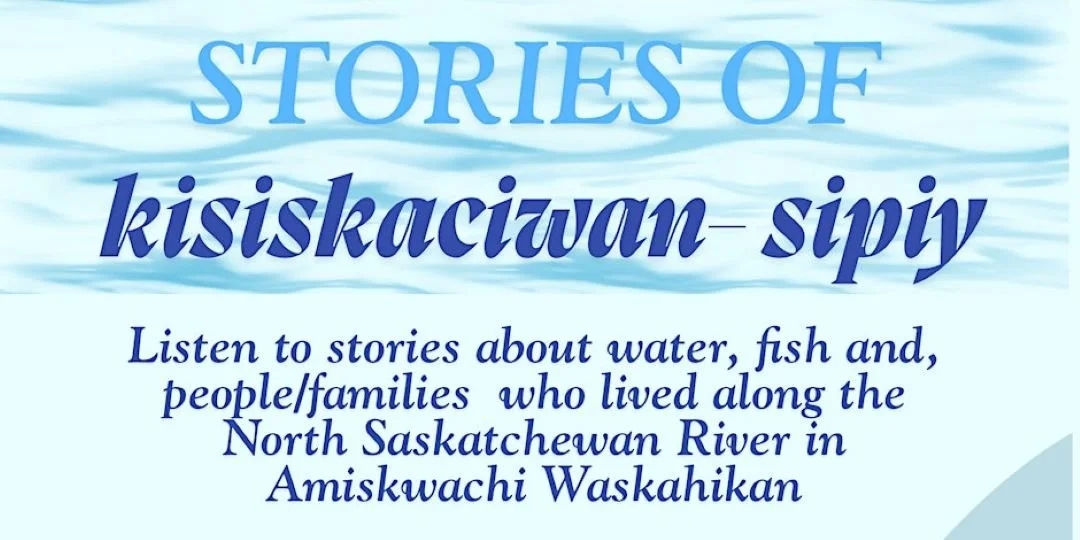
Stories of kisiskâciwan-sîpiy

Join VIDEA on November 15th from 1 pm to 4 pm for an afternoon filled with indigenous storytelling about water, fish, and families who lived along the North Saskatchewan River in Amiskwaciy-wâskahikan. The event will be located at 12905 64 St NW. Email swhite@videa.ca if you have any questions, and head to Eventbrite for tickets.

The North Saskatchewan River, or kisiskâciwan-sîpiy—the Cree name meaning "swift-flowing river"—is more than a waterway; it is the cultural and geographic heart of our region. Flowing from the Rocky Mountain glaciers toward Hudson Bay, the river has served as a vital highway, border, and source of life for Indigenous Peoples for millennia, who knew the Edmonton area as Amiskwaciy-wâskahikan ("Beaver Hills House").

The river remains a place of deep cultural heritage, ceremony, and spirituality, and its valley system is the largest connected urban parkland in North America. Events like “Stories of kisiskâciwan-sîpiy” serve to share Indigenous histories and narratives, reminding us of the intimate knowledge and responsibility the original peoples—including the River Cree (sipiwiyiniwak) and Métis—hold for this land.


Feedback - Why Your Outdoor Cat is Still a Top Threat to Canadian Birds

Thanks for the November 30 newsletter article highlighting the very serious threat that roaming cats pose to bird populations and the updated data released by Canadian researchers.  As stated, despite estimates of cat perpetrated bird deaths being lowered, this is no cause for celebration.  Roaming cats continue to outnumber, by far, all other anthropogenic causes of bird deaths.  This should be a concern not just for bird lovers but for everyone.  Birds are an essential part of the ecosystem and as their numbers continue to decline catastrophic environmental tipping points could be triggered.

Roaming Cats and Environmental Harm

​The renewed Edmonton Animal Control Bylaw fails to address the severe threat posed by roaming owned and feral cats to bird populations and the ecosystem. Despite new data, cats remain the leading anthropogenic cause of bird deaths. The current bylaw, which allows owned cats to roam on public property unsupervised, is problematic and ignores the overwhelming desire of participating Edmontonians for a "no-roaming" cat bylaw. Furthermore, the reliance on Trap, Neuter, Release (TNR) for an estimated 70,000 feral cats is questioned as it does not mitigate environmental harm and is not a universally effective solution unless strict criteria are met.

Public Health and Safety Risks Ignored

​The City Council disregarded information about the public health risks associated with roaming cats, including their role as reservoirs for diseases and parasites like Toxoplasma gondii, which can spread to humans. The decision also went against the responsible pet ownership models adopted by most large Alberta municipalities, which prohibit unsupervised pets off their owner's property. The core issue is the imposition of pets on non-consenting private property owners, whose only recourse is the difficult process of trapping the animal.

​Animal Welfare Concern & Call to Action

​Allowing cats to roam unsupervised is a significant animal welfare issue, as it exposes them to serious dangers like vehicle strikes, predators, toxins, and diseases, resulting in dramatically shorter lifespans. This practice has even been labeled by some as animal cruelty. Concerned citizens are urged to continue raising awareness about this issue, share their thoughts with the new Edmonton City Council, and—if they are cat owners—demonstrate responsible pet ownership by keeping their cats indoors.

Caelen C.

Feedback - Why Your Outdoor Cat is Still a Top Threat to Canadian Birds

Last weekend I was at the Telus Science Centre in Calgary -  there was a bat information station and it identified that cats were a major threat to Alberta bats as well.  While birds are stalked by cats in daylight hours, when they are out at night they prey on bats.  

Jan R.


Another great issue! 

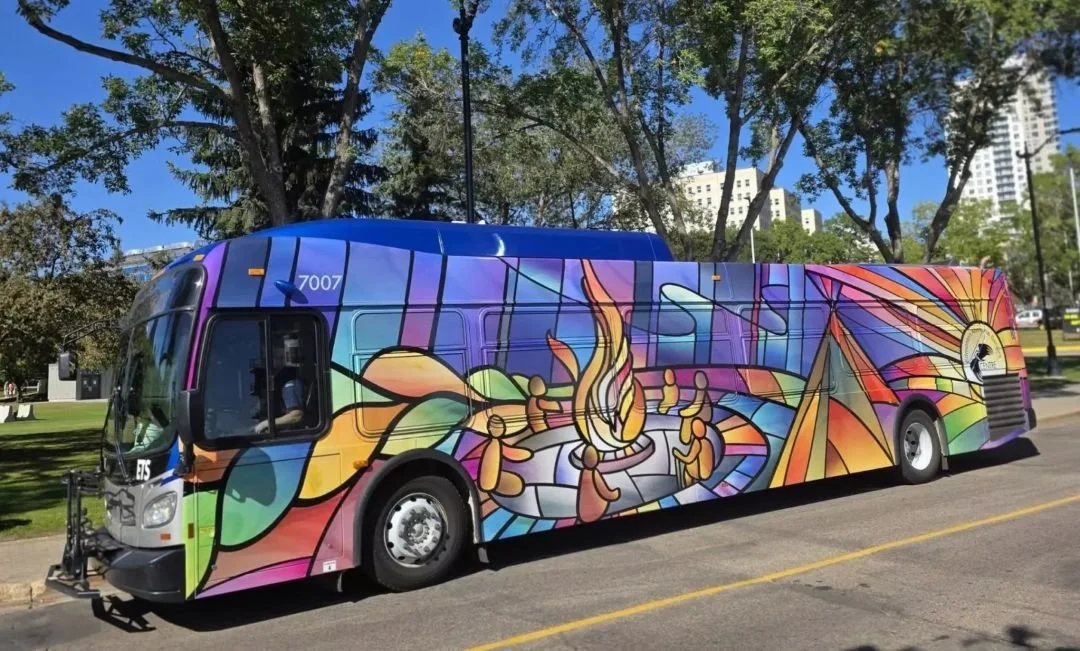
I encountered a city of Edmonton bus this week with a beautiful sweetgrass mural on the outside. After some googling, it appears this is a new initiative with Indigenous Seniors: New Edmonton bus wrapped with art inspired by Indigenous seniors | CFWE Northern Alberta.

Kristyn M.


Comment or Contributions

Please note that articles may not reflect the position of NSRVCS. River Valley News is meant to be a clearinghouse for the variety of opinions and ideas about Edmonton’s River Valley.

Email river valley photos, event information, comments, or questions to nsrivervalley@gmail.com.

Forward this link to anyone you think may want to sign up for this newsletter https://www.edmontonrivervalley.org/newsletter-signup