In This Issue
The Untamed River: Torrential spring rain and a riverboat struggles.
Mapping Ancient Roots: A student wins a $100,000 scholarship for tracking Alberta's oldest heritage trees.
Water Council Dissolved: The province axes the 22-year roundtable just as water-intensive AI data centres expand.
Forest Bathing Returns: Edmonton brings back guided nature immersion sessions across local parks this summer.
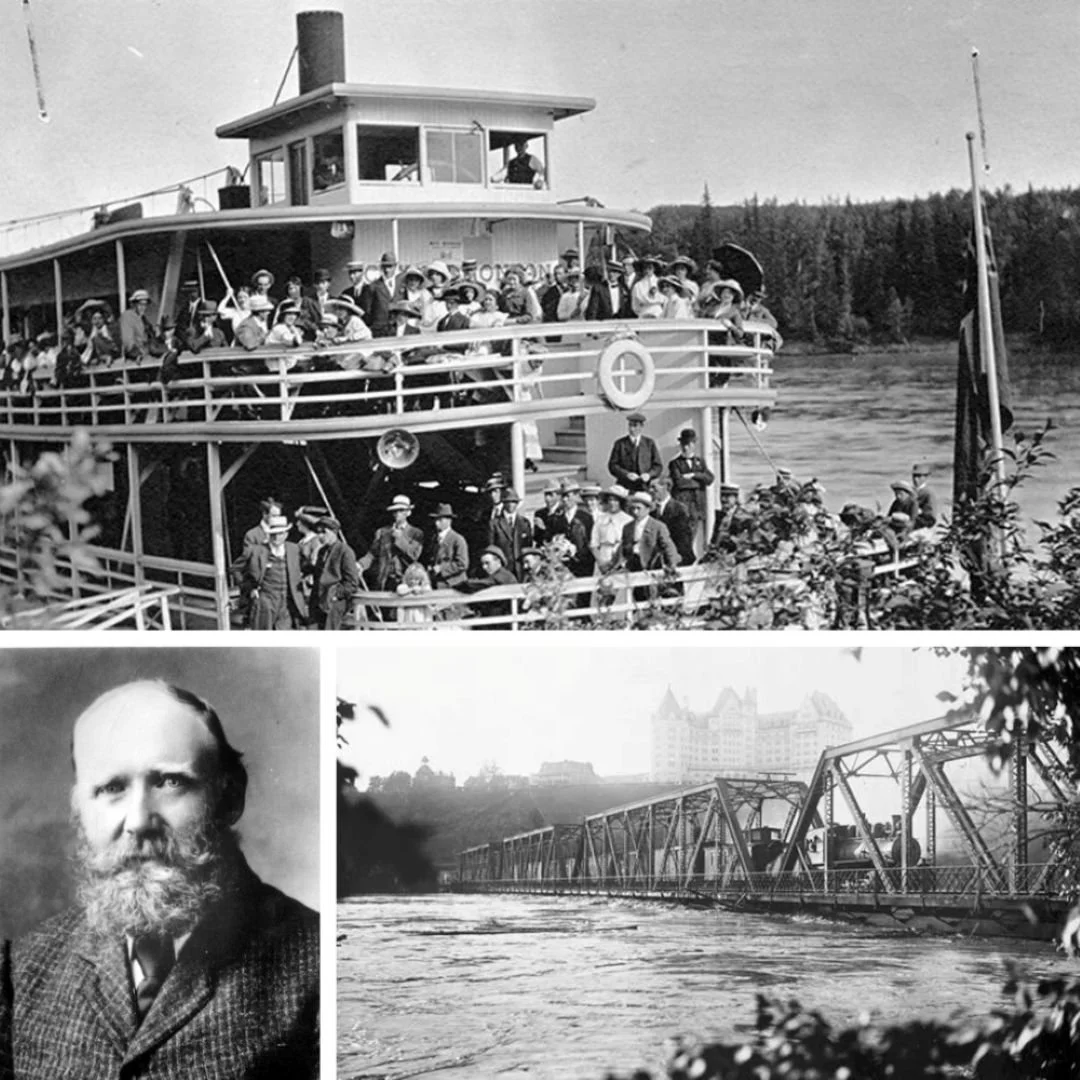
Photo credits: City of Edmonton Archives
Shifting Sandbars, Spring Deluges, and the Timeless Flow of the NSR
This past weekend, Edmonton got soaked by a spring storm that dumped 75 to 100 mm of rain in just a couple of days, filling basements, flooding yards, and turning river valley trails into soggy detours. It wasn't nearly as devastating as the flood of 1915—when massive mountain snowmelts combined with days of torrential upstream rain, causing the North Saskatchewan to rise a foot per hour and turn Rossdale into a deep lake—but it was a stark reminder of how quickly the river can reclaim the valley when the clouds open up.
The recent deluges echo another stubborn reminder of the river's character from earlier in May, when the Edmonton Riverboat suffered a hydraulic pump failure during a Mother’s Day cruise. Out of an abundance of caution, the captain deliberately brought the vessel to rest on a gravel bar just south of the James MacDonald Bridge. Around 200 passengers had to be evacuated from a paddlewheeler that suddenly found itself where no brunch-serving boat wants to be: safely beached on the riverbanks. It’s a scene that would have felt completely familiar to John Walter, the Edmonton pioneer whose luxury steamboat the City of Edmonton was famous in the 1910s for getting trapped on the shifting gravel bars that hindered early river transit.
More than a century separates Walter’s era from today’s paddlewheeler, but the North Saskatchewan hasn’t changed its personality. The connection isn’t just historical; it’s literally buried in the riverbed. Just look back to November 1960, when dropping water levels near the Walterdale camp exposed the rotting wooden ribs and rusty spikes of an old pioneer wreck, sparking a massive local debate over whether the river had finally given up the bones of Walter’s City of Edmonton or the Strathcona.
Decades later, heavy rain still turns our paths into temporary rivers, and those same hidden gravel bars still decide when a modern boat is done for the day—and suddenly sneak up on you when you're out for a leisurely paddle. The river doesn’t care about our schedules, our engineering, or our century of progress. It was here long before us, and it will remain long after we've left our mark—a quiet reminder that we don't control the river; it will always have the final say.
Mapping Alberta's Ancient Roots
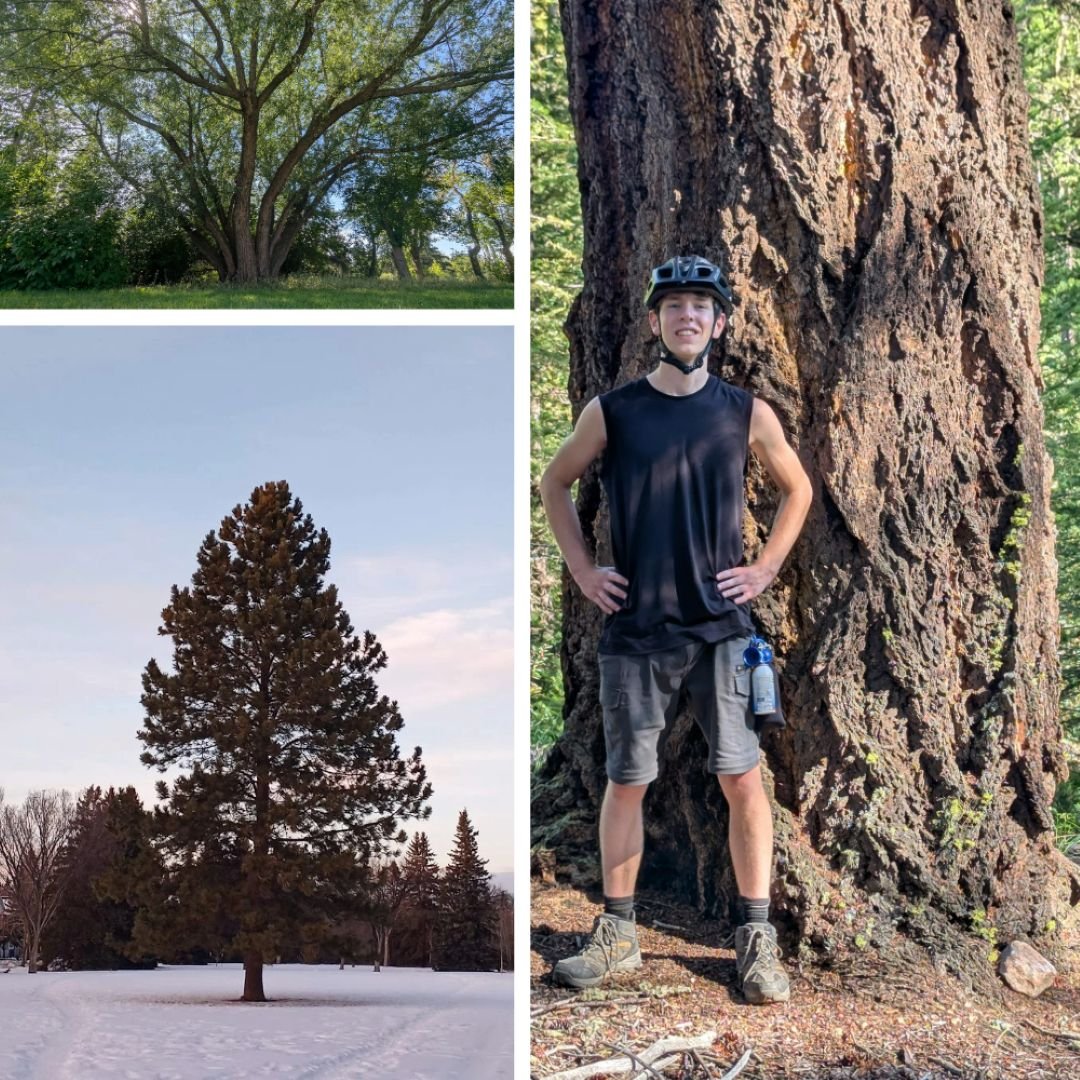
Jasper Place High School student Josh Kirsch has earned a prestigious $100,000 Schulich Leader Scholarship, recognizing his remarkable work in combining environmental science with software development. Kirsch secured the premier STEM award for creating Ancient Roots Alberta, a digital platform he built to map, document, and preserve the province's most significant heritage trees.
The project traces its beginnings back to the 2020 pandemic lockdowns. When Kirsch was 12, his school librarian dropped off a selection of books at his house, including one on Canada's historic, giant trees. The book sparked a deep interest that led to six years of independent field research, mapping, and measuring trees across the province. Realizing that Alberta lacked a modern, centralized registry for these specimens, Kirsch spent hundreds of hours teaching himself to code and build the live web platform.
Today, the registry features 374 verified heritage trees, operating as a community-driven project where the public can submit local discoveries, upload field photos, and log geographic data. Kirsch, who heads to the University of Alberta this fall to study forest business management, views the platform as a lifelong commitment. By bridging the gap between digital tools and the physical landscape, the Ancient Roots map provides a living record of the centuries-old giants quietly growing across our river valleys and rural backcountry.
Water Council Dissolved Just as Industrial AI Demands Loom
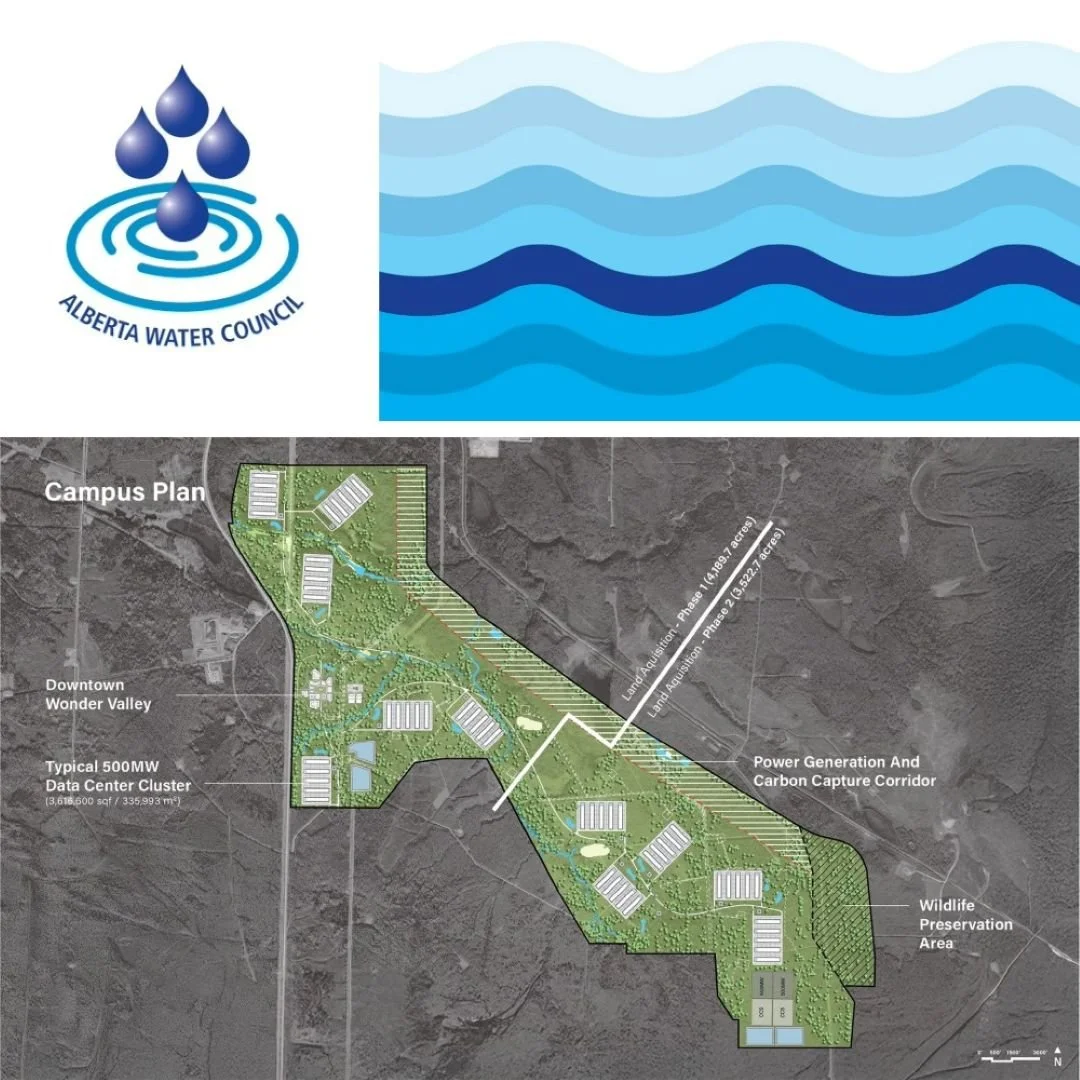
The Alberta Water Council has officially closed its doors, following a provincial decision to discontinue its core $1-million annual operational grant. Established in 2004 to guide the province's Water for Life strategy, the multi-stakeholder non-profit was given a rapid 90-day window to wind down operations and transition its website into a permanent digital archive. Throughout its two-decade history, the council functioned as a collaborative, consensus-based forum where representatives from industry, environmental groups, Indigenous communities, and government directly negotiated shared policy—famously achieving a voluntary 30% reduction in water use across multiple sectors.
The abruptness of the closure blindsided members. Signing off the final board meeting, professional biologist and founding member Jay White described the 90-day timeline as an "erasure" of decades of hard-won trust. "Collaborative water policy is slow by design," White noted, emphasizing that the council’s strength was its ability to force opposing sides to keep talking. "History rarely marks the moment when stewardship ends. It only records when its absence is finally noticed. Water policy advice is not dramatic. But its absence is."
That absence is being felt immediately as massive, water-intensive industrial projects move forward without a shared oversight table. Most prominent is the proposed Wonder Valley AI data centre campus in the Municipal District of Greenview, spearheaded by O’Leary Digital. The project recently scaled up its public plans to an enormous 9-gigawatt power capacity across a 64-square-kilometre footprint. While developers claim closed-loop cooling designs will limit consumption to under 6 million cubic metres per year, the local municipality has moved to secure a preliminary certificate to withdraw up to 24 million cubic metres annually from the Smoky River watershed. The massive scale of the request has already triggered fierce pushback from local advocates and a formal legal challenge from the Sturgeon Lake Cree Nation over risks to regional agricultural water tables.
Government officials defended the budget cut as a necessary measure to streamline administrative functions, noting that the council's president was a senior government bureaucrat and that the province would instead consult directly with individual watershed groups. However, critics and municipal leaders argue that eliminating the independent roundtable creates a dangerous oversight gap. By replacing a unified, consensus-driven model with fragmented, direct-to-government consultations, the province has dismantled its primary forum for cooperative stewardship—right when high-friction industrial demands are reaching multi-million-cubic-metre highs.
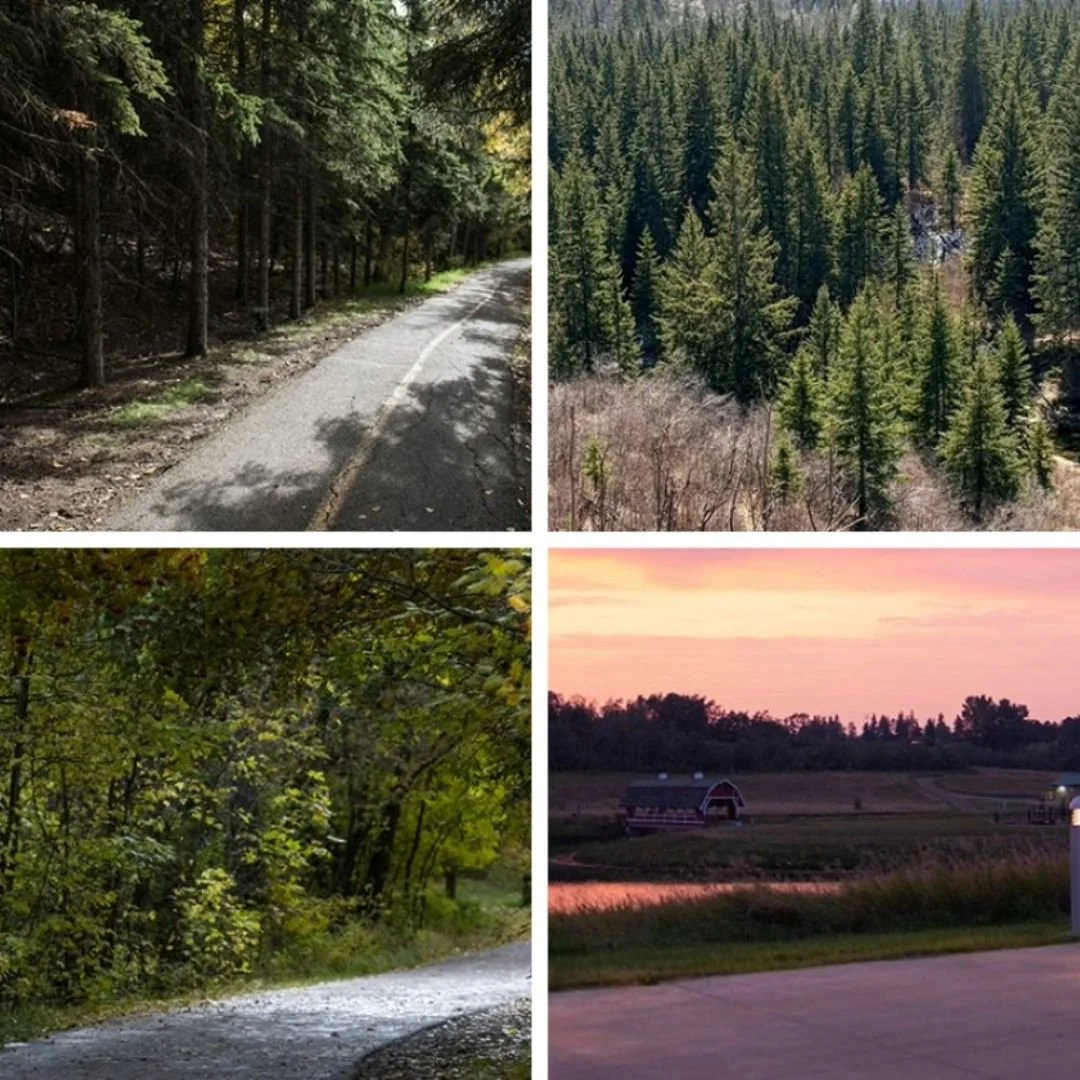
Forest Bathing Returns to Edmonton Parks
The City of Edmonton is resuming its free, certified shinrin-yoku (forest bathing) program this season, offering structured nature immersion sessions coordinated by the municipality's Urban Forestry team. Originating in Japan, the practice prioritizes slow-paced, mindful sensory engagement over physical exertion to reduce physiological stress markers, stabilize mood, and support overall well-being. Participants are guided through specific exercises designed to anchor attention on immediate environmental stimuli, such as ambient sounds, visual patterns in the canopy, and natural textures.
The two-hour instructor-led sessions are being offered as distinct registered courses through the summer, featuring specific themes including "Immunity Boost" and "Nature Reconnection." The itineraries integrate silent meditation, exploratory walking, and intervals for individual reflection within designated municipal green spaces. The 2026 program locations feature a variety of local parks and natural areas, including Northeast River Valley Park, Whitemud Ravine, Capilano Park, and the Twin Brooks District and Nature Park, as well as collaborative sessions held at the Larch Sanctuary in partnership with the Edmonton and Area Land Trust.
To find summer dates, park schedules, and registration info, head to the city's Move.Learn.Play portal under Registered Programs. You can also check program details and locations at edmonton.ca/ForestBathing.

Misi-mîkisak // Cheyenne Rain LeGrande ᑭᒥᐘᐣ // 2026 // Hawrelak park
Comment or Contributions
Please note that articles may not reflect the position of NSRVCS. River Valley News is meant to be a clearinghouse for the variety of opinions and ideas about Edmonton’s River Valley.
Email river valley photos, event information, comments, or questions to nsrivervalley@gmail.com.
Forward this link to anyone you think may want to sign up for this newsletter https://www.edmontonrivervalley.org/newsletter-signup