In This Issue
Spring Event Calendar: Six local gatherings, workshops, and guided trail walks from May 23 to June 11.
The "Prairie Chicken" Mystery: Spotting the difference between native grouse and urban partridges.
A FireSmart River Valley: Inside Edmonton's newly finalized wildfire mitigation and prevention strategy.
The Lore of the Lobstick: Traditional trail markers and the upcoming historical monument project.
Art Feature: Stream the NSWA’s complete history series.
Explore and Connect with Our River Valley
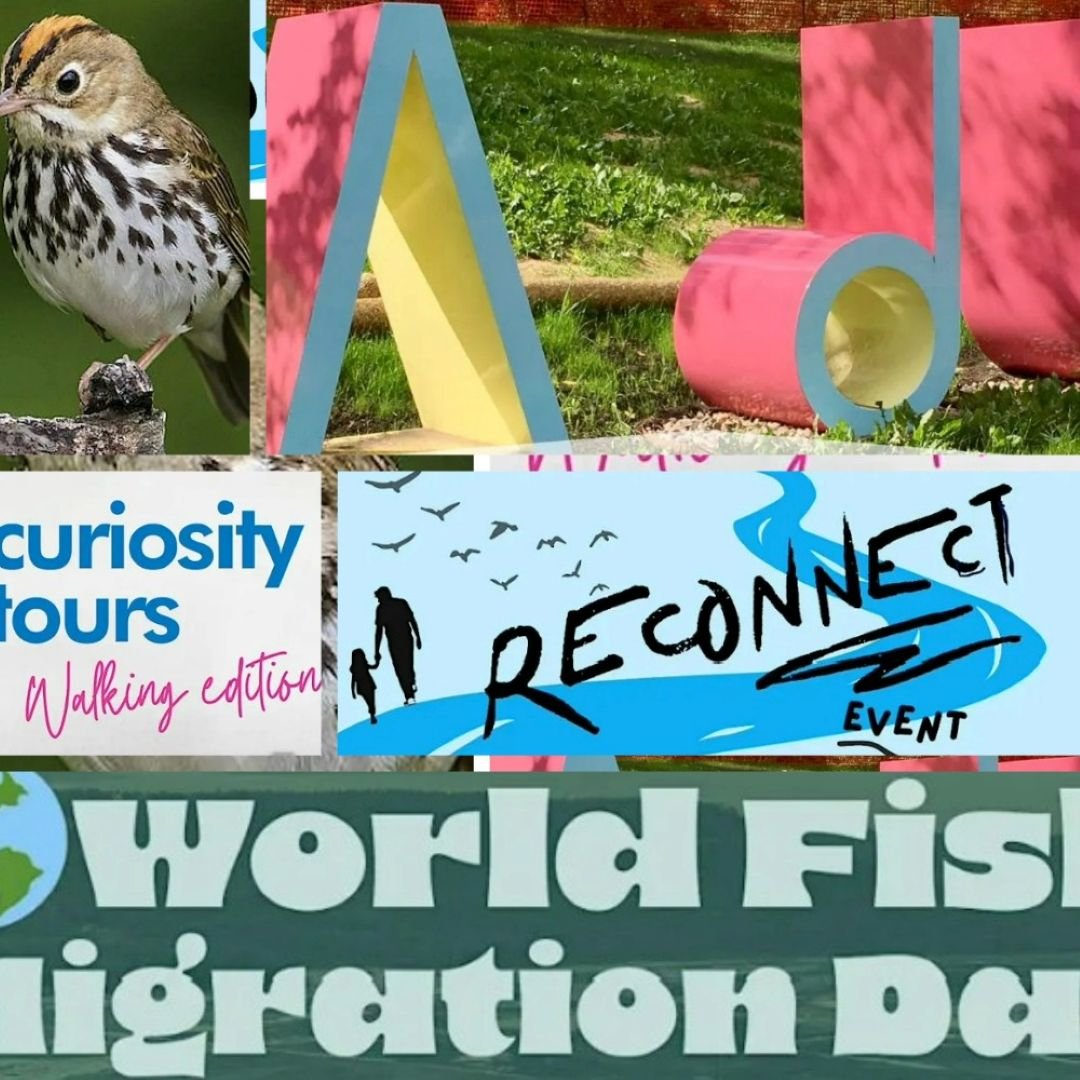
Get ready to head outdoors! May and June are packed with opportunities to explore the North Saskatchewan River Valley, learn about local ecology, and contribute to conservation efforts. Here are six upcoming events to add to your calendar:
World Fish Migration Day: We are River People Saturday, May 23 | 1:00 PM – 3:00 PM Join the Touch Grass Club and the Beyond the River team at 10298 89 St NW to celebrate the life within our waters. This family-friendly afternoon features hands-on water quality testing, stories of the river, and insights into the challenges facing local fish populations. Kids can enjoy fish-themed crafts, games, and even decorate their own fish sugar cookie to take home.
Where the Ovenbird Sings Sunday, May 24 | 1:30 PM – 4:30 PM Explore Edmonton’s largest old-growth forest at Lady Flower Gardens (20303 33 St NE). This event, co-hosted by the Edmonton River Valley Conservation Coalition, offers five expert-guided synchronous walks through the New Jubilee Forest. Whether you’re interested in bats, birds, or old-growth ecology, or simply want to enjoy a spring afternoon by the yurt with light snacks and drinks, it’s a perfect way to connect with the landscape.
Art, Story & Circle: An Indigenous Art Park Gathering Sunday, May 31 | 11:00 AM – 1:00 PM Join the River Valley Alliance's Indigenous Committee for a guided gathering at ᐄᓃᐤ (ÎNÎW) River Lot 11∞ Indigenous Art Park (10380 Queen Elizabeth Park Rd). Meeting under the gazebo by the parking lot, participants will move between various art installations. Led by community members and Elder Lance, the gathering features shared teachings, storytelling, spoken word, and poetry rooted in the land and creative reflection. Be sure to arrive 15 minutes early so the circle can begin on time.
Reconnect Event: To the Land and One Another Sunday, June 7 | 12:30 PM – 4:30 PM Celebrate Environment Week at the Alfred H. Savage Centre (13909 Fox Dr NW) with an incredible coalition of local groups, including SCAN! Edmonton, For Our Kids, ERVCC, and the Touch Grass Club. This massive community gathering features a mix of indoor and outdoor activities: drumming, singing, and a round dance with the River Cree Singers; storytelling and guided nature walks; native seed and seedling sales; and even a hands-on workshop for building DIY air filters for air quality. The Dawg Gone It food truck will be on-site, and the event runs rain or shine.
ECAMP Curiosity Walking Tours: Strikes, Struggles, and Success Various Dates The Edmonton City as Museum Project (ECAMP) is hosting a series of walking tours that dive into the social and industrial history of our city. These tours explore the hidden stories behind Edmonton’s landmarks, focusing on the people and movements that shaped the community we live in today. Keep an eye on their schedule for specific meeting locations and times.
Biodiversity Day with Nature Alberta & Root for Trees Thursday, June 11 | 5:30 PM – 8:30 PM Head down to Rundle Park for an evening dedicated to local biodiversity. This event features a rotating schedule of three 30-minute workshops: a community science nature walk, a tree-planting workshop, and an invasive weed-pulling session. "The Mule" from The Columbian will be onsite serving free coffee and tea (bring your own reusable mug!), and there is even a plant giveaway for participants. Note: If weather forces a cancellation, the event will move to Friday, June 12.
The Mystery of the “Prairie Chicken”
If you have spent any time exploring the fields, coulees, or even urban hedges around Edmonton, chances are you have heard someone point out a bird and call it a "prairie chicken." The reality? There hasn't been a true Greater or Lesser Prairie-Chicken (Tympanuchus genus) in Alberta for decades, as they have been completely extirpated (locally extinct) from Western Canada due to habitat loss. Because the real thing vanished from our landscape, the nickname "prairie chicken" has been casually transferred by generations of locals and hunters to several completely different species of upland game birds, creating a classic case of prairie mistaken identity.
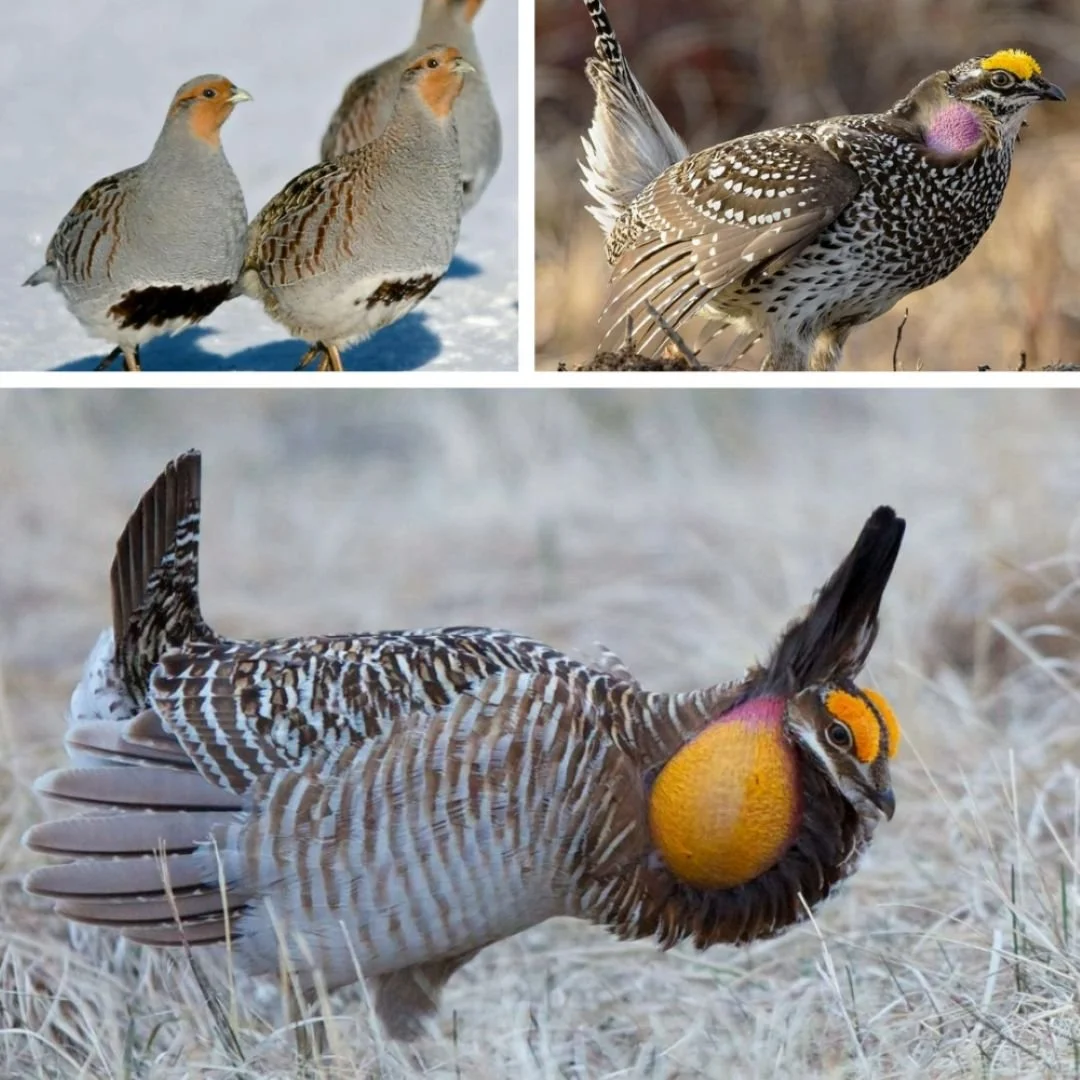
The bird most frequently saddled with this moniker is the native Sharp-tailed Grouse (Tympanuchus phasianellus), which shares the same genus and grassland habitat as the true prairie-chicken. While they look similar at a glance, you can spot the difference by looking at their bellies: Sharp-tails feature distinct V-shaped chevron markings and pointed tail feathers, whereas true prairie-chickens have horizontal, zebra-like barring and square tails. Unfortunately, our provincial emblem bird is facing its own modern struggles; while not officially listed as a species at risk across all of Canada, localized habitat fragmentation and the loss of native prairie grasslands have put significant pressure on their traditional breeding grounds (leks), making the preservation of intact open spaces more critical than ever for their survival.
So, what are those plump, round birds you actually see wandering through Edmonton’s suburban neighbourhoods, city parks, and rail corridors? Those are almost certainly Gray Partridges (Perdix perdix), commonly known as Hungarian Partridges or "Huns." Introduced from Europe in the early 1900s, these resilient little birds are about the size of a small football—roughly half the size of a grouse. They are easily identified by their bright orange-rust faces, fine gray body feathers, and the dark, horseshoe-shaped patch on their bellies. Unlike our native grouse, Huns have adapted beautifully to urban and agricultural spaces, sticking together in tight family groups called coveys that suddenly "explode" out of the brush when startled.
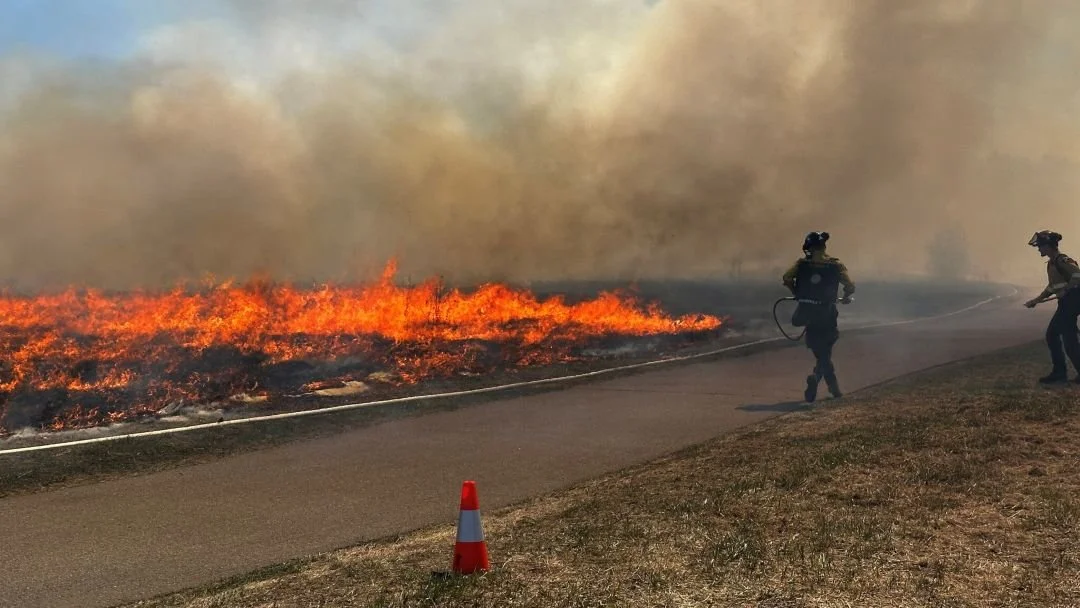
Photo credit: Leo Cruzat, CityNews
Proactive Steps for a FireSmart River Valley
Encompassing over 7,400 hectares of connected natural space and 160 kilometres of maintained trails, Edmonton’s "Ribbon of Green" stands proudly as the largest urban parkland system in Canada. However, our changing climate—marked by repeated hot, dry, and windy conditions—means this continuous wilderness winding through our city also brings a heightened risk of wildfire. To protect our natural ecosystems and the neighbourhoods bordering them, the City of Edmonton recently finalized its proactive Wildland-Urban Interface Wildfire Risk Strategy. This strategy shifts the focus from simply reacting to fires to actively preventing them before they start, recognizing that every dollar invested in wildfire preparedness saves significantly more in future community and economic stability.
The strategy is built on four core pillars: reducing ignition risks, strengthening emergency response, expanding public education, and regional coordination. To tackle built-up fuel loads, Edmontonians will see expanded vegetation management, including targeted trailside debris clearing, understory thinning, and a specialized grassland fuel management program to establish permanent and seasonal fire breaks. The City is also leaning into modern technology and traditional practices; this includes expanding its automated smoke-detecting sensor network, running high-risk daily drone surveillance, and utilizing controlled, prescribed fires—such as recent burns in local parks—which safely reduce brush while promoting ecological regeneration.
Building a resilient city requires a collective effort, and residents play a vital role. Property owners can take advantage of FireSmart landscaping guides to transition yard spaces toward drought- and fire-resistant vegetation, and neighbourhoods can band together under the FireSmart Neighbourhood Recognition Program. On the landscape, the City urges all trail users to follow local fire bans, use only authorized fire pits, and strictly refrain from smoking in naturalized or vegetation-covered areas. If you are looking to kickstart a local resilience project, the City's Community Climate Adaptation Micro Grants are a great place to start. Most importantly, if you ever spot smoke or an active fire in the river valley, call 911 immediately to ensure a rapid response.
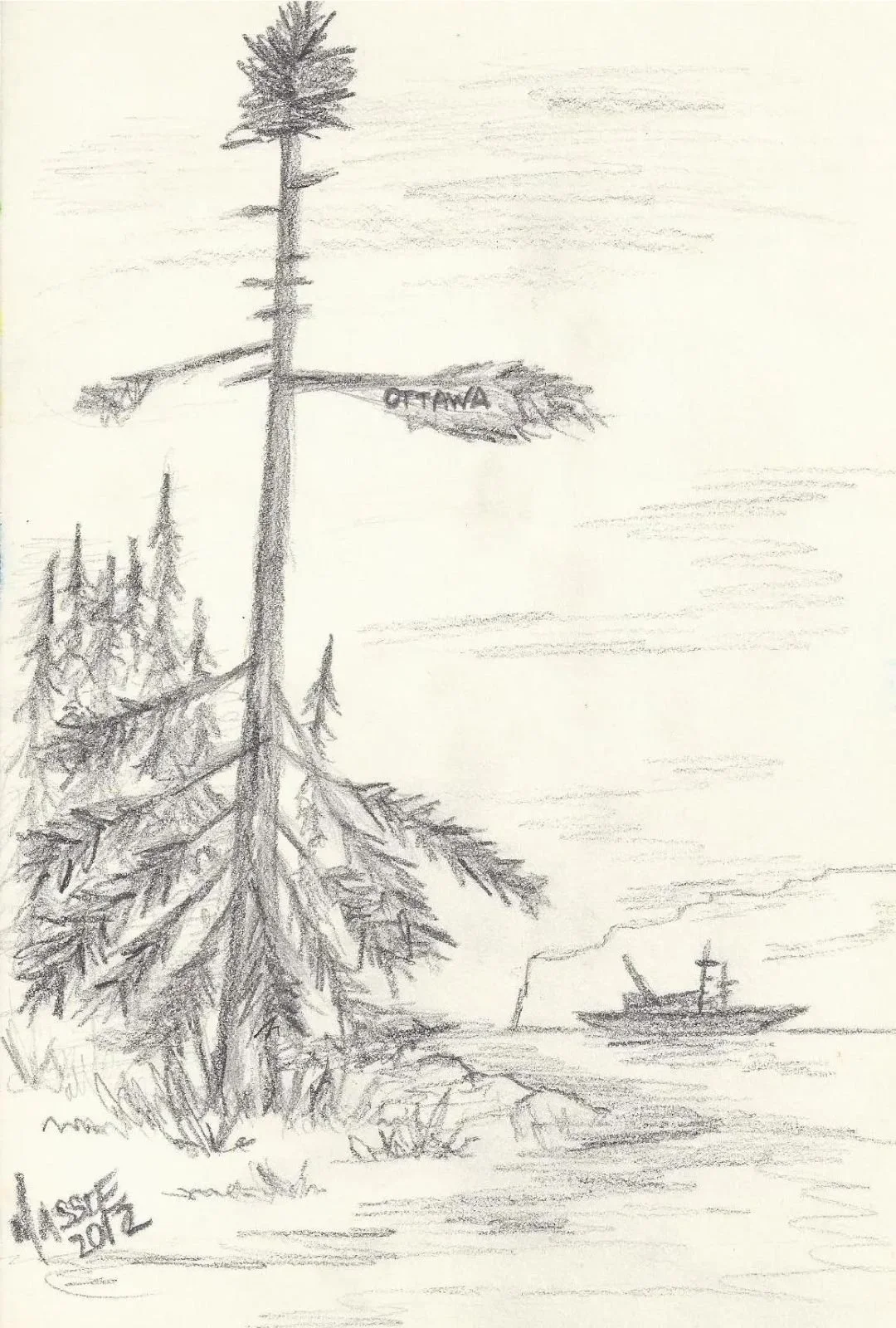
Photo credit: “The Sentinel” by Merle Massie
The Lore of the Lobstick
Following up on our look at Leon Hunter's piece from the last newsletter on the historic Victoria Trail, the Victoria Home Guard Historical Society is looking ahead to its next major initiative: the development of the Lobstick Monument Project. This new interpretive installation is inspired by traditional trail markers used by Indigenous peoples and early travellers along the historic corridor. A traditional lobstick (derived from the Cree word lopstick) was a conspicuous navigation marker created by pruning the middle and lower branches of a tall pine or spruce tree, leaving a distinct tuft of foliage right at the very top. As noted in historical research published by Active History, these markers were intentionally crafted from the tallest, most prominent trees on a ridge or riverbend. Visible from miles away across flat terrain and along vital waterways, they served as an indispensable geographical reference system for Voyagers, fur traders, and hunters travelling the vast wilderness networks of Western Canada, as documented by the Virtual Museum of Métis History and Culture.
Beyond their practical use as wilderness signposts, lobsticks carried a deeply personal and cultural significance. Creating a lobstick was a communal act of honour; a tree was typically chosen and sculpted to commemorate a specific historical event, seal a treaty, mark an important hunting ground, or pay tribute to an esteemed traveller. The process was celebrated by those present with a small gathering, a shared story, and sometimes a salute of gunfire, permanently bonding that person's name or the event to the physical landscape. While the practice eventually faded with the arrival of steamships, railways, and modern highways, it remains a powerful historical example of investing deep cultural memory directly into living geography, ensuring that important milestones remained visible and meaningful for generations to come.
"A River Runs Through Us" Mini-Doc Series
Explore the deep history, industrial recovery, and modern conservation of our local watershed by streaming the educational multi-part series, “A River Runs Through Us - The North Saskatchewan River,” produced by the North Saskatchewan Watershed Alliance. Every segment of this impactful documentary is now fully available to watch for free on the official North Saskatchewan Watershed Alliance YouTube Channel.
Comment or Contributions
Please note that articles may not reflect the position of NSRVCS. River Valley News is meant to be a clearinghouse for the variety of opinions and ideas about Edmonton’s River Valley.
Email river valley photos, event information, comments, or questions to nsrivervalley@gmail.com.
Forward this link to anyone you think may want to sign up for this newsletter https://www.edmontonrivervalley.org/newsletter-signup