NSRVCS News - October 15, 2020

logo.jpg
moose.jpg

Solar power plant hearing to continue for a 3rd day
The debate over Epcor’s controversial proposed solar power plant in the river valley will continue for a third day on October 19. If you are concerned, send your comments to City Council before 1.30 pm next Monday at council@edmonton.ca
 
Our society believes Epcor’s proposal is an unnecessary industrialization of the river valley. Council transferred these lands adjacent to the E.L. Smith water treatment plant to Epcor, when it created the company, to ensure space for expansion of the water plant when necessary. Until that day arrives, no other industrial use should be permitted.
 
The location may be financially good for Epcor, but its rezoning would come at a high cost for citizens and the river valley. Edmonton has one river valley and as the city grows from 1 to 2 million, its value as a Ribbon of Green for natural areas, recreation, wildlife, trees, and plants will only grow.

This location should not be deemed essential for a solar power plant. The sun does not shine brighter here and there is no shortage of land elsewhere for such a project. 

Calgary promotes its proximity to the Rocky Mountains to attract and retain talent. It is time Edmonton did the same thing regarding the river valley. The Ribbon of Green is our equivalent to the Rockies, our strongest differentiating feature. We should protect this feature, not unnecessarily industrialize it.
 
If you think of our river valley as a Ribbon of Green and as a sacred trust, gifted to us to respect, honour, and protect for ourselves and future generations then this proposal makes no sense. The river valley is close to the hearts of Edmontonians, who value its natural beauty and the opportunity to enjoy it. Read more at https://edmontonjournal.com/news/local-news/edmonton-city-council-decides-on-e-l-smith-river-valley-solar-farm

mill creek.jpg

Decaying Mill Creek ravine pedestrian bridges to be replaced
Eleven decaying pedestrian bridges in the Mill Creek Ravine will be replaced next year. The roughly $3.55-million project was approved on Tuesday during city council’s urban planning committee.
 
A report by the City of Edmonton found the pedestrian bridges between 34 Street and 50 Street have deteriorated beyond the point of maintenance and need to be replaced. The bridges are part of a popular pathway system often used by cyclists, dog walkers and others for recreational use in Mill Woods.
 
Daniel Tyrkalo, a frequent user of the trails in Mill Creek, said he supported the city’s plan to replace the bridges if it was needed. The 34-year-old runner said he hopes the new bridges match the scenery in Mill Creek.
 
“I think there needs to be some consultation in the community to know just what these bridges will look like in the end so we don’t end up with (a) concrete jungle,” he said. “That’s not what our neighbourhood is about. Obviously, they’re trying to build stuff that’ll last years to come but making sure that our character in the ravine is maintained.” Learn more at https://edmontonjournal.com/news/local-news/urban-planning-committee-3

Devon.jpg

Devon battery creek trail open
This new 1.5km trail begins near the Devon Lions campground and is flat and gravel, though if you begin at the campground there is a hill to the top-of-bank. Dogs on-leash and bikes are allowed.
 
This section of river valley in Devon offers stunning views of the North Saskatchewan River. Since the trail sits at the top-of-bank, you have an elevated view of the cliffs below. Battery Creek Trail may even have the best vistas in the whole river valley park system!
 
This newly opened section of trail begins at the trailhead and follows along the river for approximately 1.5km until it ultimately ends at Rabbit Hill Ravine. You can carry on all the way to the ravine or turn around at any point along the trail and return to the parking lot. Directions and information at https://rivervalley.ab.ca/news/trailtrek-how-to-devon-battery-creek-trail/

rva.jpg

River valley society seeking board members
The River Valley Alliance has 3 openings for Directors-at-Large for the 2021-2023 term. RVA is a non-profit corporation overseen by a volunteer Board of Directors with a vision to connect metro Edmonton’s river valley from Devon to Fort Saskatchewan. The board is made up of 8 elected Councillors from its municipal shareholders and 8 Directors-at-Large.
 
RVA strives for a diverse board with a variety of skill sets that represents all its communities, so encourages all nominations. A board member must be a resident of one of the six municipal shareholders: Parkland County, Town of Devon, City of Edmonton, Strathcona County, City of Fort Saskatchewan, Sturgeon County. 
 
Board members represent the RVA to its shareholders, federal and provincial governments, and other stakeholders to maintain positive and productive relationships. They are also asked to volunteer for, and participate in, events and activities that promote and showcase the RVA and the trail system to the public and/or stakeholders. Applications will be received up to October 23. Apply at https://rivervalley.ab.ca/get-involved/board-of-directors/

newsletter.jpg

Newsletter sign up and contributions
Know someone who would enjoy receiving this weekly newsletter? You can sign up for this newsletter at https://www.edmontonrivervalley.org/
 
If you have a photo, news, an event, volunteer or employment opportunity involving Edmonton’s river valley and would like to see it in this newsletter, please email the material to nsrivervalley@gmail.com
 
Sincerely yours,
Harvey Voogd
North Saskatchewan River Valley Conservation Society
780.691.1712
nsrivervalley@gmail.com
https://www.facebook.com/NSRVCS/
http://www.edmontonrivervalley.org/

NSRVCS News - October 9, 2020

logo.jpg
owl.jpg

Edmontonians want river valley protected
This past Tuesday, Council began its Public Hearing on Epcor’s request to rezone 99 acres of river valley parkland from Metropolitan Recreation Zone to a Direct Development Control zoning that will allow development of the site to a major utility consisting of a solar power plant with 45,000 solar panels that will generate 10 MW of electrical power.
 
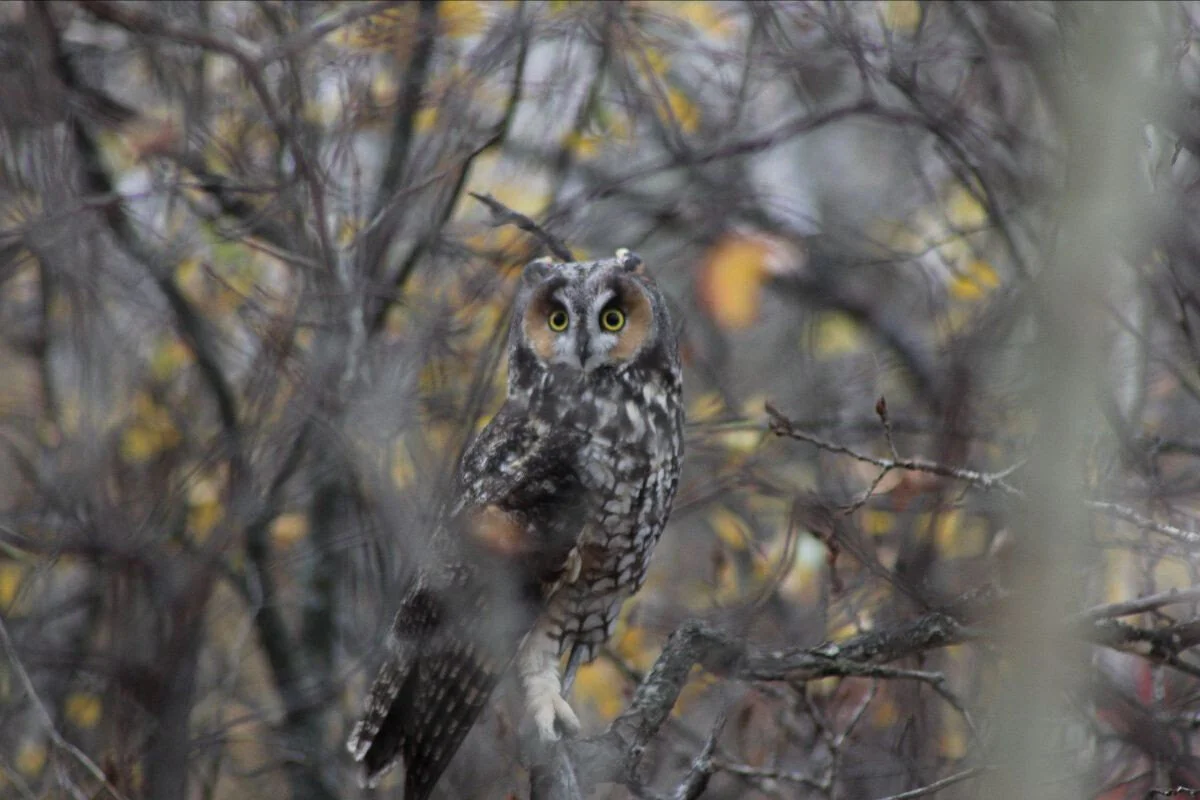
Due to the number of speakers, the public hearing will continue next week. Our society opposes this industrialization of the river valley. The owl photo was taken at the location yesterday. If you are concerned, send your comments to City Council before 1.30 pm next Tuesday at council@edmonton.ca or 311@edmonton.ca
 
An opinion piece states the city’s own ecological planners criticized Epcor’s environmental assessment. Their review predicts “significant, long-term, adverse impacts on wildlife” in an area that has been “identified provincially as a key wildlife and biodiversity zone, regional biodiversity corridor, and core biodiversity area.”
 
Culturally, this land is irreplaceable. Epcor’s archaeological survey discovered over 20,000 cultural objects, some dating back to 9,000 years ago, making it the oldest known cultural site in the Edmonton area. How do we know, as Councillor Aaron Paquette asked last summer, that this land is not worthy of UNESCO cultural heritage status like Head-Smashed-In Buffalo Jump?
 
The great thing about solar panels is that they can go anywhere. And they do not need to destroy land. They can go on rooftops or in brownfields, thereby intensifying our land use and maximizing carbon sequestration, all while leaving habitat alone. Read Kristine Kowalchuk’s opinion piece at https://edmontonjournal.com/opinion/columnists/opinion-edmontonians-want-river-valley-protected

bridge.jpg

Fall foliage to get a boost as city looks to add 2M trees
For many Edmontonians, fall is the prettiest time of year, thanks in part to the city's efforts in maintaining its urban forest. "There are 12.8 million trees in the city of Edmonton all together; about 380,000 of those trees are on boulevards and parks," says Grove Darren Grove, supervisor of the city's natural areas.
 
An estimated 5.8 million trees live in natural areas like the river valley-ravines system, with the remainder on private property. Now the city is hoping to add another two million trees to its streets and parks, Grove says.
 
Much will depend on the city's budget, Grove says, but he expects a blend of ash, elms, oaks, maples and other ornamental trees would be planted in parks and green spaces, while more natural areas would be planted with poplar, spruce and pine.
 
Many of those natural areas are seeing significantly more use from people enjoying Edmonton's wooded areas during the COVID-19 pandemic, Grove says. Watch a beautiful video at https://www.cbc.ca/news/canada/edmonton/trees-edmonton-darren-grove-adriene-lamb-fall-1.5745778

chicken.jpg

How to raise your own bird to eat for Thanksgiving
City statistics show there are 311 registered hens kept by Edmontonians. You can apply to keep up to 6 hens in your backyard, through the City’s Urban Hens Program.
 
Permits are not issued from November to March, but applicants are welcome to go through the Development Permit Approval process and start building their chicken coops and runs prior to being approved. They will then be able to obtain their hens until the spring,
 
The program requirements suggest chickens are in charge of the program as there is a lengthy to do list. Applicants must complete an urban hen keeping course, notify their neighbours prior to application, obtain a Provincial premise ID, submit a site plan location and dimensions of the chicken coop and run, and apply for an urban garden permit and residential electrical permit if they plan on hardwiring electrical into their coop. 
 
Learn about Edmonton’s Urban Hens Program at https://www.edmonton.ca/city_government/initiatives_innovation/food_and_agriculture/urban-hens-project.aspx

geese.jpg

Basics of bird migration
Geese winging their way south in wrinkled V-shaped flocks is perhaps the classic picture of migration, the annual, large-scale movement of birds between their summer breeding homes and their winter nonbreeding grounds. Of the more than 650 species of North American breeding birds, more than half are migratory.
 
Birds that nest in the Northern Hemisphere tend to migrate northward in the spring to take advantage of burgeoning insect populations, budding plants, and an abundance of nesting locations. As winter approaches and the availability of insects and other food drops, the birds move south again. Escaping the cold is a motivating factor but many species, including hummingbirds, can withstand freezing temperatures if an adequate supply of food is available.
 
Migrating birds can cover thousands of miles in their annual travels, often traveling the same course year after year with little deviation. First-year birds often make their very first migration on their own. Somehow, they can find their winter home despite never having seen it before and return the following spring to where they were born.
 
The secrets of their amazing navigational skills are not fully understood, partly because birds combine several different types of senses when they navigate. Birds can get compass information from the sun, the stars, and by sensing the earth’s magnetic field. They also get information from the position of the setting sun and from landmarks seen during the day. There’s even evidence that sense of smell plays a role, at least for homing pigeons. Read more at https://www.allaboutbirds.org/news/the-basics-how-why-and-where-of-bird-migration

steps.jpg

Newsletter sign up and contributions
Know someone who would enjoy receiving this weekly newsletter? You can sign up for this newsletter at https://www.edmontonrivervalley.org/
 
If you have a photo, news, an event, volunteer or employment opportunity involving Edmonton’s river valley and would like to see it in this newsletter, please email the material to nsrivervalley@gmail.com
 
Sincerely yours,
Harvey Voogd
North Saskatchewan River Valley Conservation Society
780.691.1712
nsrivervalley@gmail.com
https://www.facebook.com/NSRVCS/
http://www.edmontonrivervalley.org/

NSRVCS News - October 5, 2020

logo.jpg
benefits.jpg

Eco benefits of our urban forest webinar
While you might know that the City of Edmonton keeps track of public trees and their value to Edmonton, did you know that there is also a map that residents can add to? All these trees added together make up Edmonton's urban forest and serve to benefit our city in a variety of ways.
 
Guest presenters from the City’s Urban Forestry department will present on the YEG Tree Map via a free webinar on October 8 at 6:30pm. You will learn how this tool calculates eco-benefits of trees and how residents can add private trees to this mapping inventory. This webinar will conclude with Q&A time. 
 
As this is an online event, anyone can register even if you do not live in Edmonton. Registration and more info at https://tomorrowfoundation.ca/projects/community-science/october-8-webinar-yeg-tree-map-calculating-eco-benefits-of-our-urban-forest/

epcor.jpg

Epcor industrial project has no place in the river valley
A contentious solar farm proposed for Edmonton’s river valley remains a topic of division as it returns to city councillors for a vote Tuesday https://edmontonjournal.com/news/local-news/epcors-contentious-river-valley-solar-farm-proposal-back-before-city-council-tuesday
 
But many environmental advocates remain unconvinced. Jim Rickett, with Save Gold Bar Park Alliance, said the changes proposed are minor and don’t prove the project essential for the river valley. Solar projects are a positive, Rickett argued, but not when in turn they are detrimental to wildlife and the surrounding environment.
 
Studies determined the project would have negative impacts to wildlife in the area with a reduction in habitat by 19.7 hectares. It is also expected to reduce connectivity for wildlife and increase the risk of death or injury as a result of bird collisions into the solar panels as well as entrapment.
 
“We’ve only got one river valley. It’s unique and it provides environmental protection and recreation opportunities. I think there’s a huge appetite and belief from citizens that as the city grows we need more publicly-accessible parkland, not less, and that’s why I believe that it continues to be extremely important to Edmontonians to protect the river valley,” Rickett said. “I feel I can say with extreme confidence that the majority of citizens don’t believe industrial projects in our river valley are best for our city or our citizens and we’re all waiting to see if council will vote in that regard.”
 
Stephen Madsen, president of the North Saskatchewan River Valley Conservation Society, said his main issue is with the rezoning of the land itself from a recreation and environmental protection zone. He argued that industrial projects, such as the solar farm, have no place in that type of area.
 
“In order to preserve the river valley, you need all aspects of the river valley. It’s not just the river at the boundary, you need the wetlands, you need the parts that approach it and you need to keep that open for your animals and the plant life,” he said. “The question is, is that the best place for the solar panels? We’re a big fan of green energy, but why there?”
 
If you also are concerned, send your comments to City Council at council@edmonton.ca or 311@edmonton.ca

dogs.jpg

Why dogs should be kept out of some natural areas
There are 61,912 dogs licenced by the City of Edmonton, of which 12% are not spayed or neutered. While many places welcome dogs, visitors to local conservation area Bunchberry Meadows are being asked to please respect site rules and leave their canine friends at home.
 
The Bunchberry Meadows Conservation Area is privately owned and managed by the Nature Conservancy of Canada (NCC) and the Edmonton & Area Land Trust. The conservation area protects habitat and provides the public with a place to hike, cross-country ski, snowshoe and connect with nature.
 
Dogs can help to spread invasive plants into protected areas, and along with frightening the wildlife, they can also chase birds and trampling vegetation. Even something as simple as marking their scent on the trails is enough to deter some wildlife from using the site.
 
There are plenty of off-leash areas in Edmonton and nearby communities that provide a controlled environment for dogs to exercise, socialize and bond with their owners. More info on Bunchberry Meadows at
https://www.natureconservancy.ca/en/where-we-work/alberta/stories/keep-bunchberry-dog-free.html?utm_campaign=LEAFLET_0820&utm_source=eblast&utm_medium=email&utm_content=AB2

Newsletter sign up and contributions
Know someone who would enjoy receiving this weekly newsletter? You can sign up for this newsletter at https://www.edmontonrivervalley.org/
 
If you have a photo, news, an event, volunteer or employment opportunity involving Edmonton’s river valley and would like to see it in this newsletter, please email the material to nsrivervalley@gmail.com
 
Sincerely yours,
Harvey Voogd
North Saskatchewan River Valley Conservation Society
780.691.1712
nsrivervalley@gmail.com
https://www.facebook.com/NSRVCS/
http://www.edmontonrivervalley.org/