NSRVCS Newsletter - February 10, 2021

logo.jpg
gondola.jpg

Gondola wants river valley land lease
Council’s Urban Planning Committee will consider a Gondola Agreement Framework at its February 16 meeting. Last year on February 3, 2020, City Council passed a motion that Administration work with Prairie Sky Gondola to determine the feasibility of a gondola in the River Valley, with the work to be guided by the following governing principles.

No public funding request and all financial risk borne by proponents. Open books to the city for validation on a confidential and proprietary basis. A robust engagement plan for community and Indigenous stakeholders. Mutually beneficial integration with public transit. Minimized ecological footprint. Providing surety, including monetary security, with respect to service continuity or demobilization. An examination of the implications of using air rights and of an emergency response plan for first responders.

Prairie Sky is back requesting the opportunity to lease land to build five stations at the following locations: Downtown, Ortona Armoury, Rossdale, End of Steel Park, and Whyte Avenue through the river valley.

It is expressly understood that the proposed framework is not a legally binding document. It is a statement of mutually agreed upon principles and an expression of a mutual intent to engage in negotiations to enter into legally binding agreements based upon the principles set out herein. To date, a robust community engagement plan has not occurred.

Read the proposed Gondola Agreement Framework between the City of Edmonton and Prairie Sky Gondola at https://pub-edmonton.escribemeetings.com/filestream.ashx?DocumentId=79801

dragon.jpg

River valley dragons
The Year of the Ox is upon us, officially kicking off on Feb. 12, but there are now nine dragons in the river valley at the Edmonton Chinese Garden, located in Louise McKinney Riverfront Park just off Grierson Hill.

"We are the gem of the river valley," says Wing Choy, president of the Edmonton Chinese Garden Society, established in 2000. Since the garden opened in 2007, the not-for-profit society has added a friendship gate, monument, zodiac statues, and now a Nine Dragon Wall.

"It is one of the biggest dragon walls in North America. It's magnificent!" says Choy. At 17 metres long, five metres high and weighing 106,000 kilograms, the wall built in the summer of 2020 is an imposing addition to the garden. The wall cost $500,000 but Choy says they are now trying to raise $200,000 for a roof.

Choy believes this outdoor space offers tranquillity, good energy and feng shui, especially from the top of the bridge in the middle of the rock pond. Dragon wall video at https://www.cbc.ca/news/canada/edmonton/lunar-new-year-wing-choy-cheryl-wang-year-of-the-ox-chinese-1.5899965

ice age.jpg

Ice age in Edmonton
Even with the arrival of somewhat unpredictable electricity and the burgeoning popularity of refrigeration in the 1920s, many citizens and businesses clung fiercely to their insulated cubicle iceboxes. “Ice is the Safe Form of Home Refrigeration,” declared an Arctic Ice Company advertisement in the June 30th, 1927 edition of the Edmonton Journal. “Ice is the simple, natural way to secure the proper low temperatures of your refrigerator. Ice costs less than any refrigerating method and never goes out of order.”

The “ice age” in Edmonton began at the turn of the century with the establishment of the Edmonton Ice Company and the City Ice Company, followed by the Arctic Ice Company and the Twin City Ice Company, in 1912. They were headquartered on the Ross Flats (today’s Rossdale) on 100 Street between 97 and 98 Avenues, with storehouses for ice and stables for horses and delivery wagons.

A 1912 article extolling the virtues of the new Arctic Ice Company said: The ice taken from the North Saskatchewan was “as pure as nature can make it. Coming as it does from the snow-fed stream of the surrounding country, filtered through the immense gravel beds along the river, and fed from thousands of pure springs, the water is as limpid and as translucent as a diamond.”

Learn more and see photos of harvesting ice from the frozen North Saskatchewan River at
https://citymuseumedmonton.ca/2021/02/03/the-ice-age-in-edmonton/?

metis.jpg

Metis and the river valley
Métis history in Alberta originated with the fur trade when French and Scottish fur traders married Indigenous women. From 1670 to 1821 the Métis populations grew regionally, typically around fur-trading posts. After a few generations, descendants of these marriages formed a distinct culture.

Fort Edmonton spawned a large Métis population that was involved in an annual buffalo hunt for many years. These Métis helped to establish the nearby settlements of Lac Ste. Anne and St. Albert. The fur-trade was an economic boom for the Métis as it opened the fur and buffalo meat trades to private Métis traders, however it also exposed them to a flood of European and Canadian colonists seeking to profit and disenfranchise the Metis from their lands.

Métis cultures and communities survived with farming, ranching, fishing, and industry replacing their traditional economy of fur-trading as the main economic activity, though trapping and hunting have remained important in the Rocky Mountain and Boreal Forest regions.

As the fur trade slowed, Métis people developed farms on river lots close to Fort Edmonton. Metis was chosen as the new name of Ward 6 because of the history of the Metis in this region, as well as the river lot system historically used in this area of Edmonton. Learn more at
https://en.wikipedia.org/wiki/M%C3%A9tis_in_Alberta
dog.jpg

River valley contributions or question
If you have a river valley concern or question, contact us at nsrivervalley@gmail.com
Your friends and neighbours can sign up for this newsletter at https://www.edmontonrivervalley.org/
If you have a photo, information, news or event about Edmonton’s river valley and think it should be in this newsletter, email it to nsrivervalley@gmail.com

Sincerely yours,
Harvey Voogd
North Saskatchewan River Valley Conservation Society
nsrivervalley@gmail.com
https://www.edmontonrivervalley.org/
Facebook @NSRVCS
Instagram @nsrvcs

NSRVCS Newsletter - February 4, 2021

coyote.jpg

Urban coyote intervention program
The Urban Coyote Intervention Program at the University of Alberta invites volunteers from neighbourhoods in Edmonton to participate in community-based aversive conditioning of urban coyotes. The goal of this program is to increase wariness in coyotes that occupy residential neighbourhoods.

It is looking for 20 participating neighbourhoods and has identified 40 neighbourhoods with high past rates of coyote reports. The program will train volunteers to use weighted, flagged tennis balls and an umbrella with an image of a wolf face to frighten coyotes in these neighbourhoods. These actions are intended to frighten coyotes, but not injure them.

Use of similar techniques, known as hazing or aversive conditioning, is widely recommended by wildlife managers to reduce habituation by animals to people and avoid the subsequent need for more damaging tools, including lethal management.

Alberta's provincial and national parks make extensive use of aversive conditioning of bears to teach them greater wariness and reduce conflict with people. These approaches work best when combined with control of food attractants. Learn more and volunteer at https://urbancoyoteinterventionprogram.weebly.com/

trail.jpg

ERVCC wants city to reconsider trail fix
An Edmonton conservation group says there was no public consultation before the city passed a plan to cut down dozens of trees next to the city-owned Riverside golf course to realign the multi-use Riverside trail.

"We would like to see a pause on this project and for there to be a proper discussion, proper community consultation and see what kinds of creative ideas emerge," said Kristine Kowalchuk, chair of the Edmonton River Valley Conservation Coalition.

An environmental impact study prepared by the city recommended realigning the trail by cutting down a swath of trees within the boundaries of the North Saskatchewan River Valley Area development plan. But the study shows the only consultation was with the golf course and its members. There was no other public consultation.

"I want to know why communities weren't informed about this project," Kowalchuk said. "The city's engagement policy says it informs people about city projects that they will be impacted by." City councillor Ben Henderson has asked the city's administration to look at the issue again. Read more at https://www.cbc.ca/news/canada/edmonton/conservation-group-wants-city-to-reconsider-plan-to-fix-slumping-river-valley-trail-1.5898752

ice wall.png

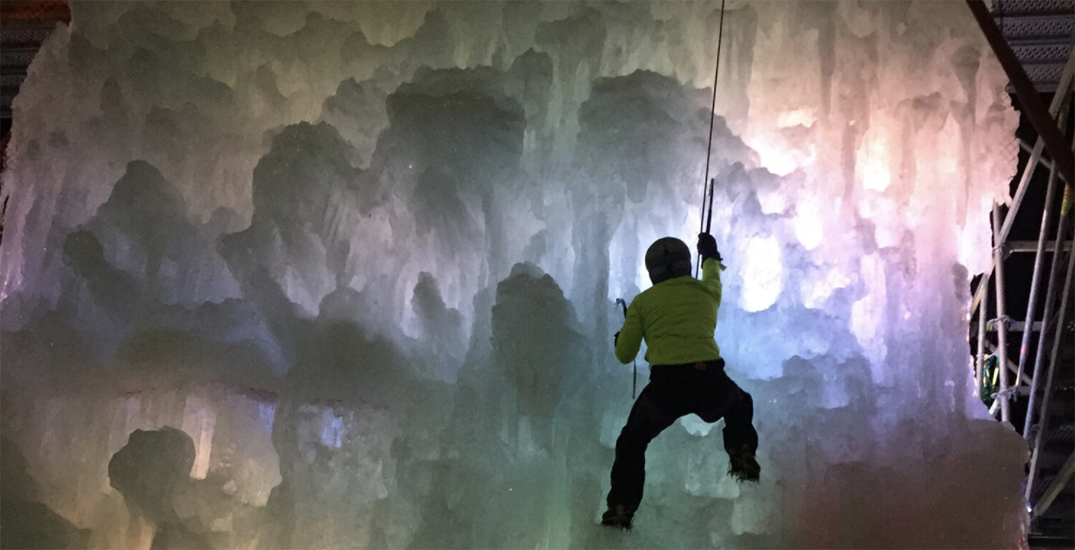
Ice wall in the river valley
This three-storey artificial ice wall is Edmonton’s first and only ice climbing facility. A partnership between the Alpine Club of Canada and the Edmonton Ski Club, it was built to bring new participants to the sport as well as to provide a spot for local ice climbers to hone their skills without driving out to the mountains.

“The ice wall combines Edmontonians’ love of the outdoors, recreation, and adventure to create an exciting new activity for all,” says the Alpine Club of Canada. “Our long cold winters and large population make for an ideal location for this facility.”

For the first timers or less frequent climbers, the ACC Ice Wall has rental gear (boots, crampons, harness, and ice tools) and lessons or orientations available. The ice wall is located right at the Edmonton Ski Club, so visitors can also combine their climb with some skiing or tubing. More at
https://dailyhive.com/edmonton/edmonton-ice-wall

river.jpg

River valley contributions or question
If you have a river valley concern or question, contact us at nsrivervalley@gmail.com
Your friends and neighbours can sign up for this newsletter at https://www.edmontonrivervalley.org/
If you have a photo, information, news or event about Edmonton’s river valley and think it should be in this newsletter, email it to nsrivervalley@gmail.com

Sincerely yours,
Harvey Voogd
North Saskatchewan River Valley Conservation Society
nsrivervalley@gmail.com
https://www.edmontonrivervalley.org/
Facebook @NSRVCS
Instagram @nsrvcs
NSRVCS Newsletter - January 28, 2021

bunchberry.jpg

Bunchberry Meadows Trail
The Bunchberry Meadows Conservation Area is privately owned and managed by the Edmonton Area Land Trust and Nature Conservancy of Canada. Located 30 kilometres from downtown Edmonton, it is open to the public year-round for foot access.

This 640-acre conservation site is made up of old growth forests, open meadows, and wetlands. The forest supports jack pine, which is habitat for northern flying squirrels, porcupines, and long-tailed weasels. The water and willows shelter a variety of species as small as tiger salamander and as large as moose.

The close proximity of the Bunchberry Meadows Conservation Area to the Clifford E. Lee Nature Sanctuary, North Saskatchewan River Valley, and the University of Alberta Botanic Gardens provides a significant habitat corridor and greater landscape connectivity in the region for wildlife.

The property is open daily from 7am to 10pm and users are welcome to hike, cross-country ski, snowshoe and connect with nature. Dogs, bicycles, horseback riding, and OHV use are not permitted. Trail information and more at https://www.ealt.ca/bunchberry-meadows

coyote.jpg

Bylaw to prohibit the feeding of wildlife
Community and Public Services Committee on February 3 will consider a bylaw to increase the fine for feeding wildlife or creating public safety, health risk or nuisance conditions on private and public property without permission.

According to City Administration’s report, research indicates that inappropriate feeding of wildlife in an urban setting can lead to several unintended consequences including habituation or food conditioning, harmful impacts to local ecosystems, creating public and private nuisance property conditions, and an increased likelihood of unsafe wildlife interactions for citizens and pets.

Fines for these violations are recommended to be set at $250, and $500 and would be both proportional to the offence and consistent with other jurisdictions. If you would like to speak at the committee meeting, contact the City Clerk at city.clerk@edmonton.ca or 780-496-8178.

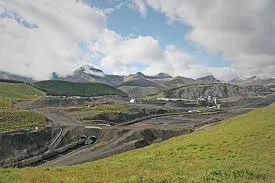
coal.jpg

Coal mines contaminant already high in some rivers
Last May, the United Conservative government revoked a policy that protected much of the eastern slopes of the Rocky Mountains from open-pit coal mining. The province's plan for large-scale expansion of the industry is fuelling widespread criticism that includes concerns over selenium pollution.

The data shows that contaminant has been found for years at high levels downstream of three mines and never publicly reported. Concerns have been raised about selenium in the Gregg and McLeod rivers and in Luscar Creek, which drain into the Athabasca River watershed.

Coal mining has occurred upstream of Edmonton, but it is not clear if the policy change will affect the North Saskatchewan River watershed. Selenium is a naturally occurring element vital in small amounts but toxic in excess.

In fish, it can damage the liver, kidney, and heart. It can reduce the number of viable eggs a fish can produce and lead to deformed spine, head, mouth, and fins. In humans, it can cause nausea, vomiting, hair loss and been linked to tooth decay, weakened nails and nervous system disturbances. Learn more at https://www.cbc.ca/news/canada/edmonton/selenium-alberta-coal-mines-contamination-1.5886293

Fort.jpg

Fort Edmonton gets $1.6M loan from city
Edmonton city council approved a $1.68-million loan to Fort Edmonton Park on Monday to help it reopen on schedule in May. The southwest Edmonton historical attraction has been undergoing renovations for two years.

After renovations, the park will feature a new entrance and more open spaces, including an open-air museum. "People want to be outside. They want to be safe in fresh air and distance, and we have the perfect arrangement for that," said Darren Dalgleish, president and CEO of Fort Edmonton Management Company.

The biggest addition to the park is the Indigenous People's Experience, an exhibit where visitors can learn about First Nations and Métis peoples. It also includes an expanded midway that will feature more space as a rental venue and a 1920s carnival complete with a ferris wheel, maze, and fun house. Read more at
https://www.cbc.ca/news/canada/edmonton/fort-edmonton-loan-covid-19-1.5888333

porcupine.jpg

River valley contributions or question
If you have a river valley concern or question, contact us at nsrivervalley@gmail.com
Your friends and neighbours can sign up for this newsletter at https://www.edmontonrivervalley.org/
If you have a photo, information, news or event about Edmonton’s river valley and think it should be in this newsletter, email it to nsrivervalley@gmail.com

Sincerely yours,
Harvey Voogd
North Saskatchewan River Valley Conservation Society
nsrivervalley@gmail.com
https://www.edmontonrivervalley.org/
Facebook @NSRVCS
Instagram @nsrvcs