River Valley News - Feb 24, 2022

Flying Canoë Volant festival is March 1-5
Come celebrate your inner voyageur with light, music, legends, and dance. In the spirit of a great winter city, this multi-evening festival is a creative and interactive cultural celebration designed to engage local history and everything that is great about a long winter’s night.

Inspired by the legend of The Flying Canoe and French Canadian, First Nations and Métis traditions, Flying Canoë Volant embraces Edmonton's beautiful Mill Creek Ravine and the newly established French Quarter.

The program includes snow tubing races, illuminated trails, food and drink, story telling, music and an activity tent. In case you are wondering, volant is French for flying. Festival info at https://www.flyingcanoevolant.ca/

Establishing Rouge National Urban Park - Canada’s first such park
NSRVCS’ online Annual General Meeting will feature a presentation by Mike Bender titled "Establishing Canada's First National Park-Success Through Collaboration." The topic is timely as Mayor Sohi campaigned on working “with key partners, including Indigenous communities and regional municipalities, to engage the federal government in creating an urban national park.”

The talk will outline the unique features of Rouge National Urban Park and why the park was created in the first place. It will highlight the park establishment process, including the key steps of consultation, collaboration, management planning, legislation, and implementation.

Mike Bender worked at Toronto and Region Conservation Authority for over 30 years. His positions included General Manager of Rouge Park, as well as Associate Director, Master Planning and Greenspace Conservation. Mike took on the role with Rouge Park in May of 2010, with a focus of transitioning the Park into Canada’s first National Urban Park with Parks Canada.

The AGM is scheduled for 5:30pm, Monday, March 14. RSVP to nsrivervalley@gmail.com Your name and email is necessary to send the Zoom contact information to attend the event. Learn about Rouge National Urban Park at https://www.pc.gc.ca/en/pn-np/on/rouge

Red fox is the most widespread wild dog species on earth
Red foxes are one of Canada’s most widespread mammals. There are more red foxes in North America now than there were when Europeans began to arrive in the 16th century. Scientists believe the range and numbers of the red fox expanded because settlers created habitat by thinning dense forests and killing the wolves that had kept fox numbers down.

They have excellent eyesight, a keen sense of smell, and acute hearing, which help them greatly when hunting. The slight movement of an ear may be all that they need to locate a hidden rabbit and they can smell nests of young rabbits or eggs hidden by long grass. Sometimes they wait patiently for the sound of a mouse moving along its path in grass or snow and then pounce. At other times, hearing movement underground, they dig quickly and locate the prey by its scent.

Red foxes eat mostly small mammals like voles, mice, lemmings, squirrels, hares, and rabbits, although they supplement this with a wide variety of other foods, including plants. Their diet changes with the seasons: they may eat small mammals in fall and winter, augmented in spring with nesting waterfowl, especially on the prairies, and in summer with insects and berries. Read more at https://www.hww.ca/en/wildlife/mammals/red-fox.html

Camel Humps a special little corner of our river valley
The Camel Humps is a park and nature preserve at the border of Strathearn and Cloverdale. From one end to another, it is a diverse mixture of small hills and canyons, woods and trails. Around 1905, the riverbank went through a process that produced its unique topography that gives it its odd Camel Humps name today.

It was discovered that parts of the riverbank have seams of sand, perhaps left over from ancient rivers. Lime was also available, shipped in on recently built railway lines. Those two things could be used to make sand-lime bricks and easily sold as Edmonton went through its first wave of construction.

The Edmonton Pressed Brick Company took the idea and ran with it. It acquired a section of the riverbank from Cornelius Gallagher who owned a meatpacking plant and much land in Cloverdale. Today, just across Cloverdale Hill Road from the Camel Humps, Gallagher Park carries on his name.

Nature reclaimed the riverbank after the last brick was made on June 18, 1915. Topsoil had been stripped away and piled in high knolls next to the diggings. Likely bushes and trees grew back on these knolls first. Eventually all the landscape took on its present well-wooded appearance. More at https://citymuseumedmonton.ca/2022/02/10/the-camel-humps-a-special-little-corner-of-edmonton/

Is the City banning mountain biking or closing trails
Nino writes “As a senior I frequently use the river valley parks and must state that we are extremely fortunate to have this wonderful asset in our City. Unfortunately, a small group of mountain bikers have been constructing bootleg trails and in so doing are destroying environmentally sensitive areas of the park system. Situations exist where materials are brought into newer bootleg trails to build bridges or shore up embankments.

In other cases, these new bootleg trails either cross or lead into established walking/multi use trails. That presents a collision danger to persons using the established pedestrian/multi use trails as the mountain bikers enter these trails a high speed. Sometimes the junctions are actually blind entries. Warning bells if they exist usually transmit weak inaudible tones and are useless as safety warning devices.

I am not against mountain bikes or bikers. I suggest the City work with established biking groups and together they work with schools in all grade levels to better educate this entire group. Further, parks staff should have the authority to detain those using or constructing bootleg trails.”

Comment or contribution
If you have a comment, concern, or question, contact us at nsrivervalley@gmail.com Please also email us river valley photos or event information. Your friends, neighbours and colleagues can sign up for this newsletter on our web site https://www.edmontonrivervalley.org/

Sincerely yours,
Harvey Voogd
North Saskatchewan River Valley Conservation Society
780.691.1712

River Valley News - Feb 17, 2022

Mountain bike trails provide health benefits with little impact
Erin Bowker writes in an opinion piece; I simply cannot believe that council would consider shutting down Edmonton’s incredible single-track mountain bike trail network. As a parent of teen/young adults, I cannot over-emphasize the physical and mental health benefits that these trails have given our kids.

Our paved trails are wonderful but are not particularly appealing to their adventurous spirits. Of course, our single-track mountain bike trails are beloved by all ages of bikers, trail runners and trail walkers and we would all find our quality of life greatly diminished with the loss of Edmonton’s single track.

Environmental impact of single-track mountain bike trails seems to be the issue under scrutiny. When compared to the chemicals used to maintain our city golf courses and the pollution surrounding the homeless camps throughout the river valley, the environmental impact argument seems almost comical.

The majority of the single track in Edmonton is hidden from view with very little impact on the forest. The average mountain biker or trail runner/hiker stays on the trail and passes any given point in space in a matter of seconds. Maintenance is overwhelmingly provided by those who volunteer their time and love the sport.

Edmonton should be expanding healthy outdoor opportunities for its citizens, not limiting them. Read complete piece at https://edmontonjournal.com/opinion/columnists/opinion-mountain-bike-trails-provide-health-benefits-with-little-impact

Is the City banning mountain biking or closing trails
No, the City is not banning or prohibiting mountain biking in the River Valley, and no trails are being closed at this time. That does not mean that, at some time in the future, if a trail is found to be causing too much disturbance in a natural area it won’t be closed or re-routed, but for the foreseeable future, no trails are being closed.

Most of the single-track trail network was built by trail users and the City has not had oversight of the construction of these trails, some of which are found in sensitive areas, so it does not know the ecological impact they have had.

The City needs time to do studies and on-the-ground assessment that consider local context and environment, and to understand the risk implications associated with some of the trails and structures within the network. The City of Edmonton has a responsibility to steward the environment and ensure we limit negative impacts, whether from cycling, hiking, horseback riding or other activities.

Detailed planning of mountain bike trails will take place in future work after the Ribbon of Green is complete. More answers to frequently asked questions at https://www.edmonton.ca/city_government/initiatives_innovation/ribbon-of-green-public-engagement#FAQ

New park planned along the North Saskatchewan river
Strathcona County is developing a master plan for a new 290-acre regional park along the North Saskatchewan River. The plan will give the County direction for the next 15 years on the type of outdoor development and activity desired for the park.

The plan seeks to respond to community needs by engaging with stakeholders and the public throughout its development. It will support the County’s commitment to a regional approach to North Saskatchewan River accessibility, including work on the Edmonton-Strathcona County footbridge connecting 167 Ave on the west side to Township Road 540 on the east side; and to environmental stewardship, an area of focus in its Recreation and Culture Strategy.

Information, public engagement and feedback options at https://www.strathcona.ca/council-county/plans-and-reports/strategic-documents/open-space-facility-projects/parks-fields-trails/strathcona-regional-park-master-plan/

Research shows cities across country losing green space
Terry emails “It doesn't take much science expertise to know that when you replace green space - trees, shrubs, and low-lying vegetation such as grasses and replace them with cement, asphalt, shingles, siding and building structures you will remove heat absorption with heat repelling. Ritchie has lost close to 100 mature trees and yards and replaced with lots with buildings and cement with zero green left. From 50% green lots to zero green. All of them. And so exactly to the article's point - in just this neighborhood.”

Comment or contribution
If you have a comment, concern, or question, contact us at nsrivervalley@gmail.com Please also email us river valley photos or event information. Your friends, neighbours and colleagues can sign up for this newsletter on our web site https://www.edmontonrivervalley.org/

Sincerely yours,
Harvey Voogd
North Saskatchewan River Valley Conservation Society
780.691.1712

River Valley News - Feb 10, 2022

Help decide the future of our river valley and ravine system
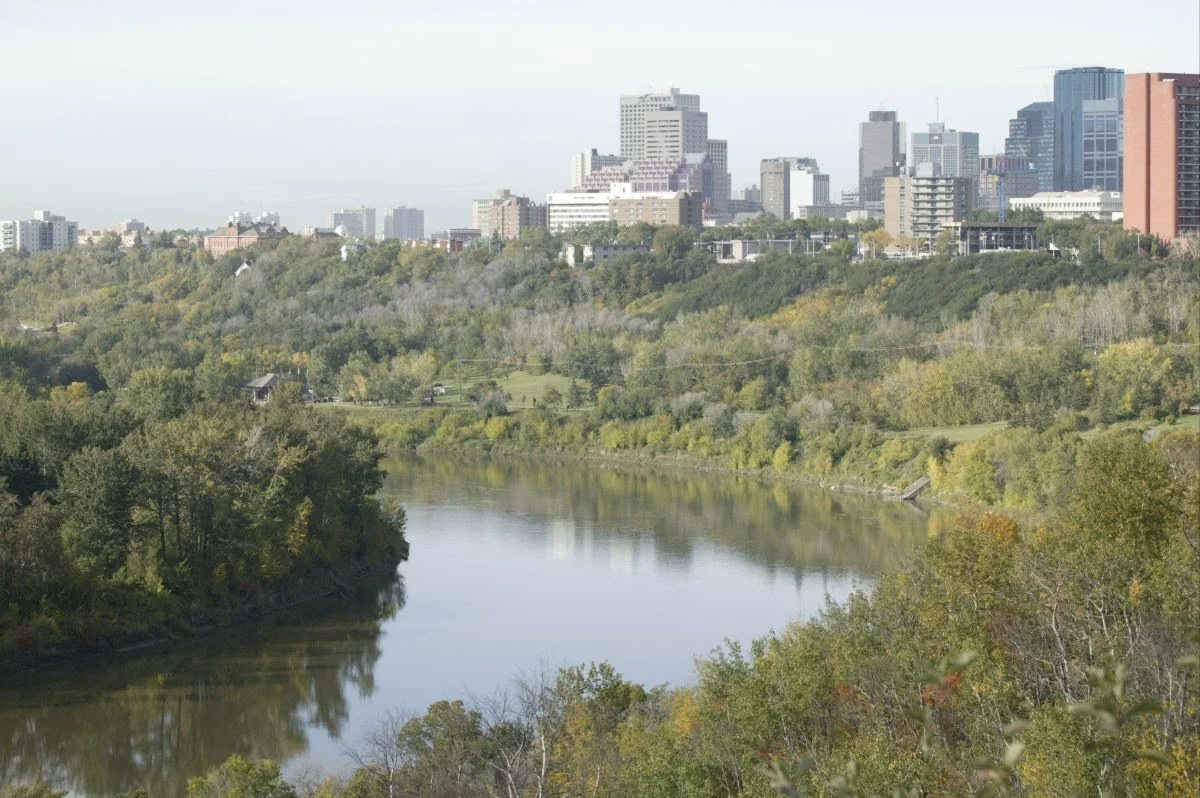
Edmonton’s City Plan, approved by City Council in 2020, describes the North Saskatchewan River Valley and Ravine System as the most important feature of our city. It is a vital ecological corridor, a valued recreation destination, a place of incredible cultural significance and a draw for visitors throughout the region.

The River Valley Planning Modernization Project seeks to renew the city’s strategic planning for the river valley and the processes and tools for evaluating and regulating development that is proposed within the system.

The question at the heart of the project is this: How will we ensure that the river valley, the backbone of our open space network, remains vibrant and ecologically resilient as the city grows?

The city wants your feedback through an interactive portal and a public survey no later than February 17 at https://www.edmonton.ca/city_government/initiatives_innovation/ribbon-of-green-public-engagement

Great Backyard Bird Count is Feb 18-21
Each February the world comes together for the love of birds. Over four days, people are invited to spend time in their favorite places watching and counting as many birds as they can find and reporting them

Launched in 1998, the Great Backyard Bird Count (GBBC) was the first online citizen-science project, also referred to as community science, to collect data on wild birds and to display results in near real time. GBBC uses eBird, one of the world’s largest nature databases.

These observations help scientists better understand global bird populations before one of their annual migrations. Learn more, including how to register and participate in the Great Backyard Bird Count at https://www.birdcount.org/

Research shows cities across country losing green space
Statistics Canada’s first survey of urban green space shows that cities, including Edmonton, are losing their green spaces. The survey used satellite data to compare changes in parks, urban green spaces, yards, and other areas in 2001, 2011, and 2019.

Studies show benefits of vegetation include trees removing air pollutants, reductions in energy use, and human health benefits. Green spaces also reduce what is called urban heat islands, bubbles of high temperature around cities.

Sandeep Agrawal, a geographer and urban planner at the University of Alberta, has found the temperature difference between a city such as Edmonton and the surrounding countryside can be as high as five or six degrees. That differential is linked with the amount of urban green. “If the tree cover goes down, the urban heat island effect goes up quite a bit,” he said.

Heat islands can help cause human health problems such as respiratory failure or heat stroke, a problem worsened in heat waves such as that experienced last summer over much of Western Canada. Read more at https://rdnewsnow.com/2022/02/01/long-term-statistics-canada-research-shows-cities-across-country-losing-green-space/

Beaver Hills, Papaschase and the dinosaur man
The Beaver Hills, 20 minutes east of Edmonton, was designated as a biosphere in 2016 by the United Nations Educational, Scientific and Cultural Organization. UNESCO-designated biospheres are regions in which people live and work in harmony with nature. The Beaver Hills Biosphere encompasses an area of approximately 1600 square kms that includes portions of five counties and Elk Island National Park.

Joseph Tyrrell, famous for discovering dinosaurs near Drumheller, made an 1886 survey through the heart of the Beaver Hills meticulously documenting what he saw. An historically significant legacy of this journey is a map sketched by Chief Papaschase in the back pages of Tyrrell’s field book.

Tyrrell got lost entering the Beaver Hills and doubled back to Papaschase’s camp at Two Hills, now known in Edmonton as Huntington Hill and Mount Pleasant Cemetery, which was adjacent to Two Hills Lake later drained by city planners.

Papaschase drew a map of the trail, the Beaver Hills and marked down 3 places where Tyrrell should camp. The 135-year-old map he drew provided a complete picture of one of the oldest and very few paths that wound through the Beaver Hills in 1886. A 20-minute informative and entertaining video of this history, titled BHB Episode 8-Tyrrell and Papachase, Part 1, is at https://www.beaverhills.ca/explore/videos

Time to turn Edmonton's river valley golf courses into public parks
Liz writes “It is time to turn our river valley's golf courses into public parks. It is outrageous that so much precious park space is reserved for golfers. I was amazed that the previous city council gave a new 50-year lease to the private Mayfair Golf club to use that wonderful space only for their members.

Hawrelak Park, which we need to change back to Mayfair Park, will be closed for three years. I go to this park many times a month. Where will I turn for the three long years that it is closed for renovation?”

Hawrelak Park closure
Ria emails “It is with great dismay that I heard about Hawrelak being closed for three years for improvements to be carried out. Does the entire park have to be closed for the work to happen? Is the work really necessary? I can't imagine the southside without Hawrelak.”

Comment or contribution
If you have a comment, concern, or question, contact us at nsrivervalley@gmail.com Please also email us river valley photos or event information. Your friends, neighbours and colleagues can sign up for this newsletter on our web site https://www.edmontonrivervalley.org/

Sincerely yours,
Harvey Voogd
North Saskatchewan River Valley Conservation Society
780.691.1712