River Valley News - April 6, 2023

Land-based education takes root in Edmonton river valley

Over spring break, 10 children learned Cree, baked bannock, raced on snowshoes and followed animal tracks in the forest. Ranging from four to 10 years old, they are the first participants of the land-based education program Blossoming Flower.

Tiffany Smith, Blossoming Flower's education program director and co-founder, said the program builds relationships through understanding by learning about Indigenous language and culture and having people from Indigenous and non-Indigenous backgrounds come together.

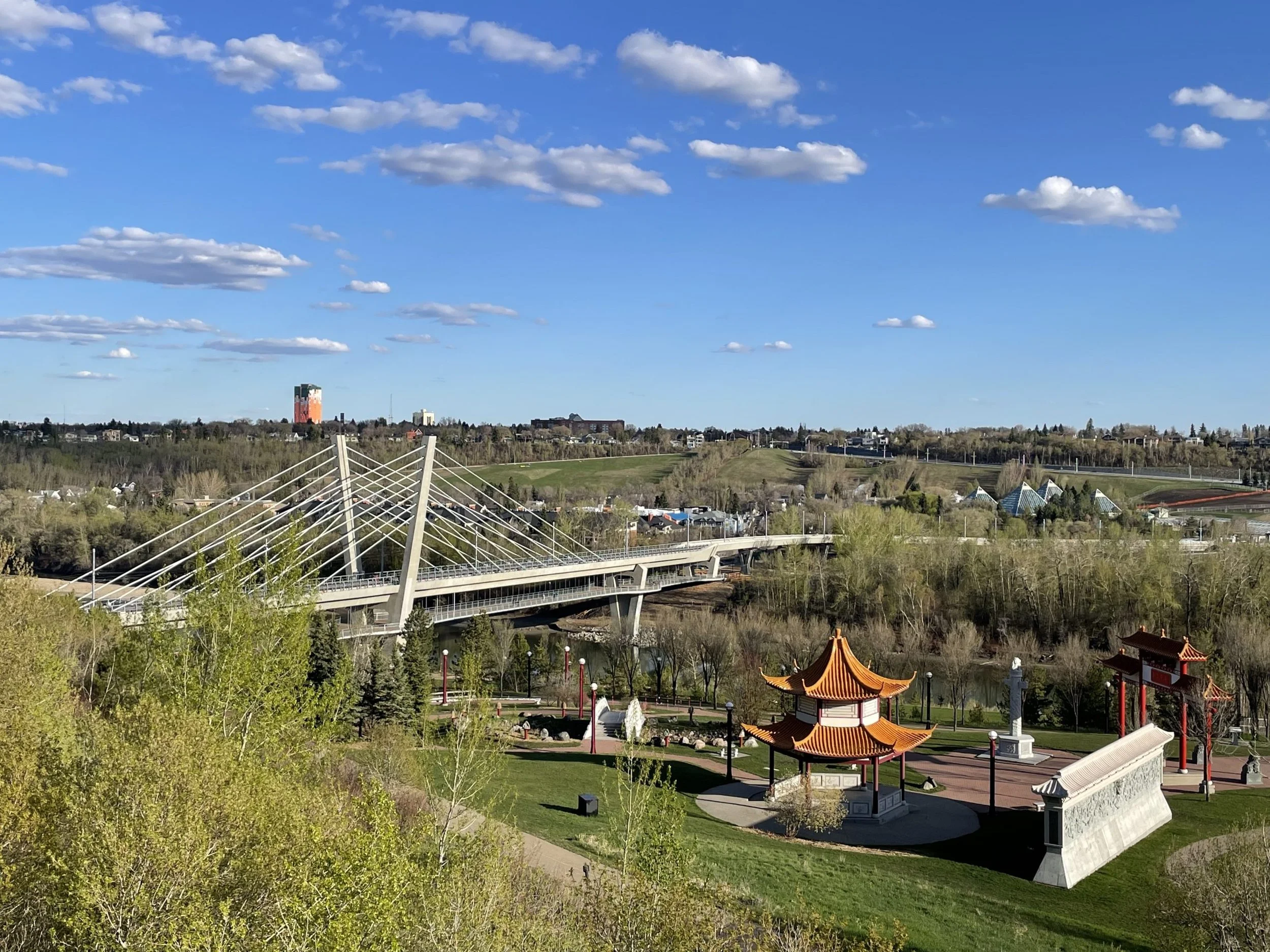
Last week's activities took place in the newly opened Indigenous sacred space in Whitemud Park called kihcihkaw askî. Years ago, it was a place where Indigenous people collected ochre and precious medicines growing in the river valley.

In Cree, kihcihkaw askî means "this place here is sacred land." The project is a collaboration between Indigenous elders, communities, and the City of Edmonton. More at https://www.cbc.ca/news/canada/edmonton/blossoming-flower-yellowhead-indigenous-education-foundation-1.6798233

Beaverhill Lake snow goose festival returns April 22-23

The Snow Goose Festival, April 22 and 23, celebrates the spring migration of snow geese through Beaverhill Lake near Tofield. Everyone is welcome, from first-time to experienced birders, children and adults. You will experience the wonder of nature as thousands of migrating snow geese, Canada geese, various shorebirds, cranes and swans return to Beaverhill Lake on their migratory route to the north.

Several guided hiking and bus tours are scheduled each day. The free Trade Show in the Tofield Arena offers kids activities, concessions and displays. Free shuttle to the festival from Sherwood Park Bethel Transit Terminal. Hop aboard Strathcona County Transit to shuttle you directly to and from the Festival.

You can purchase tickets in advance as both days offer 2 hour and 3 hour bus tours, as well as 3 hour field hikes. There is also a Saturday evening banquet with speaker and silent auction. Details at 
https://www.eventbrite.ca/e/snow-goose-festival-celebration-of-spring-migration-at-beaverhill-lake-tickets-539771480027

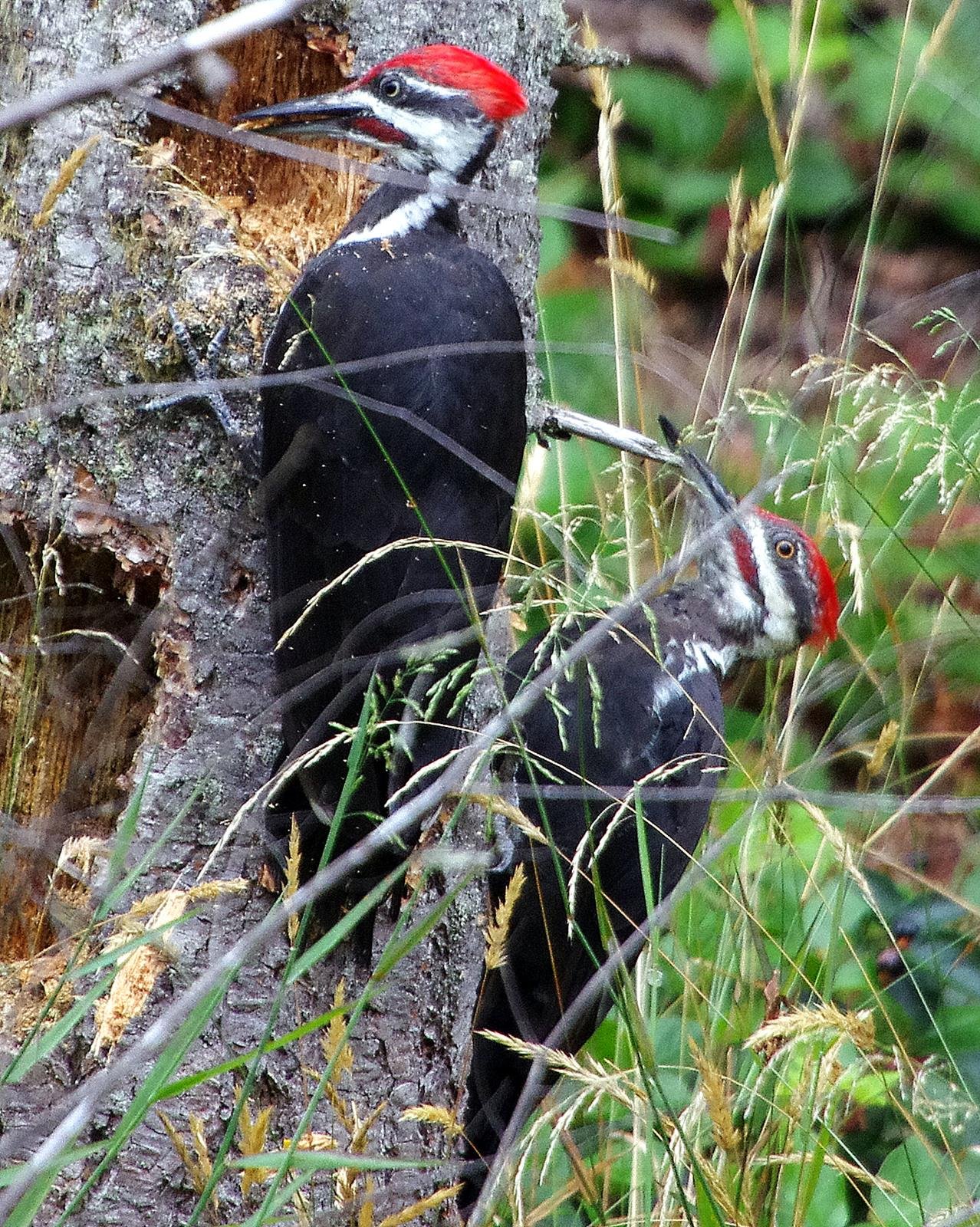
Woodpeckers weird tongue and why they don’t get concussions

If a human tried head-butting a tree with the speed and power of a woodpecker, they'd quickly end up with a headache or worse. So why don't woodpeckers get concussions, or at least headaches, after bashing their beaks into wood up to 12,000 times a day? A small brain might be key. 

A recent study found the bird's beak, head and brain all stop simultaneously when it hits the target, exactly how a hammer works, but no evidence of shock absorption. Experts wonder if the bird's brain, which is about 700 times smaller than a human's, avoids injury simply because its size and weight can withstand the force. It turns out a woodpecker would have to hit a tree twice as fast as they do to give themselves a concussion. 

Woodpecker tongues are weirdly long, measuring up to a third of their total body length, but most of its tongue is hidden within its head. The base is anchored to the hyoid bone, which is in its nostrils. From the nostril, the tongue splits in two, wraps around the back of the skull and joins together again at the base of the beak.

When muscles contract the hyoid bone, the tongue sticks out. The tongue also helps the woodpecker avoid injury when chiseling at objects. The hyoid contracts and tenses at each bash of the beak, holding the skull and spine in place. More at https://www.cbc.ca/documentaries/the-nature-of-things/why-woodpeckers-don-t-get-concussions-a-really-weird-tongue-and-other-surprising-facts-about-these-birds-1.6795945

Agoseris Glauca, or false dandelion, attractive to birds and bees

This native perennial and other agoseris species are known as false dandelions. They are common in the prairie and open woods of western North America.

The flowers are 1-inch across and appear singly at the ends of long stems. The flower stems can grow more than 45cm tall. The flowers are pollinated by insects, and are especially attractive to birds, butterflies, and bees.

Plants have a milky sap and the stems are sparingly hairy. False dandelion reproduces from seeds which have the same appearance as common dandelion. False dandelion is usually found where soils are sandy or gravelly.

Indigenous peoples used the plant medicinally and ate the roots. Wild-edibles enthusiasts eat the greens raw or cooked, much as they would regular dandelions. More photos at https://www.saskwildflower.ca/nat_Agoseris-glauca.html

We Are Here by Mia Weinberg, Muttart Conservatory. Granite pyramid depicting imagery of plant structures and urban map systems. https://www.edmontonpublicart.ca/#!/details/13

Comment or contribution

Please note that articles may not reflect the position of NSRVCS. River Valley News is meant to be a clearinghouse for the wide variety of opinions and ideas about Edmonton’s River Valley. Email river valley photos, event information, comments, or questions to nsrivervalley@gmail.com

Sincerely yours,

Harvey Voogd

North Saskatchewan River Valley Conservation Society

780.691.1712

River Valley News - March 30, 2023

The health of a river is influenced by what is happening on land

Linda Hoang photo

How healthy is the North Saskatchewan watershed? The North Saskatchewan River begins in the icefields of Banff National Park and continues across Alberta and into Saskatchewan. In Alberta, the North Saskatchewan watershed includes around 55,000 square kilometres of land.

Like many aspects of our environment, watersheds are vulnerable to human activity, from irrigating crops to building cities, that impacts how the land around it is being used. So how healthy is the North Saskatchewan watershed? And what does its future look like?

Of the roughly 1.7 million people who live in the North Saskatchewan watershed, around 1.5 million live in or around Alberta's capital. And while Edmonton's land area is small when compared to the watershed on a whole, urban environments, including small cities in Alberta and Saskatchewan, still have a significant impact with regard to water quality and land use. Details at https://www.cbc.ca/news/canada/edmonton/north-saskatchewan-watershed-climate-change-1.6774729

Staying safe and living with urban wildlife

Gerald Romanchuk photo

Many wild animals make great neighbours for humans. They eat pests like mice and insects and contribute to the biodiversity of our green spaces. But you still have to take precautions around wildlife, even in urban settings.

Keep your dog on a leash. An animal being barked at or chased by a dog might dart into traffic or try to defend itself by attacking your pet. Keep your cats indoors. They are easy prey for coyotes and foxes and keeping your cats inside will ensure the safety of the local bird population. It is estimated that domestic and feral cats kill between 100 and 350 million songbirds each year.

Remove food and shelter that attracts wildlife to your property. Keep your yard clean of pet foods, bird seed, fallen fruit and berries that can serve as a food source for wildlife. Potential shelter, such as spaces under decks, patios and outbuildings, should be closed off with durable wire mesh.

Children should be taught to make safe decisions and respect wildlife by never feeding or approaching wildlife, not running away when they see coyotes or foxes, putting garbage into garbage cans, and keeping pets leashed and supervised. Tips at https://www.ealt.ca/blog/fun-facts-staying-safe-around-large-mammals

Healthy forests are gifts that keep on giving

Have you ever been in the forest and felt a sense of peace? If so, then you know the importance of the forest to human health. But the forest is more than just a place to get away from it all; it is a vital ecosystem.

A healthy forest, like our river valley, provides many benefits to both humans and wildlife. A healthy forest provides habitat for wildlife, cleans the air and filters water. Home to a variety of species, forests play a critical role in sequestering carbon dioxide from the atmosphere to slow the pace of climate change. Forests are integral parts of our planet.

Not all healthy forests look the same because there are many different types of forest. But picture this: Healthy forests have trees of mixed age and dead trees, which provide habitat for countless species, from woodpeckers to fungi. As well, a healthy forest can look like one that has few invasive species.

As these trees decompose, they release nutrients back into the soil. A forest containing mixed-aged and dead trees is a great way to recognize a healthy forest. Having a variety of different tree species also make forests more resilient. More at https://www.natureconservancy.ca/en/blog/healthy-forests-are-gifts.html

Nature-based solutions for successful river valley zoning

Margriet writes “I enjoyed reading and fully support the recommendations in this article. Last year I suggested to the City that the open area next to the outlet of the Whitemud Creek into the North Saskatchewan River off Keillor road be transformed into a native plant habitat; trees, shrubs, grasses, and flowers. The Edmonton Queen river boat occupied this place for several years while repairs were made to it and currently there is just grass.”

All parts of this native wild onion are edible, including its flowers

Mike emailed “In your latest River Valley News, you put the native wild onion Allium textile in the spotlight. Just wanted to mention that some studies https://www.ccsenet.org/journal/index.php/sar/article/view/14542 have shown that growing Allium as an intercrop companion to brassicates, especially cabbage, can reduce the numbers of pests that feed on the brassicates, particularly reducing aphid numbers.”

Bunchberry Meadows closed April 3 - May 23

Bunchberry Meadows will temporarily be closed April 3 - May 23. April and May are an important time for plants and wildlife on the property. Birds are migrating and nesting, and ungulates are calving, making them sensitive to disturbance.

Edmonton & Area Land Trust owns Bunchberry Meadows in partnership with the Nature Conservancy of Canada and has worked since 2016 to steward the land in perpetuity, for the benefit of all people and wildlife. Learn more at https://www.ealt.ca/bunchberry-meadows

Comment or contribution

Please note that articles may not reflect the position of NSRVCS. River Valley News is meant to be a clearinghouse for the wide variety of opinions and ideas about Edmonton’s River Valley. Email river valley photos, event information, comments, or questions to nsrivervalley@gmail.com

Sincerely yours,

Harvey Voogd

North Saskatchewan River Valley Conservation Society

780.691.1712

River Valley News - March 23, 2023

Nature-based solutions for successful river valley zoning

Our recent AGM featured a presentation by former City of Edmonton Director Grant Pearsell on how including Nature-based Solutions for the River Valley in the City’s Zoning Bylaw Modernization Project would enable ecological conservation & restoration, increase climate resilience, and save money.

He recommended the city create a Natural Area Conservation and Restoration Zone whose purpose is natural area conservation, restoration, and ecological connectivity. It would allow minimal and compatible uses and include intact natural areas and areas identified to be restored.

A Riparian Setback Regulation applicable to all river valley zones is important as conserving riparian areas is necessary for ecological functioning rivers. Development setbacks are commonly used in zoning bylaws to manage development and these regulations can be applied to any zone.

Climate change means a Flood Disaster Reduction Zone or Restrictive Overlay is needed to limit development in the floodplain and restore natural landscape. This could be achieved by amending the existing Floodplain Protection Overlay.

Additions to general regulations for the river valley should include wildlife friendly fencing, native plantings and landscaping, and inclusive and transparent Environmental Impact Assessment regulations. The 37-minute presentation can be viewed at https://www.youtube.com/watch?v=MaAlsQDc5dk

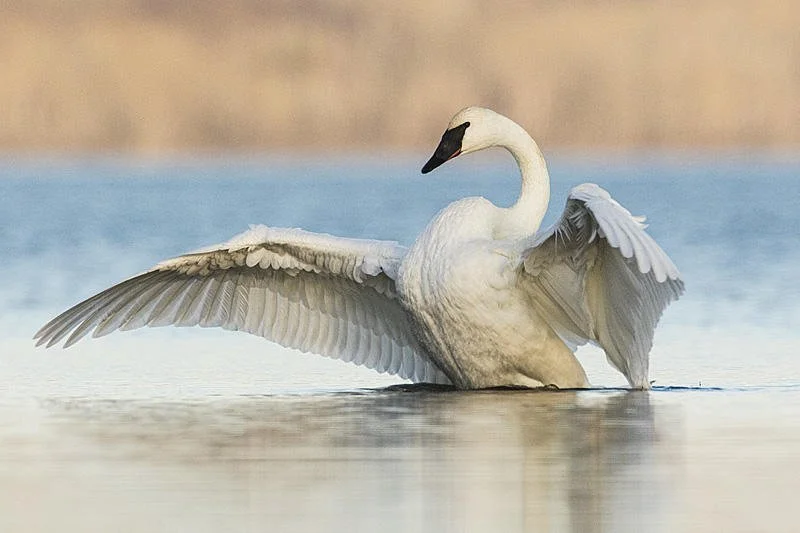
Tundra and Trumpeter swans are Canada’s swan sweethearts

Gerald Romanchuk photo

Tundra and trumpeter swans are migratory birds whose reputation for being lovebirds is well earned. Both birds often form a pair bond for life. These pairs are forged when the swans are young adults, usually between the ages of 3 and 6. Swans can live until they’re up to 30 years old, so finding the right one for them is no trivial endeavour.

To win the affection of their chosen partner, Trumpeter swans court by swimming alongside each other, usually with the male bumping the female with his breast on her flank, with both bobbing their heads. They then face each other, sometimes even making the iconic heart shape between their two graceful necks. Trumpeter Swans are our biggest native waterfowl, stretching to 6 feet in length and weighing more than 25 pounds, almost twice as massive as a Tundra Swan.

Tundra swans usually face each other, vocalizing one after the other in quick succession, all while half-flapping their wings, which eventually results in a larger wing-flare once the ritual is complete. Tundra swans don’t nest directly after finding a mate, instead staying together during the first breeding season without producing a nest. They do, however, protect a territory in this time, and actively drive away any interlopers. More at https://www.ealt.ca/blog/fun-facts-love-is-in-the-air

Master plan for Strathcona County Regional Park finalized

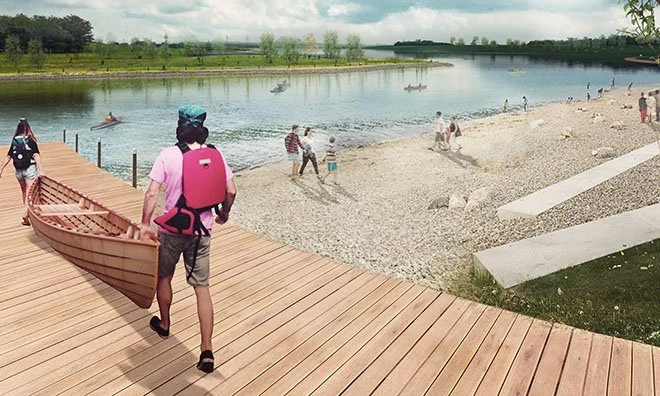
Located north of Township Road 540, where the new River Valley Alliance pedestrian bridge will connect to 167 Ave in Edmonton, this Regional Park is being promoted as a regenerative riverside park, which balances outdoor recreation nature appreciation and historical recognition, while fostering a healthy connected river valley system. It will reach across two quarter sections, or 290 acres, of land.

Previously used as a gravel quarry, North River Park, will be the key wildlife biodiversity zone, where forest and riparian restoration will take place. Construction includes topographic diversity, with hills created from earthmoving operations around wetlands. Within this portion, a north flood park will be developed, which will be designed to handle a one-in-one-hundred-year flood.

In South Wetland Park, existing ponds will be modified for wetland restoration. “The wetlands are one of the most unique aspects of this property, so developing boardwalks and pathways on the edges of them and through them will create really wonderful experiences and educational opportunities for school groups and visitors to the region,” according to the lead architect, Matt Williams.

The Central Gathering Place will have a visitor pavilion with outdoor seating, an adjacent plaza for community and school gatherings and a natural playground that uses the terrain for different play experiences. Connecting all three spaces will be the trail networks, which will focus on usage in all four seasons, so cross-country ski trails will be added.

“As the ecosystems start to regenerate we’ll have these wonderful loops of natural trails within forests, shrub-land, and grasslands, which all have the opportunities to have interpretative signage and diversity of experience to really enjoy and connect people with nature,”  said Williams. Learn more at https://sherwoodparknews.com/news/local-news/a-profound-opportunity-regional-park-master-plan-released-with-76-7m-price-tag

All parts of this native wild onion are edible, including its flowers

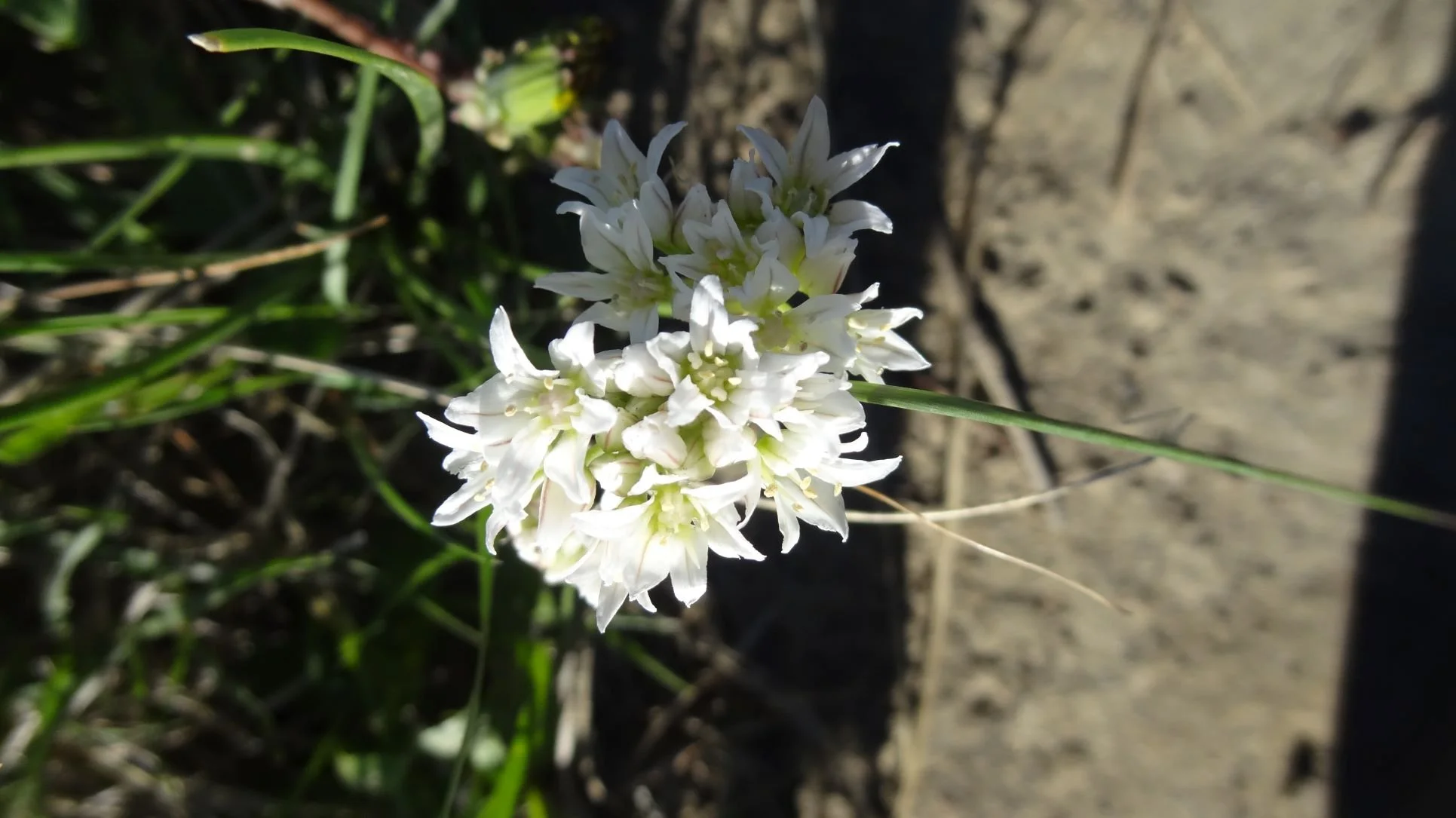
Allium textile, or textile onion, is a native wild onion. Chive like stems give rise to beautiful upright clusters of white flowers in late spring and early summer. Prairie onion is a member of the garlic family and is tolerant of hot, dry conditions making it ideal for xeriscaping or full sun beds. Hummingbirds are attracted to the flowers as are bees, and songbirds will happily eat the seeds that fall to the ground.

All parts of the plant are edible but care should be taken as mild toxicity has been reported if too much is eaten. The bulb can be eaten fresh, raw or cooked, or can be stored for later use. The leaves are good raw or cooked and the flowers can be used as a garnish on salads. Allium species usually grow well with roses, carrots, beet and chamomile.

Allium textile is a healthy addition to the diet. They contain sulphur compounds, which give them their onion flavour, and added to the diet on a regular basis help reduce blood cholesterol levels, act as a tonic to the digestive system and tonify the circulatory system. More at https://temperate.theferns.info/plant/Allium+textile

River Valley Trivia

Ron writes “I always enjoy your river valley news. Thanks for doing it. Here's a bit of river valley trivia. I remember, in the 1950s or 60s, the City of Edmonton created a rock garden beside Grierson Hill Road. In those days, that road was a source of constant frustration, as it kept sliding downhill. It finally was stabilized, I don't know how, and I don't know whether the rock garden had anything to do with it. Whether it ever had flowers planted between the rocks, I don't recall. But it soon was forgotten, abandoned, and untended. However, it's still there. On the uphill side of Grierson Hill Road, just south of the Convention Centre, you still can see the array of rocks, with all kinds of weeds and small trees growing up among them.”

Bronze Bust of Nellie McClung by Danek Mozdzenski, Victoria Promenade. Girl named Shirl Photography https://www.edmontonpublicart.ca/#!/details/246

Comment or contribution

Please note that articles may not reflect the position of NSRVCS. River Valley News is meant to be a clearinghouse for the wide variety of opinions and ideas about Edmonton’s River Valley. Email river valley photos, event information, comments, or questions to nsrivervalley@gmail.com

Sincerely yours,

Harvey Voogd

North Saskatchewan River Valley Conservation Society

780.691.1712