River Valley News - May 18, 2023

Amisko Wacîw Mêskanaw is North America's longest river valley trail

The Amisko Wacîw Mêskanaw, or Beaver Hill Road, winds for more than 100 kilometres, crossing 8,000 hectares of parkland and connecting six municipalities along the North Saskatchewan River. It pays tribute to the historic Cree name for the trail, which was a significant corridor for trade and a gathering ground and ceremonial place for Indigenous communities throughout the region.

Linking Parkland County, Edmonton, Strathcona County, Fort Saskatchewan and Sturgeon County, the trail runs through Treaty 6 territory and the Métis Nation of Alberta Region 4. The trail project has been in the works since the early 1990s, driven by the River Valley Alliance.

Markers bearing the name will be placed every 50 kilometres, and a trail symbol designed by Dene/Métis Artist Matthew Weigel will be added to existing infrastructure to help with wayfinding.

https://edmonton.ctvnews.ca/honouring-the-beaver-new-name-unveiled-for-100km-trail-through-edmonton-river-valley-1.6395450

Mountain Bluebird usually spotted because of the male’s sky-blue colour

Part of the thrush family, Mountain Bluebirds are smaller than an American Robin, but larger than a sparrow. They nest in natural cavities, on buildings, and in nest boxes. Nests are constructed from dry grass, stems, or pine needles, then lined with finer plant material, and can take more than a week to complete.

Typically, 4-8 eggs are laid and females will produce 1-2 clutches per year. They feed their young grasshoppers, beetles, and caterpillars. Mountain Bluebirds are adept at catching insects mid-air and will hunt for food on the ground, sometimes pouncing on prey.

When nesting season is over, Mountain Bluebirds will form flocks, eventually migrating south, with their southerly wintering grounds dipping into central Mexico. Specifications for building a Mountain Bluebird nest box can be found at https://bluebirdtrails.org/nest-box-building

Sound reflects the biodiversity and complexity of an ecosystem

There is a growing movement of people dedicated to protecting quiet places, not just for the sake of human well-being, but also because the loss of quiet spaces can have significant impacts on biodiversity and ecosystem health.

Many people are familiar with dark sky preserves, which provide some of the best stargazing experiences in the world. But instead of combating light pollution, Quiet Parks International tackles the problem of noise. The goal is not to make spaces quieter, it is to protect areas that are already quiet.

Sound is an indicator for the overall health of an ecosystem, according to Matt Mikkelsen. “Why does sound matter? It’s a really good indicator for the overall health of an environment. So when you have a healthy soundscape … that also means that other parts of that ecosystem are probably also functioning pretty well.” 

Discoveries in the field include reduced reproductive success in eastern bluebirds nesting near noisy natural gas compressors and an increased heart rate in monarch butterfly caterpillars when exposed to highway noise.

https://thenarwhal.ca/protecting-quiet-spaces-natural-sounds/
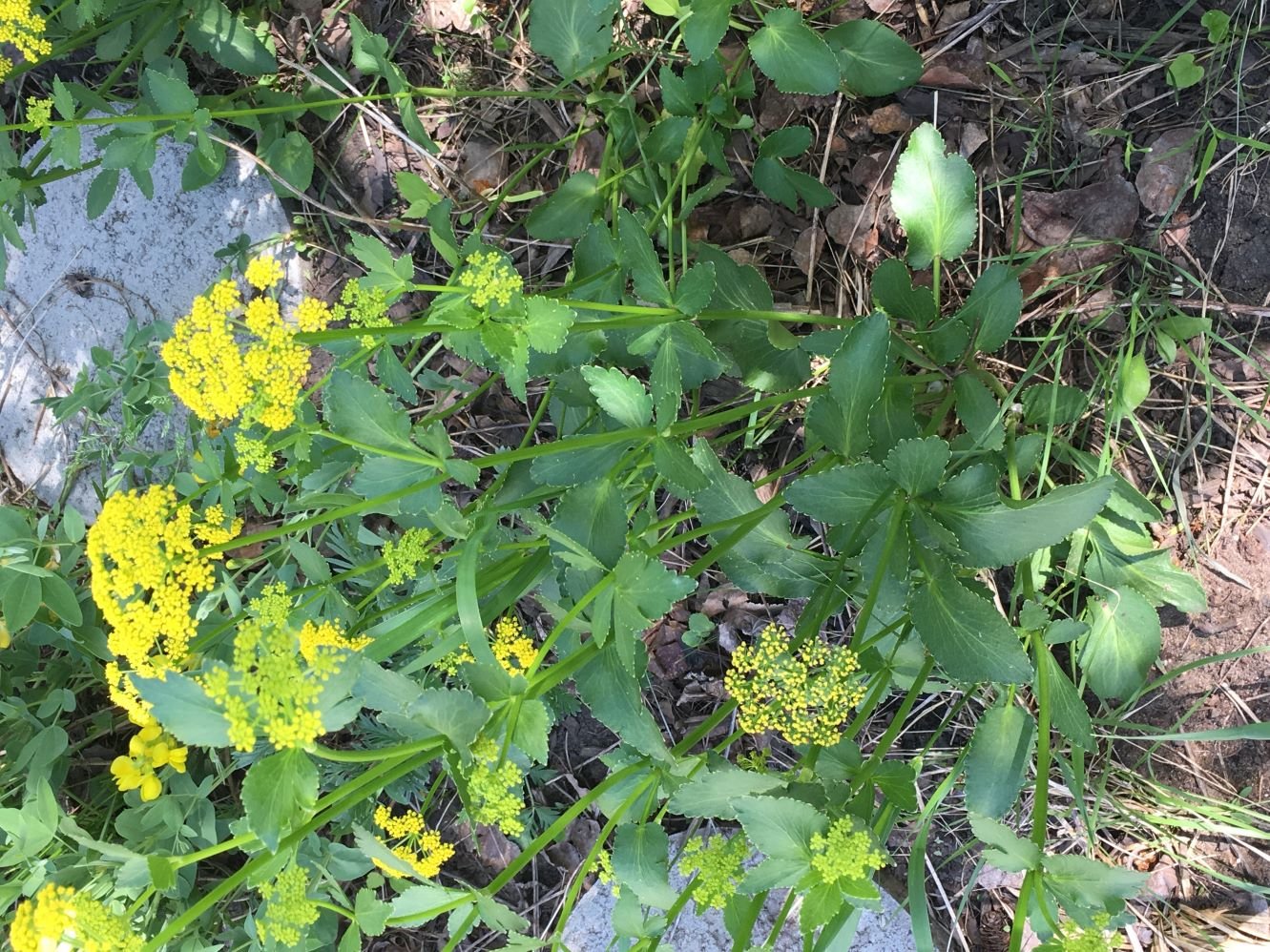
Zizia aptera is a member of the carrot family

Zizia aptera is a flowering plant native to North America. Its common names include meadow zizia, golden alexanders, heart leaved golden alexanders, and prairie golden alexanders. It is an attractive mid-sized plant with glossy green foliage and golden-yellow flat-topped flowers.

These plants provide nectar and pollen as food for many insects active in the spring such as bees, flies, beetles, and other beneficial insects. Use to brighten a lightly shaded woodland corner or a sunny perennial bed.

Both the flowers and stalk are edible and the flowers can be prepared like broccoli. It has been used medicinally by both First Nations people and in western herbal medicine. Golden Alexander or zizia was used for headaches, fever, hysteria, epilepsy, chorea, leucorrhea, backaches and increasing sexual drive in men. https://www.edmontonnativeplantsociety.ca/wfindex/zizia-aptera

Map highlights historic, old, unique and rare YEG trees

Sherry writes “NAIT capstone students working with Shrubscriber and the Alberta Tree Register created a database of unique trees within the province. The developed map alongside the database allows users to view the existing trees and add new trees. Please check it out at https://albertatreeregister.github.io/Map/

The Convergence by Tony Bloom, Victoria Promenade https://www.edmontonpublicart.ca/#!/details/76

Comment or contribution

Please note that articles may not reflect the position of NSRVCS. River Valley News is meant to be a clearinghouse for the wide variety of opinions and ideas about Edmonton’s River Valley. Email river valley photos, event information, comments, or questions to nsrivervalley@gmail.com

Sincerely yours,

Harvey Voogd

North Saskatchewan River Valley Conservation Society

780.691.1712

River Valley News - May 11, 2023

Map highlights historic, old, unique and rare YEG trees

The Historic Trees of Edmonton map, originally created by Josh Kirsch, highlights historic, old, unique and rare trees in Edmonton and surrounding areas. Dustin Bajer contributed lots of the trees that are included.

You can find trees under a wide variety of headings including Edmonton’s Widest Trees, Largest of Different Tree Species, and Heritage tree nominations. Oldest Grade 1 Tree, in Edmonton’s Favourite Tree’s category, is a White Spruce at 10741-75 Avenue NW, planted in 1952 and nominated by Allan Williams.

A 23.65 foot wide tree, at 11127-72 Ave NW, in the Parkallen neighbourhood, has been nominated as the widest tree in Edmonton. Nominated by Kelly Kowalchuk, it is believed to be 100+ years old. More at https://www.google.com/maps/d/u/0/viewer?mid=19R_1iainW3ZsrcfqrA5sxS--R4nNFt3j&ll=53.55980764757472%2C-113.45179214649374&z=14&fbclid=IwAR1ow8UVCz4A3pwXWuY2P-klhQPUTa_pxBBXtLsbnIni37qqTmeLPyMSR7c

How do birds know when to migrate

Marg Reine photo

Lengthening days set off a cascade of events in migratory birds that culminates in the birth of a clutch of chicks. To time this arrival for the highest likelihood of conditions favorable to reproducing, a migratory bird tracks each day’s light length, or photoperiod.

That tracking happens instinctively in the animals, which use special photoreceptors in their brain to detect light. Once those photoreceptors register that the days are lengthening in late winter and early spring, they trigger activity in a host of body systems.

Birds molt, for instance, shedding their worn feathers and growing new ones. Their hormones change, influencing their digestive patterns and leading them to eat more, put on weight and build up flight muscle. In some birds, once they’ve eaten enough, a digestive hormone called ghrelin begins to make them restless and nudges them to take flight. And the birds’ reproductive tracts begin to change to ensure that they will be fertile by the time they breed.

When all the pieces fall into place, birds are well prepared to raise their chicks while making the most of the long days and the seasonal boom in bugs, berries and other resources their summer homes offer.

https://www.scientificamerican.com/article/how-do-birds-know-when-to-migrate/

Spruce tips harvesting, cooking and recipes

Spruce tips, the young growth on branches of spruce trees, are not an herb in the typical sense, but they are for all intents and purposes. No species of spruce is poisonous though, so what you can do is just go around to different trees and taste them until you find one that tastes good.

 Like with many foraged foods, you need to be careful with how you treat the trees. Always pick from mature trees as young trees need time to grow. Never pick more than 20% of the tips from a single tree. Do not pick tips from the apical meristem or top of a young tree, which would stunt its growth.

Cooking with spruce tips is misleading since using heat makes them lose their vibrant color. Think of them as an herb you would use raw. Add them raw to salads or sprinkle over vegetable dishes. Spruce tips in desserts will typically be pureed or in an infusion, and always strained if possible since leftover particles can get bitter.

The strong taste of spruce tips should be a deterrent from eating multiple handfuls, but it is possible for some people to get an upset stomach from eating them, which could be due to the fact that spruce tips are naturally high in Vitamin C. https://foragerchef.com/spruce-tips/

Frederick Todd envisioned YEG with a ribbon of green as its heart

Adriana writes “I applaud the item on landscape architect Frederick Todd. As co-artist in residence at Yorath House with Marlena Wyman in early 2022, I did an extensive article on Edmonton’s “Beautiful Views: Edmonton’s Westerly Park,” which you might want to inform your readers about. Here is the link: https://yegarts.tumblr.com/post/677459133706928128/yorath-house-artist-residency-blog-post?fbclid=IwAR2hRQluj9hK3-Lsc9jxAoNvi96WMoBgdn9pUe0UrRymnBA7sDB-ZHygyZg

I not only deal with Todd’s report to the City in which he brought to bear “garden city” principles, I also talk about the history of Laurier Park and the development of the early parks department. I think that this is still relevant today as threats to the River Valley continue.”

The Dancer by Bella Totino-Busby & Verne Busby, Yorath House, Buena Vista Park. https://www.edmontonpublicart.ca/#!/details/297

Comment or contribution

Please note that articles may not reflect the position of NSRVCS. River Valley News is meant to be a clearinghouse for the wide variety of opinions and ideas about Edmonton’s River Valley. Email river valley photos, event information, comments, or questions to nsrivervalley@gmail.com

Sincerely yours,

Harvey Voogd

North Saskatchewan River Valley Conservation Society

780.691.1712

River Valley News - May 4, 2023

YEG funicular a tale of vandalism, costs and closures

Besides being a choice target for vandals, including a “massive increase” in graffiti over the last two years, there have been numerous lengthy shutdowns for planned and unplanned maintenance work, while crews have been kept chronically busy responding to various alarms, emergency stops and trapped passengers.

For the funicular’s first full year of service, in 2018, records show the city spent $682,000 on operations, before costs settled at around $530,000 in each of the next three years. This includes funding for various kinds of maintenance, utilities, security and custodial services, but not snow clearing, which is covered through a different budget.

Counting all this up, city records show that between January 2018 and July 2022, about 55 months, there were 162 days when the funicular was not in service or experienced a disruption of at least three hours. Of these days with stoppages, 99 involved planned maintenance while 63 featured unexpected issues, including a 10-day closure amid very cold weather in February 2021.

Why was it built? In his column, Keith Gerein says the real motivation was the fact that almost all the $24 million construction bill was covered by other orders of government and the River Valley Alliance. There was no choice in the matter. The city either built the funicular, or it lost the funding. https://edmontonjournal.com/opinion/columnists/keith-gerein-edmontons-funicular-after-five-years-a-tale-of-vandalism-costs-and-closures

Climate change impacting bird migration patterns

Myrna Pearman photo

In Canada, almost three-quarters of our birds are migratory. "Only the hardiest birds like magpies and even though they're tiny, chickadees, have ways to cope with the cold," said Geoff Holroyd, chair of the Beaverhill Bird Observatory east of Tofield. "There's several hundred species that migrate."

But as our climate changes, those migration patterns are being interrupted. "Some birds are arriving earlier because of our earlier spring temperatures … our mountain bluebirds are now arriving 19 days earlier than they did 60 years ago," said Holroyd, who has been studying Alberta's birds for about four decades.

And in the fall, Holroyd said he has noticed later trends with birds leaving. "Saw-whet owls that we catch at our Beaverhill Bird Observatory are migrating late … one and a half days per decade later," he said. The risks with these changes come with our variable weather, according to Holroyd. 

"If the bluebirds arrive early and get hit with a late snowstorm, then they could be in trouble. It can kill them," he said. "With the owls, if they get caught with an early snowstorm in the fall and they've been tricked into thinking they can stay and migrate later, that can also get them in trouble." https://www.cbc.ca/news/canada/edmonton/climate-change-is-impacting-bird-migration-patterns-here-s-what-we-know-1.6796477

Upright prairie coneflower has a deep taproot making it drought tolerant

Ratibida columnifera commonly known as upright prairie coneflower, Mexican hat, and longhead prairie coneflower is a native erect perennial prairie plant that grows from one to three feet high with occasional branching, on stems that are green and smooth to slightly rough with hair.

The floral array is a solitary 2 to 3 inch high flower on a tall stalk, held well above the leaves. The flower is a composite. There are 4 to 12 yellow ray florets with rays that are ovate to elliptic in shape and hang downward. The rays can also have a reddish-brown color. When the rays have this alternate color, it is sometimes called Mexican Hat Plant.

Coneflower has a deep taproot making it drought tolerant and it is well adapted to poorer drier soils, mesic to dry moisture conditions. On grazeland Upright Prairie Coneflower is palatable and nutritious to domestic grazing animals as well a source of seeds for birds and other wildlife. It will self-seed. https://www.gardenia.net/plant/ratibida-columnifera

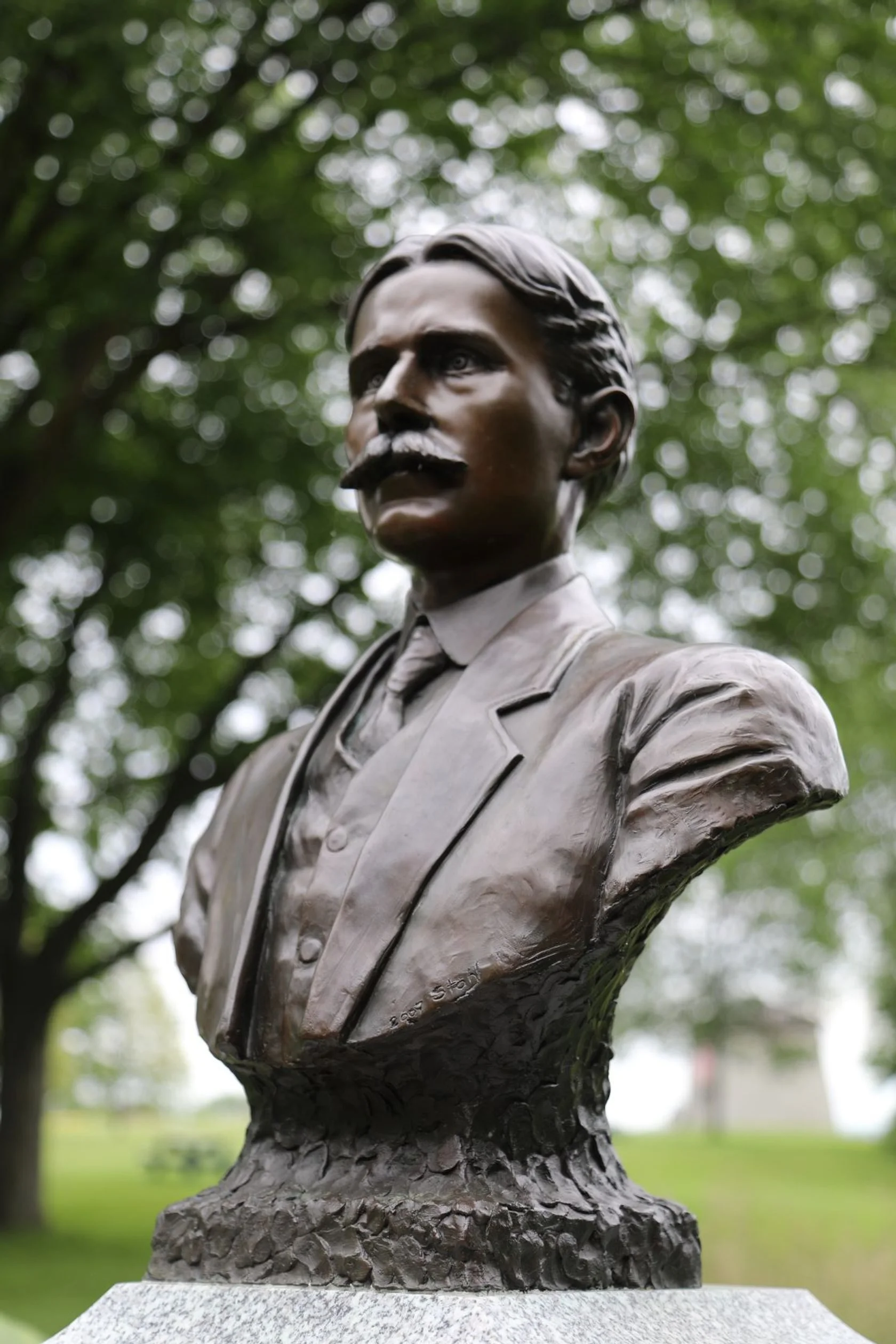
Frederick Todd envisioned YEG with a ribbon of green as its heart

Edmonton’s river valley, the largest urban park in Canada, is an asset that may never have existed without the efforts of Frederick G. Todd. As was common in most Canadian settlements, Edmonton’s river valley was used for industry and manufacturing leading up to the flood in 1915.

In the winter of 1906 through 1907, the City of Edmonton asked Todd to generate a report on how to provide park space to meet the future needs of citizens. In that report, Todd found Edmonton to have the potential to grow into a bustling metropolis owing to its situation in the centre of a developing province, attractiveness for business and residential development, and its picturesque setting.

With the potential for swift growth, Todd noted that park space becomes the limiting factor, and that financial prudency demands purchasing park land before people move in since land costs rise over time. In addition to recommending playgrounds, boulevards along streets, and large parks, Todd emphasized that ravines and hillsides are easily turned into natural areas for the public good as their incline makes other uses more difficult.

Frederick Gage Todd’s report was adopted in principle by the Government of Alberta following the floods in 1915 and that same year Edmonton spoke of the river valley park system in its municipal development plan. It began the preservation of the river valley that has grown stronger over time through zoning bylaws, land use plans, community activists, and government investment. https://www.edmonton.ca/public-files/assets/document?path=Naming_Committee_Biography_Frederick_Gage_Todd_Lookout.pdf

EPCOR YEG river valley solar power plant

Alice writes “Thanks, as always, for the latest issue of the newsletter. The photo by Kyle Schole of Epcor’s solar plant is a whole story and editorial commentary on that project, supposedly a ‘green’ renewable source of energy, but in fact a huge grey bite out of the green valley.”

Wendell emailed “The photo of the solar panels is real? The one with the caption: EPCOR YEG river valley solar power plant. Too bad, eh!”

More than 700 trees at risk in Hawrelak Park reconstruction

Sandra writes “This is an absolute horror situation. Edmonton deserves better. Adding insult to injury with the total climbing! Global warming is real. Cutting down trees accelerates it. Is there any way the public can have a say? I will attend any meetings. I feel it must be reviewed, ASAP. Please let us know. As citizens we deserve to have our voices heard. Thank you for posting.”

Preparing to Cross the Sacred River by Marianne Nicolson, INIW River Lot 11, 10380 Queen Elizabeth Park Road. Conor McNally still. https://www.edmontonpublicart.ca/#!/details/189

Comment or contribution

Please note that articles may not reflect the position of NSRVCS. River Valley News is meant to be a clearinghouse for the wide variety of opinions and ideas about Edmonton’s River Valley. Email river valley photos, event information, comments, or questions to nsrivervalley@gmail.com

Sincerely yours,

Harvey Voogd

North Saskatchewan River Valley Conservation Society

780.691.1712