River Valley News - September 14, 2023

Northeast River Valley Park opens September 24

Edmonton’s newest river valley park opens to the public on Sunday, September 24 at 11 a.m. Northeast River Valley Park, previously known as Our Lady Queen of Peace Ranch North, is located at 903-153 Avenue NE. It provides opportunities for quality outdoor recreation experiences and expands the Ribbon of Green network for biodiversity and ecological integrity. 

The park connects with popular River Valley trails and includes unique features, such as charming barn bridges, an ornamental lake for non-motorized paddling activities, a large events centre for gatherings and weddings, trail connections, children’s playground and public washrooms.

On opening day there will be many activities for the public including an Event Center open house, Edmonton Public Library story walk, nature and recreation activities, neighbourhood showcase, and a City tradeshow with displays and giveaways. Food trucks will also be on-site.

Residents and stakeholders will have an opportunity to provide input on the long term plan for the park, including its name, as part of a strategic concept-planning process expected to begin Fall 2023. https://www.edmonton.ca/activities_parks_recreation/parks_rivervalley/northeast-river-valley-park

Edmonton must protect its river valley and drinking water

In an opinion piece, Kristine Kowalchuk argues against Epcor’s flood mitigation plan, citing five interrelated concerns. The first is the cutting of 577 trees, including 77 mature trees. Replanting young trees will not replace mature trees; the latter offer exponentially greater carbon sequestration, flood and drought mitigation, and habitat.

Our second concern is further impact to the wildlife corridor, in particular on pinch points that are already in desperate need of restoration. This will drive wildlife into residential areas and increase conflict. The third concern regards the questionable wisdom of trying to hold back the river in a flood plain. As Calgary and High River learned 10 years ago, water will do what it wants.

Our fourth concern is Epcor’s lack of a long-term plan to decentralize water treatment. How resilient is a water system in which over 90 communities rely on just two water treatment plants (located in flood plains)?

That brings us to the final main concern. How does one even put a price tag on protecting the river valley and land that has the same archaeological designation as UNESCO World Heritage sites? Read complete piece at

https://edmontonjournal.com/opinion/columnists/opinion-edmonton-must-protect-its-river-valley-and-drinking-water

Invasive earthworms changing the soil in Canada's boreal forests

University of Alberta research highlights how non-native earthworms are directly altering the soil microbial community in the country's boreal forests. The study showed that earthworms affected fungal and bacterial communities in the first layer of mineral soil, just below the organic-rich layer known as the forest floor.

Researcher Justine Lejoly was particularly surprised to discover a higher diversity of bacteria and fungi in those worm-invaded soils. "It was unexpected, considering that vegetation studies have already shown that earthworms have detrimental effects, including lower plant diversity and higher drought sensitivity."

"In theory, having higher diversity means there are more types of bacteria and fungi present, which potentially makes them more resilient to disturbance and better equipped to maintain soil functions in different scenarios."

The presence of the worms also appeared to increase the abundance of fungi capable of living in symbiosis with trees, the study showed, though consequences for tree growth, whether positive or negative, weren't explored.

https://phys.org/news/2023-09-invasive-earthworms-soil-canada-boreal.html

Edmonton forest school seeks to raise curious, nature loving children

Megan writes “I saw the article about forest school. It is only one of many running in Edmonton. For instance, I sent my 5-year-old to Wild Child Forest School in Mill Creek this past summer for a weeklong summer camp. It's one of the most affordable summer camps in the city, and the kids learn practical forest and survival skills along with having a ton of fun.

There is also a Free Forest School, which is parent run/organized, meets all over the river valley from Devon to Fort Saskatchewan and has weekly get togethers for unstructured forest play. Thanks so much for spreading the word about these important opportunities for kids to interact in the wild in a safe fashion, while learning to appreciate our beautiful river valley!”

Almost Whole by Roydon Mills, Belgravia Art Park

https://www.edmontonarts.ca/public-art/almost-whole

Comment or contribution

Please note that articles may not reflect the position of NSRVCS. River Valley News is meant to be a clearinghouse for the wide variety of opinions and ideas about Edmonton’s River Valley. Email river valley photos, event information, comments, or questions to nsrivervalley@gmail.com

River Valley News - August 24, 2023

Edmonton forest school seeks to raise curious, nature loving children

September spots are open for the not-for-profit Edmonton Forest School which runs full-day, half-day, and once-a-week program options at Gold Bar Park for preschool, kindergarten, early dismissal, and homeschool programs from September to June.

The society’s goal is to support children in the development of a sense of place, an ethic of care towards nature, and an understanding of themselves as a part of the natural world. It seeks to contribute to the health of our natural environments by fostering meaningful connections between children and nature.

By strengthening their bonds with the natural world, children become responsible stewards of their forests, watersheds, wildlife, and other ecological resources. Connection to the natural world takes time. Through the school’s programming, children will explore, play and learn in the same natural spaces over all four seasons, fostering a deep connection to the natural world. https://edmontonforestschool.com/

Conservation easement protects Visser farmland forever

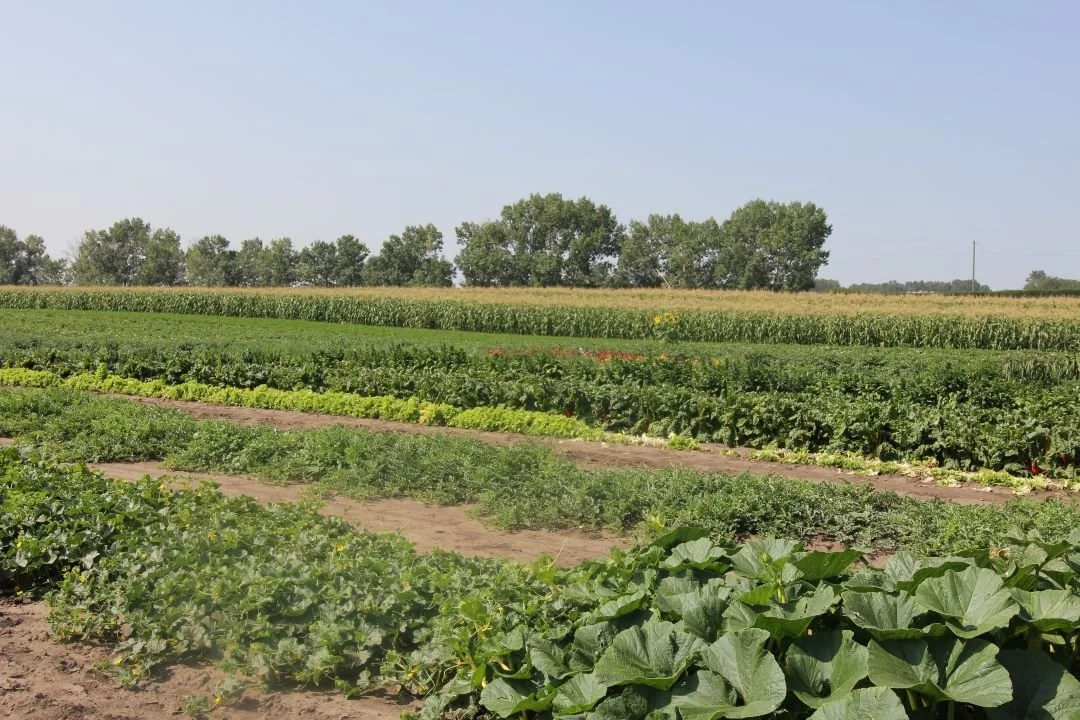
Doug Visser’s farm is in northeast Edmonton across the river from Fort Saskatchewan. The North Saskatchewan River flows by on the east and north side of the farm. Doug moved here when he was five years old. For the first couple of summers, First Nations people lived on part of the land catching rabbits.

The land includes a forest and is very good for root crops and vegetables. His daughter and son-in-law run a market garden that sells vegetables directly to Edmontonians. Doug has taken steps to preserve these special agricultural lands, which he says are important because it gives so much to us in terms of food and biodiversity.

He has developed a conservation easement with the Edmonton & Area Land Trust which gifts a bundle of rights to EALT to protect than land. Agriculture is still permitted, but the 73-acre forest and natural area is protected from forestry and subdivision. Doug feels relieved and secure that this land will be preserved into perpetuity.

Conservation easements are a nice tool because landowners still own the land and can pass it on to their family or sell it if they wish. But the bundle of rights from the conservation easement are associated with the land title itself, so future landowners must adhere to the restrictions put in place.

https://www.cbc.ca/listen/live-radio/1-17-edmonton-am/clip/16002632-a-visit-visser-farms

Splooting is a goofy act that signals something serious

As climate change is making extreme heat events more common, squirrels are splooting to cope. Splooting is behavior some animals use to cool their body temperature. Squirrels are finding cool surfaces and lying on their stomachs, legs spread, to cool off. Think of it like finding the cool side of the pillow when you're trying to fall asleep.

Sunny Corrao of the New York City Department of Parks and Recreation says it's about transferring the heat away from their bodies: "They're trying to find a cool space, and if they can put as much of their core body on to a cool space, then the heat is going to transfer from their bodies to the other surface. In the case of squirrels, you'll often see them maybe on a shady sidewalk, or a park path, or in the grass, just splayed out."

Animals that can't sweat have to resort to other behaviors to cool off. Dogs pant. Birds dunk themselves in water. Splooting can be a sign that squirrels and other animals are experiencing temperatures much higher than what they're used to. https://www.npr.org/2023/06/29/1185092056/squirrels-splooting-heat-wave-climate-change

Let’s Find Out a monthly podcast about YEG history

This local podcast is recorded in Edmonton, aka Amiskwaciwâskahikan, on Treaty Six territory. It takes questions from curious Edmontonians about local history and finds out the answers together. The podcast is currently in the midst of a season about parks and natural areas in Edmonton.

Chris Chang-Yen Phillips, the podcast host and producer, is a storyteller and people weaver. He is an MA History grad student at the University of Alberta and works as Podcasting Coordinator at CJSR 88.5 FM. Previously, he served as Edmonton’s 4th Historian Laureate. He loves learning about science, nature, and history.

Let’s Find Out is a publication of Taproot Edmonton. In 2018, it picked up a silver medal for Best Consumer Podcast from the Canadian Online Publishing Awards and was a finalist for the 2019 Canadian Podcast Award for Outstanding Documentary. In 2020, Let’s Find Out was an Emerald Award finalist in the Public Education & Outreach category. https://letsfindoutpodcast.com/

Ria Busink photo

River Valley News taking a break

This weekly e-newsletter is taking a 3-week break from August 25 through September 13. We will resume publication on Thursday, September 14.

Comment or contribution

Please note that articles may not reflect the position of NSRVCS. River Valley News is meant to be a clearinghouse for the wide variety of opinions and ideas about Edmonton’s River Valley. Email river valley photos, event information, comments, or questions to nsrivervalley@gmail.com

River Valley News - August 17, 2023

How bats benefit from goats eating weeds

The Little Brown Bat was emergency listed as Endangered under Canada’s Species at Risk Act because of sudden population declines due to White Nose Syndrome. But this is not the only threat facing these bats. Habitat loss, human disturbance, pollution, and climate change can all lead to population decline.

Invasive plants outcompete native vegetation, sometimes so aggressively that they create a monoculture. They can decrease the biodiversity of an area, leading to less available prey for bats. Management of invasive plants is necessary so native flora and fauna can flourish, and there are multiple ways to accomplish this.

One effective and innovative method is to use goats to browse on weeds, which also reduces the overall usage of pesticides, which may inadvertently be harmful to bats, their insect prey, and other species. This is Edmonton & Area Land Trust’s third year using goats at Pipestone Creek Conservation Land and Glory Hills.

EALT has seen a stark difference in the extent and density of invasive plants at these two conservation lands. Hundreds of goats at a time visit the lands, coming back to each site twice in a year. This repeated effort depletes those plants’ energy stores, leaving space for native flora to flourish. https://www.ealt.ca/blog/goats-helping-bats

Living dinosaur lurks in North Saskatchewan River

Despite the name, lake sturgeon are strictly river fish in Alberta, living in the North and South Saskatchewan river systems. A living dinosaur of the fish world, this unusual species is torpedo-shaped and armor-plated. It has a shark-like, upturned tail and a pointed snout with four barbels, whisker-like tissue filaments.

Like other prehistoric fish, sturgeon do not have scales, they have denticles. Denticles are scale-like plates found along the skin of the sturgeon, which give the skin its roughness. They also have five rows of bony plates, called scutes.

The usual habitat where lake sturgeon can be found are along highly productive shoals, which are ridges, banks or bars under water. With adequate bottom-dwelling prey, lake sturgeon can live in a variety of habitats. They are bottom feeders, eating clams, insect larvae and some fish and fish eggs.

Lake sturgeon take a longer time to reach maturity than other Alberta fish species. Male sturgeon do not spawn until they are about 15 to 20 years old. Females usually spawn between the ages of 20 and 25. Lake sturgeon can live up to 150 years, with the oldest fish in Alberta being recorded at 62 years old. https://www.alberta.ca/lake-sturgeon.aspx

Designing a bird friendly yard

Destruction of habitat is a leading cause of species extinction. After spending years walking, hiking and driving to photograph birds Melissa Penney tried something new. She decided to invite birds to come to her by spending the past decade making her yard a haven for native plants, animals and birds.

Melissa created a wildlife habitat by adding native plants, shelter and clean water. Her interests have expanded to gardening, native plants, lepidoptera and how it all works together. The Canadian Wildlife Federation has certified her yard as a wildlife friendly habitat.

Melissa now has Northern Flying Squirrel visits, multiple species of annual nesting birds and in 2022 had an incredible 76 different bird species visit. This number included her amazing experience with a male American Redstart for 45 days and a few other rarities which she did not think were possible to have in an Edmonton backyard. Watch her 5 ways to increase biodiversity in your backyard.

https://www.youtube.com/watch?v=z8yrEImRzGM&t=8s

Federal funding will support planting 1.5 million trees in Edmonton

Janet writes “I would like to see trees in every concrete and asphalt parking lot to prevent the heat build up in those areas, provide needed shade for people walking to and from their vehicles, and to possibly absorb some of the fumes from motor vehicles. There should be a requirement for all parking lots to have trees at a certain number of feet from one another to protect us all from concrete's effects. Thanks for keeping the River Valley in everyone's focus!”

Three things to help Edmonton achieve a higher bird friendly status

Wayne emailed “An amendment is needed to Section 8 of the Parkland bylaw, Bylaw 2202. The problem is that while it is illegal to move, remove, cut or damage any tree, shrub, flower, other plant or deadfall, it is not illegal to remove the berries, fruit, nuts or seeds that river valley plants produce. In the fall it is not uncommon to see people carrying up to four 5-gallon buckets filled with berries gleaned by walking freely through the woods.

For most of our wildlife inhabitants these items are their only source of food. No food equals no animals and no birds. Berries, fruits, nuts and seeds are also the method through which our woodland areas renew vegetation. During our harsh winter and lean spring seasons, natural food sources are getting harder and harder for all manner of creature to find, and in many cases cannot be found.”

Bust of Maude Bowman by Don Begg, Heritage Trail along the Victoria Promenade

https://www.edmontonarts.ca/public-art/bust-of-maude-bowman

Comment or contribution

Please note that articles may not reflect the position of NSRVCS. River Valley News is meant to be a clearinghouse for the wide variety of opinions and ideas about Edmonton’s River Valley. Email river valley photos, event information, comments, or questions to nsrivervalley@gmail.com