River Valley News - June 8, 2023

Alberta Biodiversity Challenge is June 8-11

Biodiversity provides the building blocks of nature itself. Every organism plays an important role in their habitat, with each species contributing to create the unique ecosystems we have around us. The more native plants and animals in an area, the healthier the ecosystem becomes which is both beneficial for humans and for the climate.

Most recently referred to as nature-based solutions, humans are increasingly using nature and its biodiversity as an effective mitigation and adaptation strategy to address the impacts of our changing climate. The first step to maintaining local biodiversity is understanding it and as a Citizen Scientist you can help!

The Biodiversity Challenge invites Albertans to take part in a photo BioBlitz, between June 8-11, using the iNaturalist citizen science app. Take photos of native biodiversity for example, the flora and fauna you find in nature - not your flower beds, cats, or dogs and upload your sightings to iNaturalist by June 18.

Sounds too daunting but still want to get involved. June 10-11 visit the Edmonton Valley Zoo June where educators will help walk you through the process as well as other family fun activities to help educate about Edmonton’s wild and local biodiversity. https://changeforclimate.ca/story/celebrating-the-role-of-biodiversity
How to spot the difference between crows and ravens

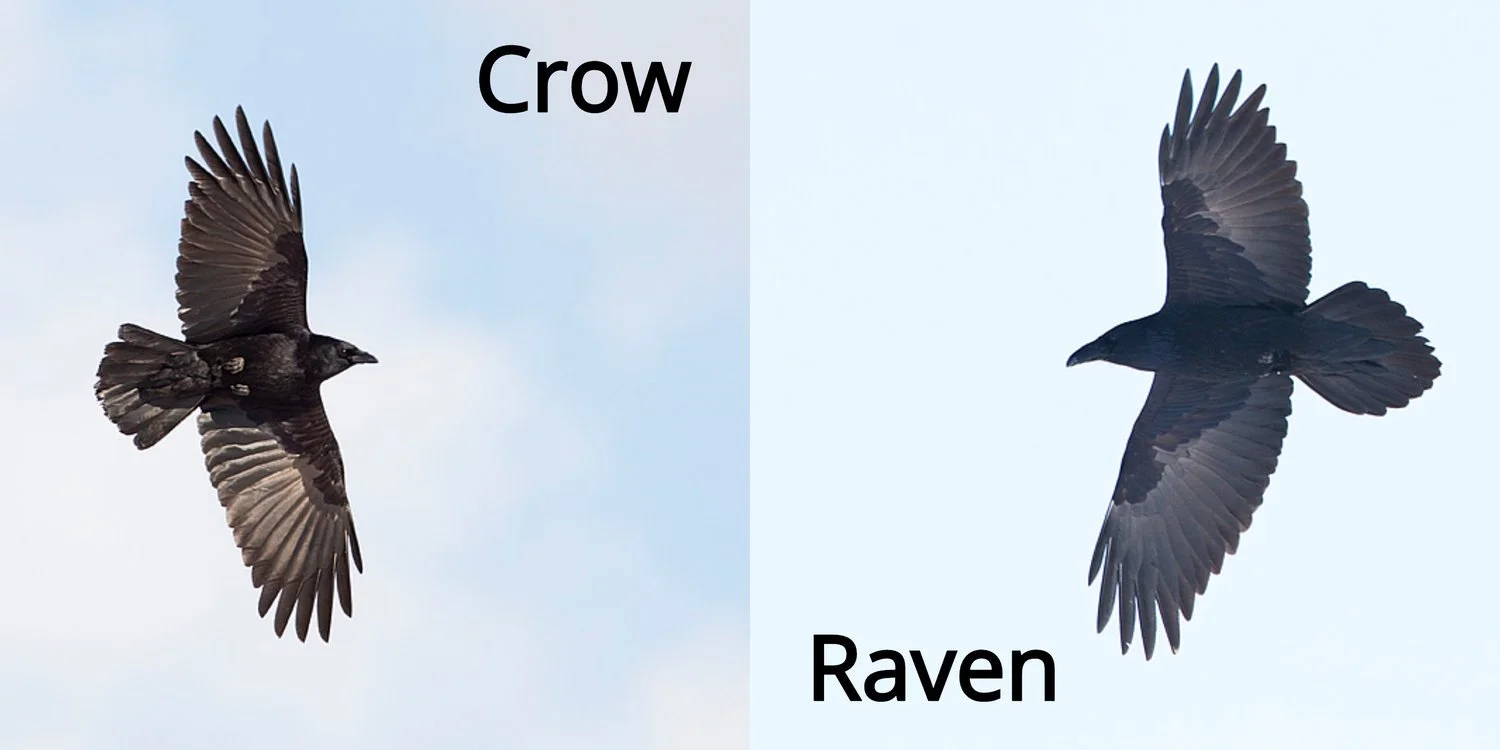
Gerald Romanchuk photo

Ravens and crows are large black birds, both part of the Corvidae family. They have many similarities, so how can you tell these two birds apart? 

The shape of their tail feathers is one indication. Crows have more rounded tails, while ravens have a more pointed tail. You can remember that by thinking that the crow has a C-shaped tail and C is for crow. Ravens have a V-shaped tail and there is a letter V in the word raven. Little memory tricks like these are helpful for remembering details about birds and other wildlife.

Ravens are generally larger than crows and have much larger and more curved beaks. Another way to tell the two apart without seeing them up close is by their sounds. The crow makes a caw sound, whereas the raven makes a deeper croaking sound.

In addition, ravens tend to move in pairs, whereas their crow counterparts travel in large flocks called murders, sometimes numbering into the thousands. Furthermore, ravens tend to glide more, whereas crows flap their wings a lot more when flying around. https://www.ealt.ca/blog/fun-facts-raven-or-crow
Pollinator week celebrates bees, birds, butterflies and other pollinators

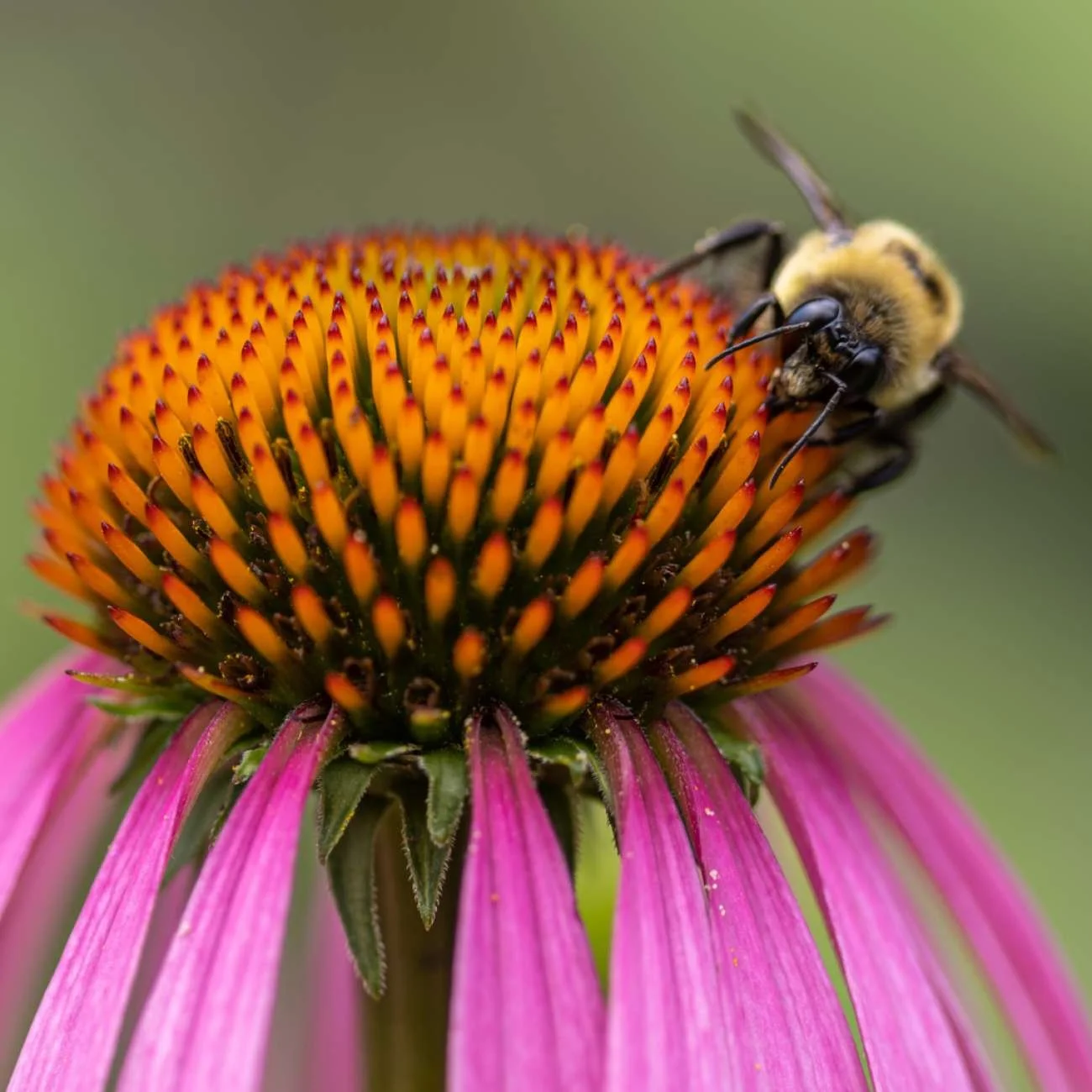
Pollinator Week Canada, June 19-25, is an annual event in support of pollinator health. It is a time to celebrate pollinators and spread the word about what we can do to protect them. The week has grown into an international celebration, promoting the valuable ecosystem services provided by bees, birds, butterflies, bats, beetles, moths, wasps, and flies.

Between 75 to 95% of flowering plants on earth need help with pollination. Pollinators provide pollination services to over 180,000 different plant species and more than 1200 crops. That means that 1 out of every three bites of food you eat is there because of pollinators. In addition to the food that we eat, pollinators support healthy ecosystems that clean the air, stabilize soils, protect from severe weather, and support other wildlife.

This year the emphasis is on the connections between climate and pollinators. Pollinators are dying because their food and homes are disappearing, diseases have increased, and rising temperatures and natural disasters are affecting their ability to survive, all of which are related to climate change. The conservation of pollinators and their habitats can help combat climate change by supporting healthy ecosystems, air, soil, water, and plants.
https://pollinatorpartnership.ca/en/pollinator-week-canada#

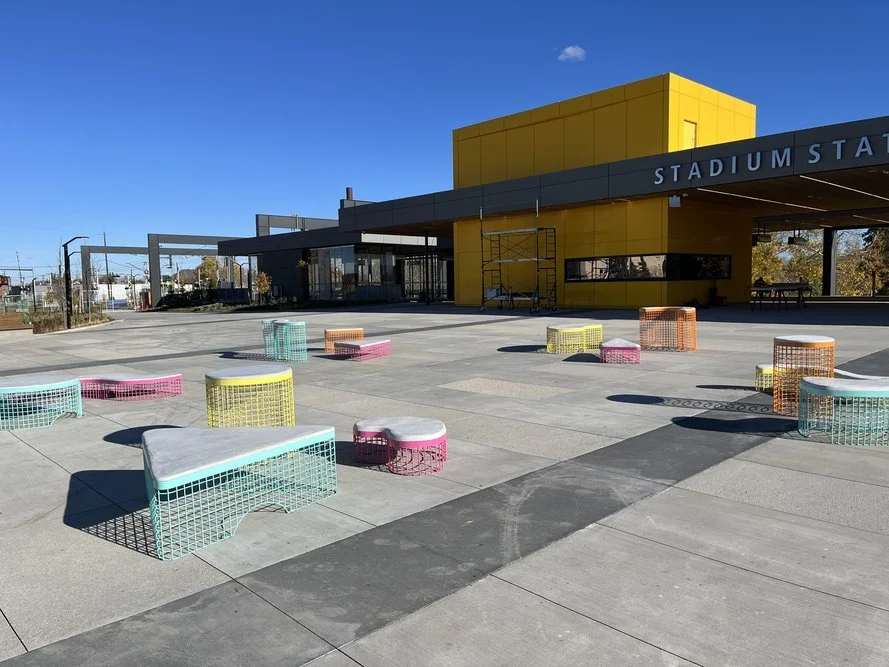
Dream by Multiple Edmonton artists, Stadium LRT Station.

https://www.edmontonpublicart.ca/#!/details/329 

Comment or contribution

Please note that articles may not reflect the position of NSRVCS. River Valley News is meant to be a clearinghouse for the wide variety of opinions and ideas about Edmonton’s River Valley. Email river valley photos, event information, comments, or questions to nsrivervalley@gmail.com

Sincerely yours,

Harvey Voogd

North Saskatchewan River Valley Conservation Society

780.691.1712
River Valley News - June 1, 2023

June 10 meditation and trail walk in Parkland County

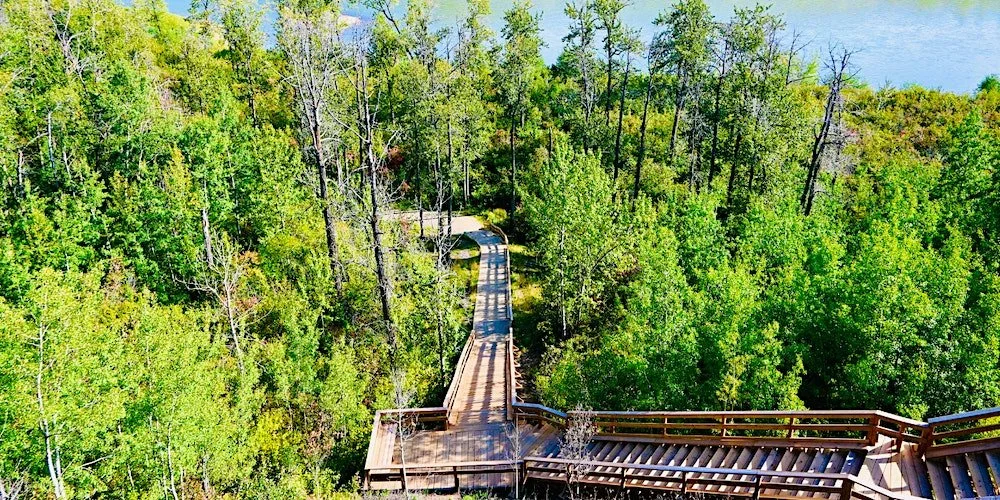
River Valley alliance is hosting this event on June 10, which will begin across the river from Devon at Prospectors Point. The walk will be to the new stairs, where there will be a guided meditation led by Amanda Papadopolous.

Meditation will bring awareness in and allow time to be present in nature. After silent contemplation, participants will turn around and head back to the parking lot. The walk will take about 90 minutes walking at a leisurely pace with plenty of time to take in nature and rest if needed.

There are some large inclines along the route, so it may not be suitable for all abilities. The trail is a double-wide granular trail with some switchbacks that may be considered difficult for those with strollers. The event is free but please register at https://www.eventbrite.ca/e/rva-june-community-meditation-trail-walk-tickets-639518706667

Despite a midlife crisis, Streetcar No. 33 has served YEG since 1912

The Edmonton Radial Railway Society runs streetcars from May long weekend to Thanksgiving. While most of the fleet services the Fort Edmonton Park line, three cars cover the High Level Bridge route. The metropolitan flavour of Edmonton is reflected in these cars, with #930 Melbourne Australia, #247 Osaka, Japan, and #33 Edmonton. 

Streetcar No. 33 looks shiny and new, despite being 110 years old, with a red and green exterior and high gloss varnish in the wood-paneled interior. In June 1912, No. 33 began operating in Edmonton and remained in service until 1951. Upon retirement, its electrical parts and wheel components were removed and sold for scrap. The body of streetcar No. 33 was sold and put out to pasture on a farm.

On May 1, 2010, streetcar No. 33 made its first run on the tracks in over 50+ years, in Fort Edmonton Park. The following year, it was moved to the High Level Bridge route where it has been a staple of the fleet ever since. The rebuild of Streetcar No. 33 took 17 years, 35,000 volunteer hours and $151,000 to bring it back to its original factory state. https://citymuseumedmonton.ca/2023/05/18/edmonton-streetcar-no-33/

Early blue violet widespread throughout Alberta

Other than seeds and rhizomes, the entire early blue violet plant is edible. Leaves can be used in salads and to make tea, and candied violet flowers can be used as garnish for desserts. Violet vinegar can be made by adding blossoms to white wine vinegar.

The leaves are very high in Vitamins A and C, with 1¼ cup of early blue violet leaves having about the same amount of Vitamin C as 4 oranges. In parts of the United States, violets are called wild okra and are often used to thicken soups.

Medicinally, early blue violet was used as a poultice for bruises, and a violet syrup was made to relieve epilepsy, inflamed eyes, insomnia, jaundice, and sore throats. In modern times, violets have been used to colour and flavour medicines.

Blackfoot Indians used the blue colour to dye arrows. Violets often appear in ancient artwork and poetry. Mohammed loved the violet, as did Napoleon and the violet became the emblem of the Bonapartists.

https://plantwatch.naturealberta.ca/choose-your-plants/early-blue-violet/index.html

Tipi an innovative, practical and locally sourced transportable shelter

Many Indigenous Nations, including the Cree, Chipewyan, Beaver, Nakoda, and Blackfoot gathered along the banks of the North Saskatchewan River to trade with one another and to participate in religious and political ceremonies. The Beaver Hills area was part of a complex trading system that stretched throughout Canada and North America. These trading routes and systems not only allowed for the exchange of goods, but also the transference of knowledge and practice.

Although First Nations Peoples living on the plains are known to have maintained their land through growing crops and landscape manipulation, they also engaged in a pattern of movement by following seasonal sources of food and other resources. Since travel was such an essential part of life, shelter had to be temporary, transportable, and incorporate available materials.

The resulting structure was the tipi. These innovative and highly practical structures used locally available materials like buffalo hides and wooden poles and were small enough to be transported easily. Tipis were also designed to adapt to changing conditions such as cold winters, wind, and hot, bug-infested summers. The architecture involved in the erection of a tipi involved advanced geometry and arithmetic, which allowed the lodging to serve as not only housing, but many other uses vital to everyday life. https://www.edmontonsarchitecturalheritage.ca/time-periods/pre-contact-and-fur-trade/

Cloverdale Coyote

Jayne Bawden writes “I took a picture of a coyote eating dried crab apples that fell off a tree in Cloverdale. This was taken on 93 St in my neighbour’s yard between 97 and 98 Ave. We share our neighbourhood with these beautiful creatures.”

Comment or contribution

Please note that articles may not reflect the position of NSRVCS. River Valley News is meant to be a clearinghouse for the wide variety of opinions and ideas about Edmonton’s River Valley. Email river valley photos, event information, comments, or questions to nsrivervalley@gmail.com

Sincerely yours,

Harvey Voogd

North Saskatchewan River Valley Conservation Society

780.691.1712

River Valley News - May 25, 2023

City announces new 190 acre River Valley Park in NE Edmonton   

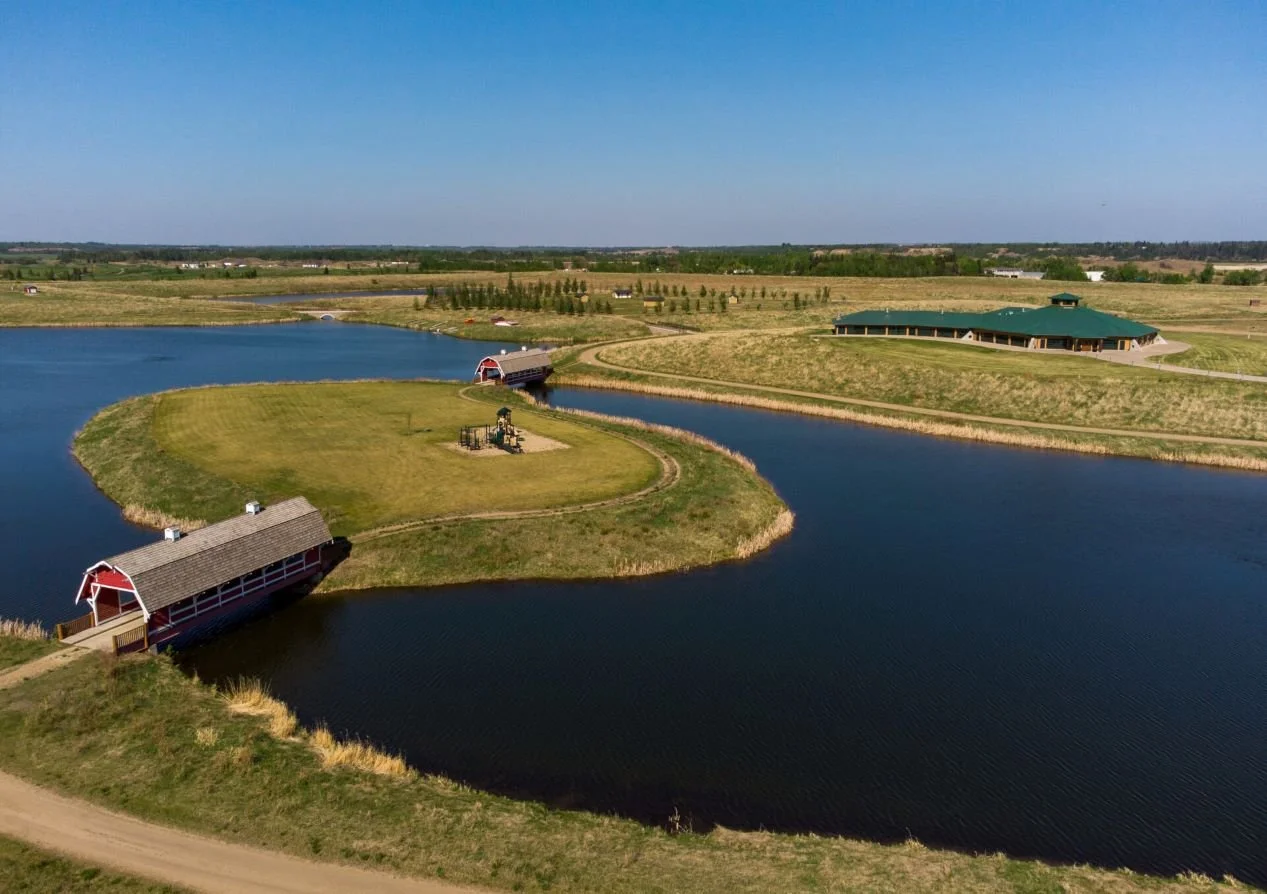
The city's River Valley park system expands this summer with the addition of a new public park in Northeast Edmonton. Nestled along the North Saskatchewan River, these 190 acres of developed parkland connects with popular River Valley trails and includes unique features such as charming barn bridges, an ornamental lake, a large events centre for gatherings and weddings, trail connections, children’s playground and public washrooms.

“Edmontonians have told us loud and clear that they want to expand River Valley access to enjoy more opportunities to connect with friends, family and the natural world around them,” said Mayor Amarjeet Sohi. “I hope this new park will serve as an important gathering place for generations of residents as our city continues to grow.”   

The picturesque park, previously known as Our Lady Queen of Peace Ranch North, is located at 17 Street NE and 153 Avenue NE, and its acquisition comes at a time when the City of Edmonton is investing in the wellbeing of Edmontonians, providing opportunities for quality outdoor recreation experiences and expanding the Ribbon of Green network for biodiversity and ecological integrity. 

While the City acquired the park on May 15, it will not open to the public until late Summer 2023 because staff need to perform proper inspections, maintenance work and prepare the facilities and grounds for public use.

https://www.edmonton.ca/activities_parks_recreation/parks_rivervalley/northeast-river-valley-park

How much is a city owned tree worth

City-owned trees are valued down to the last cent, as illustrated on the bright yellow Tree Protection Zone signs along stretches of Stony Plain Road closed during LRT construction. Fenced-off trees stand on both sides of the arterial road and even along some side streets.

The American elms have among the highest price tags. One near 132nd Street and 104th Avenue is valued at $24,793.35. Three others are valued between $14,000 and $21,000. One nearby ash is tagged at $4,520.08, another at $2,702.26. A scraggly spruce is $2,288.06.

The City values trees using the Guide for Plant Appraisal, published by the International Society of Arboriculture. The formula considers size, condition and growing limitation. It posts the value “to demonstrate to both the public and anyone working around the tree that trees are valuable assets.”

A November 2022 City blog post says: “The project agreement for the Valley Line West states that a fence goes up around a tree designated as protected or preserved if it is within 20 metres of construction.” It adds that 300 trees on City property are being removed in the “current phase of tree removal” on the Valley Line West LRT route along Stony Plain Road/104 Avenue between 121st Street and 139th Street. https://urbanaffairs.ca/edmonton-ish/heres-why-the-city-is-placing-pricetags-on-trees/


Wildlife friendly things to do around your home

Windows, buckets and vents are part of the human landscape, but they can pose significant hazards to wildlife. Collisions with windows kill an estimated one billion birds each year worldwide.

During the day, birds see through windows, not realizing there is an obstruction, or they may see the reflections of trees or the sky and think that there is nothing in their way. Place bird feeders and baths within one metre from a window. Place decals on large windows. Some stores sell subtle decals that reflect ultraviolet light, which is visible to birds but not to humans.

Fledglings, baby hares, and even frogs can get trapped in window wells, rain barrels, and buckets. Install covers or screens on your window wells and rain barrels. Store buckets upside down so they do not fill with rainwater or place a stick inside a bucket of water so wildlife has a way to climb out.

Private residences and buildings have a variety of vents. Improperly covered dryer or stove vents are a popular spot for sparrows to nest. The sparrows collect nesting materials to line their nest and this can create a fire hazard in your vent. https://www.ealt.ca/safe-habitats-for-wildlife

Mountain Bluebird usually spotted because of the male’s sky-blue colour

Lise writes “What a delight to read about Mountain Bluebirds in the newsletter. I am a member of the Calgary Area Nest-box Monitors’ Society which was formed over 40 years ago, to provide cavity nesting spots for these beautiful birds. Today, about 100 members monitor 5,000 boxes, covering 2,000 km in ranges of favourable habitat, from the foothills of the Rockies west of Calgary, and east of Didsbury and Olds.

About one-third of members band birds, and all members monitor the birds’ activities, from nesting attempts to numbers of eggs, hatchlings, and fledglings. In 2022, our bluebirds showed a remarkable success rate: 5,836 birds.

The Abduction of Liberty by Ryan McCourt, Belgravia Art Park. DCM Photography. https://www.edmontonpublicart.ca/#!/details/104

Comment or contribution

Please note that articles may not reflect the position of NSRVCS. River Valley News is meant to be a clearinghouse for the wide variety of opinions and ideas about Edmonton’s River Valley. Email river valley photos, event information, comments, or questions to nsrivervalley@gmail.com

Sincerely yours,

Harvey Voogd

North Saskatchewan River Valley Conservation Society

780.691.1712