River Valley News - June 29, 2023

Moose on the loose in downtown Edmonton

A moose was seen running near the Ice District early morning on June 26. Video taken around 6 am, shows a moose trotting toward Rogers Place in the middle of an empty road. "Pedestrians were scared and running away from it," the man who shot the video told CTV News Edmonton.

The moose was seen as early as 5 a.m. southbound on 109 Street and on 9620-103A Ave., a spokesperson with the ministry of public safety and emergency services said. The last report, just before 6 a.m., said the moose was heading south toward the river.

"It is expected that the moose found its way into the river valley, based on the time of the day, proximity to the river valley and direction of the moose’s travel," Sheena Campbell said.

https://edmonton.ctvnews.ca/watch-moose-spotted-in-downtown-edmonton-1.6456647

YEG river valley a ribbon of green, but not a protected park

Often referred to as the largest urban park in North America, Edmonton’s river valley is a series of connected green spaces. There are policies meant to prevent chipping away of green spaces, but this is different from a protected park.

According to Kecia Kerr, Executive Director of the Northern Alberta chapter of the Canadian Parks and Wilderness Society, an analysis they conducted showed that between 2000 and 2015, we lost 6.5% of the green spaces in the river valley. That is an area about the size of the Kinsmen Park every year.

Kerr says a national urban park in our river valley would provide additional protection so there would not be a loss of green spaces. It could be a legacy project, provide federal funding for infrastructure, interpretation programs, focus on conserving green space, connecting Canadians to nature and advancing reconciliation with Indigenous people, and there would be no fee.   

Though a national urban park, it is expected to be a partnership model involving the City and other partners such as the Confederacy of Treaty Six First Nations and the Metis Nation of Alberta. The park boundaries of not yet been determined, but Kerr says think big, go from Devon and connect all the way to Elk Island National Park. https://www.cbc.ca/listen/live-radio/1-17-edmonton-am/clip/15993047-what-mean-national-urban-park-edmonton

Lego bricks highlight Edmonton spaces and pop culture

Muttart Brick by Brick premiered at the Muttart Conservatory this week. Created by the Northern Alberta Lego Users Group (NALUG), the exhibit displays multiple models built with Lego bricks. Two highlights are the High Level Bridge, as well as a to scale model of the Muttart Conservatory. Other custom works include a historical replica of Edmonton buildings, space models and characters from pop culture.

NALUG member and exhibit organizer Michel Magnan said Muttart asked him to build a scale model of the conservatory, which is now on permanent display in the conservatory’s hub area. Built at a one-stud-per foot scale, the model involves some 45,000 pieces and portrays even hidden areas of the facility, such as the underground tunnel that leads to a greenhouse across the street.

Attractions program manager Sarah Gericke said she came up with the idea for this exhibit in 2021 while playing with Lego with her family during the pandemic. She reached out to NALUG members who agreed to work on a show. https://www.stalbertgazette.com/local-news/plastic-princesses-meet-plants-at-muttart-7198081

Fires underscore the need to let mature forests get old

New trees are no substitute for old trees. It turns out the age and composition of forests makes a big difference in what role they play in preventing wildfires and storing carbon. Old growth forest is the best at both, but there is very little old growth left.

But a large amount of the forests on public lands is what foresters call mature forest, which is nearly as good as old growth and in fact is on the brink of becoming old growth. It is these older forests that will help us prevent future forest fires and will do the most to reduce climate change, and it’s these forests that we need to protect at all costs.

An immature forest is composed of trees of small stature and similar age. These forests pose a high risk of wildfire due to the abundance of fine fuel, small branches and leaves, near the ground. As natural thinning occurs, the leafy canopy remains intact and gradually rises above the forest floor as the trees grow. These forests efficiently absorb carbon dioxide and store it in the tree trunks and roots. By separating the fine, leafy fuels from the forest floor, the likelihood of wildfire diminishes.
The forest continues to thin as it approaches maturity. The surviving trees will get bigger, accumulating additional carbon and storing some of it within the debris of the forest floor. In a mature stage, the shady understory of the forest keeps things moist, and much of the debris consists of larger logs that are not easily ignited, so the dead stuff is less likely to serve as fuel for a fire.

https://www.politico.com/news/magazine/2023/06/11/to-fight-wildfire-our-forests-need-to-grow-old-00101360

Migratory Paths by Catherine Ross, Edmonton Convention Centre. Dane Ryksen photo.

https://www.edmontonpublicart.ca/#!/details/325

Comment or contribution

Please note that articles may not reflect the position of NSRVCS. River Valley News is meant to be a clearinghouse for the wide variety of opinions and ideas about Edmonton’s River Valley. Email river valley photos, event information, comments, or questions to nsrivervalley@gmail.com

Sincerely yours,

Harvey Voogd

North Saskatchewan River Valley Conservation Society

780.691.1712

River Valley News - June 22, 2023

Leaf litter an important part of ecosystems

Though the name can be deceiving, leaf litter can be made up of leaves, twigs, fallen bark and other pieces of plant matter. This litter is vital for having healthy soils and plants. It also is an indicator of biodiversity. Worms, snails, spiders, insects, fungi, and bacteria all make leaf litter their home.

When leaf litter accumulates on the forest floor, it releases nutrients like carbon, nitrogen, phosphorus and other organic compounds into the soil through decomposition. These nutrients are then taken in by plants who use them to grow.

Litter also helps control the soil temperature. In the summer, leaf litter keeps the soil moist and damp by protecting it from the sun. In the winter, it acts as an extra layer of insulation, like a nice scarf or pair of mittens, for plants as they wait for spring. https://www.ealt.ca/blog/the-many-meanings-of-litter

Elusive tiger salamanders live in Edmonton area wetlands

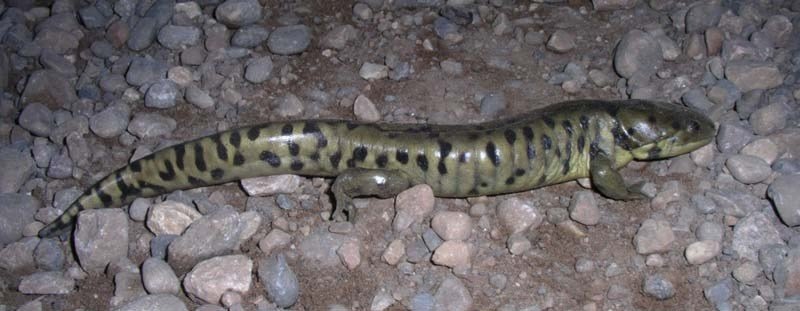
Sydney Toni, a knowledge translations specialist with Alberta Biodiversity Monitoring Institute, says scientists know that boreal chorus frogs, wood frogs and tiger salamanders have been visiting wetlands in the Edmonton area. The proof? Environmental DNA, or eDNA, in water samples.

"All organisms shed DNA, be it hairs or tissue, and you can collect that in environmental samples and analyze it to see what's there," Toni says. Native to North America, tiger salamanders spend most of their time living in underground burrows. They don't have a call, like a frog, that would register on audio monitoring equipment.

Amphibians around the world are on the decline due to habitat loss, contaminants, disease, and climate change. There are 10 species of amphibians in Alberta and half of them can be found in the Edmonton area. 

https://www.cbc.ca/news/canada/edmonton/tiger-salamander-sydney-toni-brian-eaton-amanda-schmidt-abmi-innotech-alberta-1.6194102

Variety of tree species better at fighting climate change

"In Canadian forests, as compared to temperate and tropical forests, tree diversity is low," said Scott Chang, a professor of renewable resources at the University of Alberta. Tree diversity is a term used to describe three specific qualities in our forest environment.

The first two qualities are species richness, which is measured by the number of trees in an area, and evenness, which Chang describes as how equally the species are distributed. The last factor comes down to the actual trees and the different functions they perform in a forest. 

Chang said that the implications from recent research should be implemented in the Canadian government's 2 Billion Trees Commitment, an initiative that is working to help organizations plant two billion trees in Canada over the next decade.

"If they can use multiple tree species for instructing those tree plantings instead of just a single tree species, there is a potential benefit that can be gained to increase carbon sequestration," Chang said.

https://www.cbc.ca/news/canada/edmonton/if-a-forest-has-a-variety-of-tree-species-is-it-better-at-fighting-climate-change-a-u-of-a-study-says-yes-1.6858279

Wildlife passages reconnect natural ecosystems fragmented by urban development

Grant texts “ Check out this link to some Nature Based Solutions comics https://nbscomics.com/#comics

Horses can sleep standing up but must lay down daily to get REM sleep

Wendell emails “Cool article on horses and sleep!”

Indigenous voices lacking in Edmonton’s Hawrelak Park project

Janes writes, “Excellent article about Hawrelak Park project. So many Edmontonians are upset about how this was planned, or rather the seeming lack of planning. The exclusion of an Indigenous perspective is extremely sad as well as disgraceful.”

Carousel by Nicole Galellis, Borden Park. DCMPhotography.ca https://www.edmontonpublicart.ca/#!/details/140

Comment or contribution

Please note that articles may not reflect the position of NSRVCS. River Valley News is meant to be a clearinghouse for the wide variety of opinions and ideas about Edmonton’s River Valley. Email river valley photos, event information, comments, or questions to nsrivervalley@gmail.com

Sincerely yours,

Harvey Voogd

North Saskatchewan River Valley Conservation Society

780.691.1712
River Valley News - June 15, 2023

Wildlife passages reconnect natural ecosystems fragmented by urban development

Kurt Bauschardt photo

In Edmonton, the integration of wildlife passages, which allow land, aerial and aquatic animals to move safely through their habitat, reconnected dozens of natural ecosystems fragmented by urban development. It also reduced collisions involving vehicles and animals by more than 50 per cent between 2006 and 2015, according to the city.

Grant Pearsell, a former City of Edmonton executive who led the creation of the city’s ecological planning system, recalls one of the key challenges of designing these wildlife passages: Getting everyone on the same page. “What we found when we started the project was that ecologists and engineers didn’t speak the same language,” he recalls. “So, talks would break down.”

The solution: Create a tool that provides the specifications engineers need such as the dimensions, components and locations of a passage, based on the size, movement and habitat preferences of the various creatures in the city.

Working with animal behaviour experts at the University of Alberta, the city developed engineering guidelines that, among other things, organized the city’s animals into design groups, moose and deer, for example, are in the large terrestrial group while grey partridge and sharp-tailed grouse are in the ground-dwelling birds group.

Examples of recommendations in the guidelines include gently sloping underpass sidewalls for moose or deer, which could confuse straight walls for ledges where predators can hide. For amphibians like frogs, steel structures which conduct heat, trapping cold in the winter should be avoided because amphibians won’t use a passage if it’s too cold. https://www.theglobeandmail.com/business/article-green-space-and-wildlife-passages-preserve-urban-ecosystems-and/

Horses can sleep standing up but must lay down daily to get REM sleep

Horses slumber while standing to balance their need for sleep against the ever-looming threat of predators. They are big animals, and it takes time and energy for them to get off the ground. A standing horse is therefore much better able to run away when roused from sleep.

Horses have specialized anatomical features known as a stay apparatus that enable them to stay on their hooves while catching some z's. When a horse relaxes its leg muscles, the stay apparatus ligaments and tendons act as tension bands that stabilize the shoulder, knee and ankle joints in the legs. This enables the horse to remain standing without having to maintain much tension in their muscles.

Adult horses can get by on as little as 5 hours of sleep per day, and most of it while standing up. But an adequately rested horse requires at least 25 minutes of REM sleep per day, which can only happen while lying down. Because of this, horses must lie down every day.

Horses need to feel comfortable and safe before they are willing to lie down and sleep. In feral horse populations, if multiple horses lie down to get REM sleep at the same time, there will always be at least one horse that remains standing, likely to watch for potential predators. https://www.livescience.com/animals/land-mammals/why-do-horses-sleep-standing-up

Indigenous voices lacking in Edmonton’s Hawrelak Park project

In an opinion piece, Kristine Kowalchuk says as Indigenous History Month begins, it is worth reflecting on Council committee meetings on both the City of Edmonton’s Indigenous Framework annual report and the lessons learned in the Hawrelak Park project.

As far as we know, Hawrelak Park has never been the subject of Indigenous consultation. The current rehabilitation project was a major opportunity to correct a historic mistake. Yet this has not happened. When Edmonton River Valley Conservation Coalition and members of the Indigenous community raised concerns about the lack of Indigenous consultation for this project, we heard many excuses.

Consider what the $134-million budget for Hawrelak Park could do if it were redirected instead to Indigenous-led systems in our city, including river valley stewardship. This change would be transformational. We encourage city council to seriously reflect on the need for decolonial decision-making on all issues to end the colonial violence that continues in the river valley and city streets today.

We urge them to halt the Hawrelak Park project as a first act of ensuring that city land-use decisions align with the Indigenous Framework and begin again with meaningful consultation. https://edmontonjournal.com/opinion/columnists/opinion-indigenous-voices-lacking-in-edmontons-hawrelak-park-project

1913 Magrath Mansion in Highlands declared an historic resource

Completed in 1913, the mansion was owned by William and Ada Magrath. William and his partner, Bidwell Holgate, formed the Magrath-Holgate Company to buy land in Highlands to build a suburb catering to Edmonton’s entrepreneurs and professionals. Ada Boulevard running in front of the mansion was named for Mrs. Magrath.

They hired architect Ernest Morehouse to design their stately mansion and the other high-end houses to be build in the new development. Morehouse designed 13 neighbourhood buildings between 1912-1915, including the Gibbard Block and the Highlands Methodist (now United) Church. Edmonton’s economy plunged into a recession in 1913 with only 50 of the 550 lots in the area having been developed.

William Magrath died in 1920 and the mansion was seized by the City in 1931 for unpaid taxes. The mansion’s classical revival style of architecture is shown in the side central staircase and the two-storey colonnade supported by classical columns. The grandeur of the mansion was intended to convey the vision the Magraths had for Highlands.

Concordia University of Edmonton, Alberta’s second oldest post-secondary institution, now owns the Magrath mansion. It is currently used for educational activities and donor, community, alumni and fundraising events, with all proceeds going toward student support. https://www.historicplaces.ca/en/rep-reg/place-lieu.aspx?id=6768

Pollinator week celebrates bees, birds, butterflies and other pollinators

Rod writes “Thanks for the informative article about Pollinator Week, June 19-25. Note that mosquitos are pollinators as well, including for some orchid species and some smaller flower species in wetlands. Credit where credit is due! https://www.fs.usda.gov/wildflowers/pollinators/pollinator-of-the-month/aedes_communis.shtml#:~:text=In%201913%2C%20it%20was%20first,that%20live%20in%20wetter%20environments

Pehonan by Tiffany Shaw-Collinge, INIW River Lot 11. Connor McNally still.

https://www.edmontonpublicart.ca/#!/details/186

Comment or contribution

Please note that articles may not reflect the position of NSRVCS. River Valley News is meant to be a clearinghouse for the wide variety of opinions and ideas about Edmonton’s River Valley. Email river valley photos, event information, comments, or questions to nsrivervalley@gmail.com

Sincerely yours,

Harvey Voogd

North Saskatchewan River Valley Conservation Society

780.691.1712