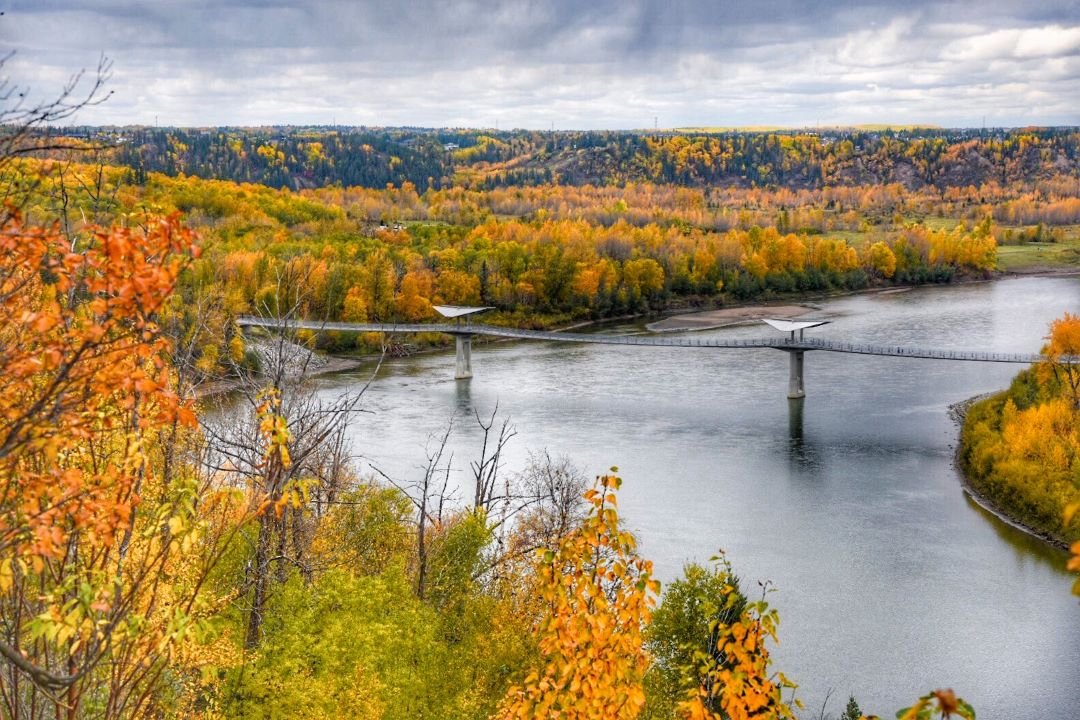
River Valley News - October 26, 2023

How birds keep warm

A bird’s first method of defense against cold weather is its feathers. Not only do they provide insulation from the cold, but feathers also have a waterproofing factor. Birds produce a special oil called Preen Oil which cold savvy birds use to waterproof their feathers.

This is important because the only thing worse than a cold bird is a cold, wet bird. Feathers trap pockets of air around the body and their internal body temperature will then warm up the trapped air. Birds will fluff their feathers in the cold so that they can trap as much air as possible. To maintain the pockets of air, a bird’s feathers must be flexible, clean, and dry.

Torpor is a state of reduced metabolism that is induced when a bird’s body temperature is lowered so it will require fewer calories to maintain an appropriate heat levels. Many birds will enter torpor to save energy during chilly winter nights.

Although birds have many adaptations to conserve heat, bird mortality can be high during winter or in sudden cold snaps. To give your neighbourhood birds an advantage during wintry conditions, keep bird feeders stocked with foods that are high in fat and calories such as seeds, peanut butter, and nuts. These fill birds with plenty of energy that will enable them to generate more body heat. https://www.ealt.ca/blog/how-birds-keep-warm

MacDonald Drive the historical secret edge of downtown Edmonton

MacDonald Drive has overlooked the river valley from Edmonton’s earliest incarnation, marking the south edge of downtown, a steep bank plunging to the valley below. A very short piece of road, only two blocks in length, it’s prominent in many of the early black and white cityscapes of downtown.

It’s difficult to determine when exactly this strip of downtown became known as a place for gay men to meet, but by 1969 the short strip of road already had a reputation. It was in The Naive Homosexual, an unofficial handbook, listing all the locations in Canadian urban centres where LGBTQ2S+ people could safely and discretely meet others like them.

Through the 1970s and even into the early 80s, it was not only a place to meet potential sexual partners, but it was also a place to buy and sell sex. Depending on the year, sex workers of various genders could be found lining the sidewalk.

The hotels added travelling strangers to the mix. Gay travellers staying at the Hotel Macdonald, the Chateau Lacombe, Edmonton House or even the adjacent Greenbriar, found that the opportunity to discretely sample the locals was simplified by the proximity to an active cruising area right across the street.

In the 70s, the reputation of this strip grew, becoming not only a place for cruising for and selling sex, but also a gathering place after the only gay bar in town, Club 70, closed for the night. Revellers would head to The Hill and socializing occurred into the wee hours. There was safety in numbers. https://citymuseumedmonton.ca/2022/01/19/the-hill-the-secret-edge-of-downtown/

Autonomous recording units used to monitor noisy species

The Alberta Biodiversity Monitoring Institute has used autonomous recording units (ARUs) and sound technology to monitor noisy species, such as birds, amphibians and bats, for over 10 years. ARUs allow collection of large quantities of data over large areas and can be set up and left out for months or even years, minimizing people hours out in the field.

Once the recordings have been retrieved from the ARUs, they undergo a rigorous quality control process before being uploaded into WildTrax for processing, storage and sharing. WildTrax is a free platform, developed in collaboration with the University of Alberta, that is used by ARU users in over 250 organizations.

WildTrax is a platform for managing, storing, processing, and sharing environmental sensor data. It provides a robust, flexible, and adaptive platform for Open Data and encourages collectors to contribute to Open Data initiatives https://wildtrax.ca/?mc_cid=ecf5679dcd&mc_eid=b02c6f60ed

Animal Family by LeuWebb Projects, Edmonton Valley Zoo

https://www.edmontonarts.ca/public-art/animal-family

Comment or contribution

Please note that articles may not reflect the position of NSRVCS. River Valley News is meant to be a clearinghouse for the wide variety of opinions and ideas about Edmonton’s River Valley. Email river valley photos, event information, comments, or questions to nsrivervalley@gmail.com
River Valley News - October 19, 2023

What lichens can tell us about climate and pollution

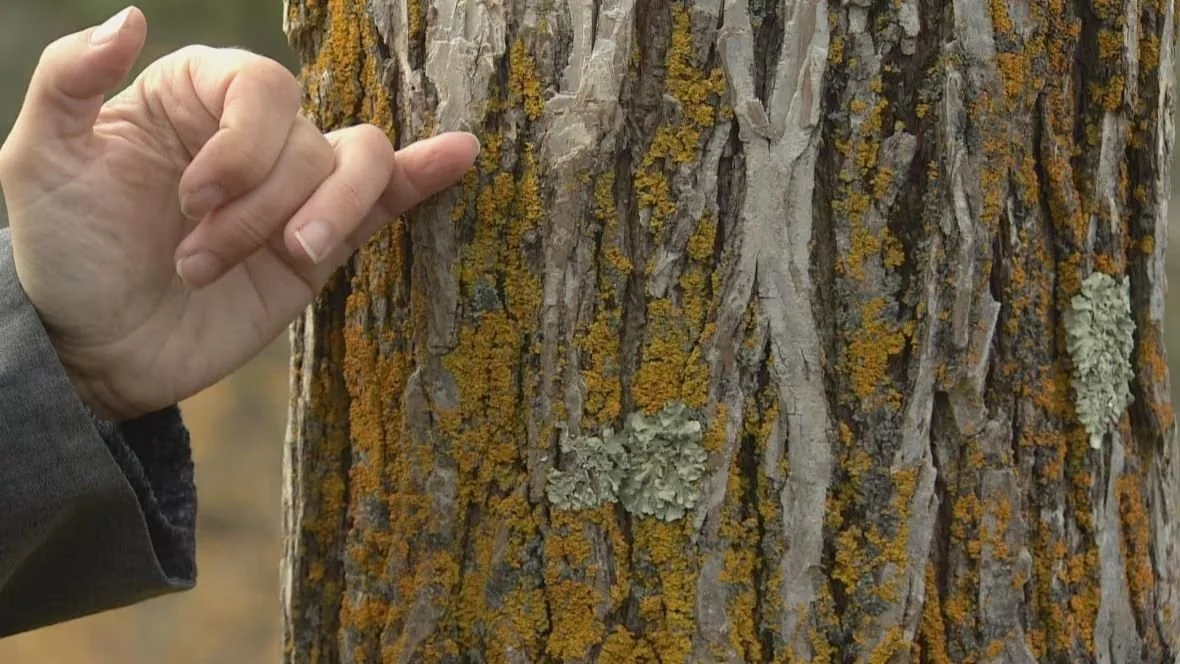
Peter Evans photo

When you walk past a tree in Edmonton's river valley, you may notice tree trunks and branches are covered in multicoloured growths, decorating them in yellow, green, grey and bluish spots. These are lichens. Lichens are fungi, not plants. They work closely with their photosynthesizing partner, usually algae, which live inside lichens.

Lichens are important determinants of air quality, said Troy McMullin, a lichenologist at the Canadian Museum of Nature in Ottawa. "You can think of them as little sponges. They get their nutrients and minerals from what is floating by, what's in the air," he said. "Essentially, they're eating the air and if there's pollutants in the air, they're going to eat those too." 

Even though they can thrive in cities, urban areas can be challenging habitats for lichens. At some point, the amount of pollution in the air becomes too much even for the sturdiest of lichens, McMullin said, after which they disappear, creating lichen deserts. "They are the canaries in the coal mine because they're eating in the air," he said. https://www.cbc.ca/news/canada/edmonton/what-lichens-can-tell-us-about-climate-and-pollution-1.6989959

New name proposed for Oliver neighbourhood

Robyn Paches, the president of the Oliver Community League, confirmed that an agreement has been reached on a new name, but it has yet to be made public. The Naming Circle is working on a way to work with Indigenous leaders to make a “respectful” announcement.

The neighbourhood was named for Frank Oliver, the former Liberal politician and newspaperman who championed many racist views. He supported legislation that restricted immigration based on ethnicity, and championed regulations that restricted the movement of Indigenous peoples.

The Oliver name has been a contentious issue for several years, as more and more people learned about his time as both a writer and political leader. A Naming Circle was created to take in community input on how the community should move forward.

Members of the City’s Naming Committee lauded the Oliver process. The Urban Planning Committee was told that the way the Oliver community decided on the new name is a blueprint for how other neighbourhoods should undertake these processes going forward. https://urbanaffairs.ca/edmonton-ish/oliver-no-more/

Remote cameras monitor wildlife presence in YEG

This photo of a deer and coyote meeting was captured in Edmonton by a wildlife camera. Since 2018 the City of Edmonton and the University of Alberta have worked together to create WildEdmonton, a project that uses remote cameras to monitor wildlife presence and abundance throughout our city. 

It maintained remote cameras at 109 sites between May 2018 and August 2021, collected over 2 million images, and captured 28 mammal species and 41 bird species.

The project works to identify areas of valuable wildlife habitat so that future planning and development projects will know where animals live and how they move around. Identifying and protecting these areas will help protect animal habitats and ensure future generations of Edmontonians are able to experience and enjoy our parks and natural areas as the city grows.

Protecting biodiversity in urban areas is a challenge. It can be done by making sure we protect natural areas and maintain natural connections that help wildlife move around Edmonton and surrounding area. More photos at https://www.edmonton.ca/city_government/environmental_stewardship/wild-edmonton

Edmonton’s ambitious urban cycling plan getting attention

If you build it, they will come. That is how avid urban cyclist and Calgary content creator Tom Babin feels about bike lanes. Build them and they can turn car dominated, traffic heavy cities into cycling havens. And that might very well be the plan for Edmonton. Babin made his way up to Edmonton from Calgary after receiving an invitation from city councillor Michael Janz.

“What we see in cities all over the world is that when cycling is made safe and convenient, then people will ride their bikes,” said Babin. “And what works in other places is a feeling of safety. And so separation from motor vehicles is really important.”

He called Edmonton “the most exciting bike city in North America” in a nearly 18-minute video posted to his YouTube channel “Shifter” last week, where he documents his life as an urban cyclist to his nearly 100,000 subscribers. The video puts a spotlight on Edmonton’s “ambitious urban cycling plan.”

In December, city council approved a $100 million bike plan over four years. “I absolutely think if a city like Edmonton wants to encourage more people to cycling you need to invest in it,” said Babin. “And I think that’s a huge opportunity that is happening here. And it’ll be interesting to see how this money is spent and how it can change the city.” https://edmonton.citynews.ca/2023/10/15/edmonton-cycling-model-north-america/

I Am You by Alexandra Haeseker, Alfred H. Savage Centre in Whitemud Park.

https://www.edmontonarts.ca/public-art/i-am-you

Comment or contribution

Please note that articles may not reflect the position of NSRVCS. River Valley News is meant to be a clearinghouse for the wide variety of opinions and ideas about Edmonton’s River Valley. Email river valley photos, event information, comments, or questions to nsrivervalley@gmail.com

River Valley News - October 12, 2023

Guided fall foliage tours at Bunchberry Meadows Conservation Area

Join the Nature Conservancy of Canada for a guided tour to witness the dramatic fall colours of Bunchberry Meadow's tamarack stands and to learn about the diverse features of this conservation area. Home to sand dunes, wetlands, and old-growth forest, Bunchberry Meadows provides a valuable habitat for many species such as moose and jack pine.

Dates still available are October 13, 14, 21, 28, and 29. Bunchberry Meadows’ 640 acres is located 30 kms from downtown Edmonton on Range Road 261 in Spruce Grove. Don’t forget to check out the Edmonton Native Plant Society’s demonstration plots down by the parking lot, and on either side of the road as you first drive into the conservation area.

Bring a water bottle, snacks and dress for the weather with appropriate footwear. Parking available onsite, carpooling encouraged, moderate fitness level required, no dogs allowed, and there are toilets on site. Price: $10. Register at https://www.eventbrite.ca/e/fall-foliage-tours-sept-22-oct-29-2023-tickets-719514205357

High chloride concentration in Whitemud Creek an impact of road salts

The North Saskatchewan River WaterSHED monitoring network is a collaborative project between the Government of Alberta, EPCOR, the North Saskatchewan Watershed Alliance (NSWA), and the City of Edmonton. It has developed an extensive 20-station tributary monitoring network throughout the region, allowing scientists to track water quality and quantity over time.

WaterSHED data demonstrates drastic changes in water quality from the mountains down through the forest and foothills areas, and then into the agricultural and urbanized plains. You can see clearly, changes in nutrients and salts and some metals. Particularly around the Drayton Valley area, when you start getting more clearing of former grasslands and forests into agriculture and residential areas.

One notable parameter was found to change remarkably in concentration downstream from the watershed’s pristine headwaters: chloride. Whitemud Creek in Edmonton had particularly high concentrations, and an expert says that “it gives you an idea of the impact of road salts, not only just on the concentration of these small creeks, but that it’s the most important contributor of chloride from any of our tributaries.”

He highlights this as interesting because Whitemud Creek is smaller than most of the watershed’s other monitored tributaries, and notes that, “But because it’s so urbanized, it really gets that chloride input.” As for pointing to a culprit for some of these pollutants, the aquatic scientist says, “We aren’t there yet, we can see where contaminants are coming from but more data are needed to know how much.” https://www.nswa.ab.ca/2023/09/27/inside-the-north-saskatchewan-river-watershed-monitoring-network/

River Valley Alliance looking for new board members

The RVA Board comprises seven elected Councillors from its municipal shareholders and eight Directors-at-Large. It has 3 openings for Directors-at-Large and invites interested candidates to submit their applications up to November 5.

The RVA Board is dedicated to a balanced approach of preserving, protecting, enhancing and connecting the river valley with the potential of becoming a world-class pedestrian trail, linking over 100 km through 8,000 hectares of parkland, the longest river valley trail and park system in North America, recently named Amisk Wacîw Mêskanaw or Beaver Hill Road.

It is accepting applications from residents of Parkland County, Town of Devon, City of Edmonton, Fort Saskatchewan, Sturgeon County and applicants of Indigenous Heritage that reside within Treaty 6 Territory or Métis Nation of Alberta Region 4. More information on the role description and application process

https://rivervalley.ab.ca/get-involved/board-of-directors/

Kids in Riverdale fish out 6 e-scooters in the North Saskatchewan River

George writes “Congratulations that your previous issue motivated those kids to get the e-scooters out of the river. Well done!

Liz emailed “Good for the Riverdale kids. They see a need and go do something about it! Thanks for highlighting the scooters in the river.”

Garden Frame by Will Truchon, Muttart Conservatory grounds adjacent to the picturesque garden gazebo. 

https://www.edmontonarts.ca/public-art/garden-frame

Comment or contribution

Please note that articles may not reflect the position of NSRVCS. River Valley News is meant to be a clearinghouse for the wide variety of opinions and ideas about Edmonton’s River Valley. Email river valley photos, event information, comments, or questions to nsrivervalley@gmail.com