River Valley News - November 16, 2023

River Valley News needs your Support

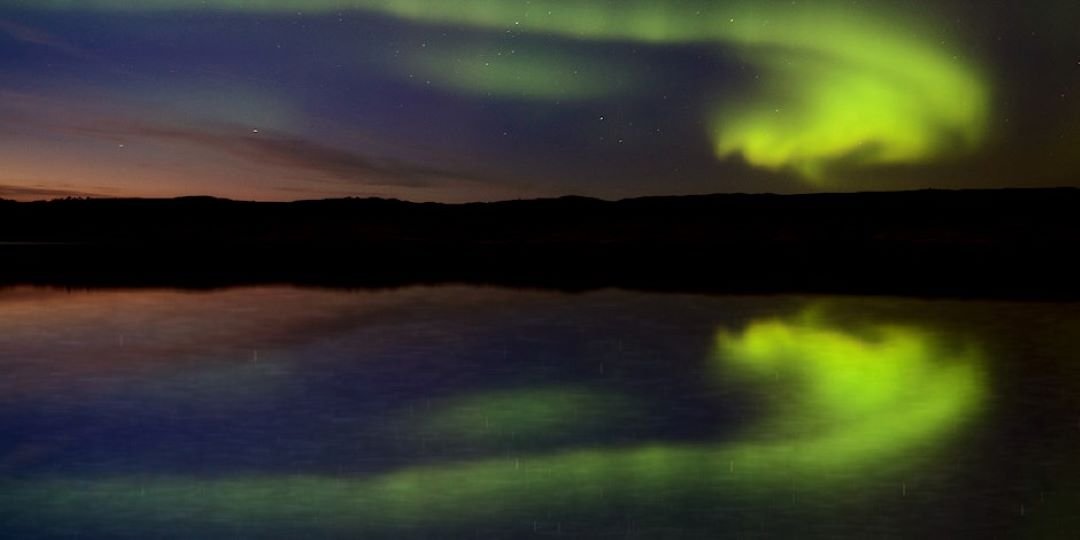
Kyle Schole photo

You and another 2,500+ people receive our free e-newsletter River Valley News. In 6 years, this newsletter has grown from a publication whose first issue was sent to 300 society members, to a weekly distribution sent to 2,542 Edmontonians.

Though we are a completely volunteer run organization, we need $250 monthly to pay for distribution of River Valley News, our website, and to keep our social media feeds up to date. Our bank account is very low and we need your donation ASAP to pay the bills. Donate now at https://www.edmontonrivervalley.org/donate

Our communication outreach is vital to NSRVCS and plays a key role in our work. It helped us in our successful campaign to create Big Island Provincial Park. It informs people of our current initiative to create a National Urban Park. It highlights our work with the City of Edmonton on enhanced protection of our river valley and ravine system.

Your support is critical to continuing publication of the River Valley News and our communication outreach. We know you are committed to our work to conserve, protect and preserve Edmonton’s river valley for future generations. Thank you for your financial support! https://www.edmontonrivervalley.org/

Drone part of land conservation fieldwork and surveys

Edmonton & Area Land Trust (EALT) has added a drone to help in its conservation work. For every new piece of land it secures, EALT conducts fieldwork and surveys to collect information about the species and habitat. This process now includes a drone to capture information from the sky.

Assessing prospective lands to conserve involves securement visits to collect data that can be used for a baseline documentation report as well as funding applications to granting bodies such as the Alberta Land Trust. These visits require surveying the land to assess vegetation communities, human disturbance, observe wildlife, and more.

Wildlife cameras and recording devices such as audio recording units (ARUs) are often placed there for the summer to collect further information. The combination of in-person visits and technology allows for as much data to be collected as possible. The drone allows EALT to survey harder to reach areas, capture photos, and monitor its own conservation lands in new ways.

The drone was made possible by RBC’s Tech for Nature grant, which also supported EALT to purchase more wildlife cameras and ARUs. https://www.ealt.ca/blog/october-field-notes-2023

Plains bison may be key in helping the prairie hold onto water

Plains bison have an ingrained capacity to boost biodiversity. An adult bison eats about 11kg of grass a day. The prairie grasses adapted to their foraging. Vegetation across the plains uses the nutrients in their dung. Birds pluck their fur from bushes to insulate their nests.

Bison also literally shape the land. They roll in the dust and create indentations known as wallows that hold water after rainstorms. After the bison move on, insects flourish in these pools and become a feast for birds and small mammals. Pronghorn antelope survive by following their tracks through deep winter snows.

Although rivers and streams cover less than 2% of the prairie, they are crucial refuges for its wildlife. Hila Shamon's research shows increase in vegetation and bird diversity on creeks where bison have replaced cattle. She also found more deer and elk.

Other studies show that year-round, low-density grazing by bison is associated with more variety in woody vegetation heights and more native plant diversity in riparian areas than seasonal grazing by cattle. Well-vegetated creeks are the prairie's lifeblood.

https://www.bbc.com/future/article/20231102-why-grazing-bisoncould-be-good-for-the-planet

Farmer markets resilient throughout Edmonton’s history

Farmer markets provide important access to local food and horticultural products. In 1900, eight years after Edmonton first became a town, the Edmonton Public Market opened. In 1903, the market moved to Market Square, now the site of the Stanley A. Milner library.

The goods available at the market ranged from coal to more familiar market goods like vegetables and meat. The market expanded beyond a place of local commerce to become a local gathering place. While it was open every day of the week except for Sunday, the market was at its most bustling on Saturdays, shoppers purchased ingredients for their Sunday suppers and prepared for the week ahead.

In 1916 the city built an all-weather structure to house the market, and in 1933 an annex was added in which six permanent stalls were housed. This success continued until the end of the 1940s. Through politically and economically challenging times, Edmontonians remained invested in the success of their market.

An emphasis on progress and modernisation throughout the 1950s and ‘60s meant hard times for the City Market. Edmonton’s focus shifted from local to international, and a quaint farmers’ market located so close to City Hall was seen as an embarrassment. https://citymuseumedmonton.ca/2014/10/03/the-city-market/

Urban green space can help local wildlife deal with climate change

Colleen emailed “That was a brilliant framing of the climate change study for application to Edmonton; thank you. I enjoyed the post about J.J. Belanger as well. But what a worrisome story about the attack at Louise McKinney Park. I appreciate the fact-based emphasis of that article, without sensationalism or invocation of the broader inner-city issues at play.  I so enjoy the synthetic, succinct writing and breadth of interesting stories and information in the newsletter.”

River valley assault in Louise McKinney Park creates fear and questions

Mark comments “Thanks for another interesting newsletter. Your article sharing Lucy's experience of assault in Louise McKinney Park was disturbing, but my sadness turned to anger when I read the police response to attacks of this nature. Their advice does nothing to address safety in public spaces.

Looking over our shoulder, walking in groups, and carrying a whistle doesn't make us safe when attackers have weapons or can simply prowl in larger groups. Heightened awareness only creates a culture where fear becomes normalized. Only when we address the root cause of the attack can we create a safer society.

It was their fourth tip that really made me mad - the suggestion that we carry concealed weapons. Meagre attempts at self-protection promote vigilantism and will take us down a dark road. Only when we care for one another enough to address the root cause of extreme behaviour will we achieve a safe society.”

Development proposal along Whitemud ravine ridge between Grandview and Landsdowne

Carole writes “Is the Whitemud ravine considered part of the river valley conservation area? If so, is your group aware of the West240 proposal to develop along the ridge of the ravine between Grandview and Landsdowne. I thought that there were restrictions in place to protect our ravines and river valley from erosion caused by commercial and residential development above the valleys along the ridges. I am appalled by the proposal for development by the West240 group.”

Untitled by Eugene Uhuad, Digital Photograph at Clareview Community Recreation Centre.

https://www.edmontonarts.ca/public-art/untitled-4

Comment or contribution

Please note that articles may not reflect the position of NSRVCS. River Valley News is meant to be a clearinghouse for the wide variety of opinions and ideas about Edmonton’s River Valley. Email river valley photos, event information, comments, or questions to nsrivervalley@gmail.com

River Valley News - November 9, 2023

Edmonton veteran served his country despite discrimination

Joseph John “J.J.” Belanger was born in Edmonton, Alberta in 1925. He enlisted in the military as a teenager during the Second World War and served as a wireless air gunner in the Royal Canadian Air Force.

He flew in Lancaster bombers on raids over occupied Europe. During one mission in mid-1944, enemy fire hit J.J.’s plane and he was wounded by shrapnel. The crew had to bail out along the coast of France where J.J. spent three days in a small dingy before being rescued.

Only three of the plane’s eight crew members survived. One of the dead was the bomber pilot, an Australian named Gordon and J.J.’s lover. They had met at the British Commonwealth Air Training Plan base in Winnipeg earlier in the war and had spent much time together.

This tragic loss was very hard for J.J. and was made even worse because their love had to be hidden from the wider world. Grieving the death of his partner too openly would have caused problems, so he couldn’t express the full depth of his sorrow.

J.J. had already come out to his family and to Gordon’s parents, who lived in England during the war. After the war, he returned to civilian life and moved to the west coast.

https://www.veterans.gc.ca/eng/remembrance/people-and-stories/joseph-john-belanger

Urban green space can help local wildlife deal with climate change

As an Arctic Ambassador Centre, the Edmonton Valley Zoo works with Polar Bears International to help educate Edmontonians about the effects of a warming climate on northern biodiversity. Fall is a special time of year to highlight such climate impacts on polar bears because that’s when they gather on the shores of Hudson Bay to wait for the sea ice to return, so they can hunt their seal prey.

However, with the Arctic warming at a rate four times faster than the rest of the planet, the ice-free summer period is now three-to-four weeks longer than it was in the 1980s, straining the limits of the bears’ fat reserves and making it difficult for survival.

Similar to the Arctic, with Edmonton’s more northern position, historical climate records indicate that Edmonton is also warming at a faster rate than the global average. In the absence of climate action, research predicts that Edmonton’s annual average temperature of 2.1 C will increase to 5.5 C by the 2050s and to approximately 8 C by the 2080s.

A recent study using data from the City of Edmonton’s WildEdmonton project gives a window into a potential solution. Published in Nature & Ecology (July 2023), the findings suggest that while climate change can make it more challenging for wildlife in urban areas, these effects are lower in more vegetated cities. Therefore, to help local wildlife deal with the stress of climate change, keep and make more green space. 

https://transforming.edmonton.ca/protecting-wildlife-from-the-effects-of-climate-change/

River valley assault in Louise McKinney Park creates fear and questions

Edmonton is a great place to live and our river valley is the jewel in its crown, writes Lucy. However, recent events have sullied its reputation. I belong to an urban pole walking group. In early October, my friend and I were walking in Louise McKinney Park beneath the Convention Centre along the river path.

It was a beautiful afternoon when suddenly my friend and I were attacked from behind by a middle-aged man yielding a club. I was knocked face first into the concrete path and sustained a fractured nose and elbow. My friend was pushed into the grassy verge where the man continued to beat her with his club. She was able to fend him off somewhat but was beaten severely on the head, requiring 18 staples to close the wounds.

We screamed as loud as we could. Other people approached and our assailant ran off. The people who came to our assistance were marvelous, holding pressure on my friend’s bleeding wounds and helping me into a sitting position. They called emergency services, who arrived very quickly and we were transported to hospital. The police artist did a good picture for circulation amongst the police, but the assailant has not been caught. The police artist did a good picture for circulation amongst the police, but the assailant has not been caught.

The police said violent men always choose a vulnerable victim and gave us a few prevention tips.

1. Practice situational awareness; look over your shoulder frequently.

2. Walk in a large group. There is safety in numbers.

3. Carry a high decibel whistle on a lanyard.

4. Carry a travel can of hairspray.

Read Lucy’s story at https://www.edmontonrivervalley.org/projects

Mamohkamatowin (Helping One Another) by Jerry Whitehead, INIW River Lot 11.

https://www.edmontonarts.ca/public-art/mamohkamatowin-helping-one-another

Comment or contribution

Please note that articles may not reflect the position of NSRVCS. River Valley News is meant to be a clearinghouse for the wide variety of opinions and ideas about Edmonton’s River Valley. Email river valley photos, event information, comments, or questions to nsrivervalley@gmail.com

River Valley News - November 2, 2023

Virtual night out on the North Saskatchewan

Dark Night Skies is the theme of the Edmonton River Valley Conservation Coalition’s annual online fundraising event on Wednesday, November 8 from 7 to 9pm. Tickets are free, with donations welcome. Speakers will talk about saw-whet owls, urban light pollution and its ecological impacts, and astronomy and star stories from an Indigenous perspective.

Learn from the chair of the Beaverhill Bird Observatory, Geoff Holroyd, about light pollution and other impacts on the saw-whet owl, once thought to be rare in the Edmonton River Valley. Elder Francis Alexis will talk about astronomy and star stories from an Indigenous perspective.

Robert Dick, a former astronomy professor who manages the light pollution abatement program for the Royal Astronomical Society of Canada, will share his experience of helping to initiate Dark-Sky Preserves There will be time for questions and a panel discussion, and an ecologically themed live auction. Register at https://www.eventbrite.com/e/night-out-on-the-north-saskatchewan-tickets-737406561877?aff=oddtdtcreator

Our thoughts on Edmonton’s new zoning bylaw

The North Saskatchewan River Valley Conservation Society participated in the Public Hearing on the new zoning bylaw by sending City Council a letter. We reminded them that from the outset of our involvement, we had asked that the Zoning Bylaw Renewal be synchronized with improved environmental protection measures, namely, the River Valley Modernization Project to update the North Saskatchewan River Valley Area Redevelopment Plan Bylaw.

That important project has fallen behind the new Zoning Bylaw, which is designed to facilitate development rather than provide updated and comprehensive environmental protection measures for the River Valley and Ravine System. The City Administration and Council appeared determined to fully adopt the new Zoning Bylaw before year end with the result that the Modernization Project will fall even further behind.

We requested that if the new zoning bylaw is adopted, that Council direct a moratorium on all development applications for discretionary uses within the new A-River Valley Zone pending the adoption of an updated Area Redevelopment Plan bylaw for the River Valley and Ravine System. We also asked that Council direct the Administration to accelerate the completion of the Modernization Project at which time the moratorium would be lifted.

City Council, by a 11 to 2 vote, adopted the new zoning bylaw. It did not agree to either of our two requests. Read our letter and attachments https://www.edmontonrivervalley.org/projects

Pileated Woodpecker the official bird of Strathcona County

On April 20, 2022, Strathcona County became the 12th municipality in the country to earn Nature Canada’s Bird Friendly City designation. The certification is a badge of honour that celebrates the contributions municipalities make to save bird lives.

To celebrate being recognized as a Bird Friendly Community, the County asked residents for suggestions for a community bird. Community members weighed in throughout the past spring and summer, and in October the Pileated Woodpecker was announced as official bird of Strathcona County! 

Birds play an essential role in maintaining healthy and resilient ecosystems in our communities and on our planet. But there are three billion fewer wild birds in North America today than 50 years ago. This is a 25 per cent drop. Strathcona County wants to help reverse this alarming trend. Learn more at https://www.strathcona.ca/agriculture-environment/wildlife/bird-friendly-community/

Mayor Sohi’s favourite park is ᐄᓃᐤ (ÎNÎW) River Lot 11∞ Indigenous Art Park

One of Canada’s first outdoor curated Indigenous art parks stands amidst the forest on the south side of the river valley, overlooking the Walterdale Bridge and downtown Edmonton. The name ᐄᓃᐤ (ÎNÎW), pronounced (EE-NU), is a Cree word meaning “I am of the Earth.”

The importance of giving a name in the language native to the area is to acknowledge its historical significance and proclaim the ancestral lands of the Indigenous Peoples. A Treaty signed between the Indigenous and the British Crown resulted in the territory being opened for settlement. 

The River Lot 11 in the park name helps tell the story of the historic river lot that was in this very location. Lot 11 stretched from the North Saskatchewan River to University Avenue, and from 104 to 107 Street. It was home to Métis settlers Joseph McDonald and Margaret Fraser.

They began homesteading there in 1878, after the family made a personal agreement with the Papaschase Cree for the use of the land. As some of the first settlers on the south side of the river, the couple farmed the land while raising their family. Joseph also worked trading furs and hauling cargo for the Hudson’s Bay Company.  

https://transforming.edmonton.ca/pick-a-park-with-city-council/

Autonomous recording units used to monitor noisy species

Ivan writes “When I think of noisy species, I think of Harley Davidson motorcycles at 2:00am, jet boats on the river, and lawn care companies with their 85 decibel, dust and exhaust machines on Saturday mornings. Bring on the noisy birds, music to my ears!

John Janzen by Genevieve Simms, John Janzen Nature Centre

https://www.edmontonarts.ca/public-art/john-janzen-nature-centre

Comment or contribution

Please note that articles may not reflect the position of NSRVCS. River Valley News is meant to be a clearinghouse for the wide variety of opinions and ideas about Edmonton’s River Valley. Email river valley photos, event information, comments, or questions to nsrivervalley@gmail.com